


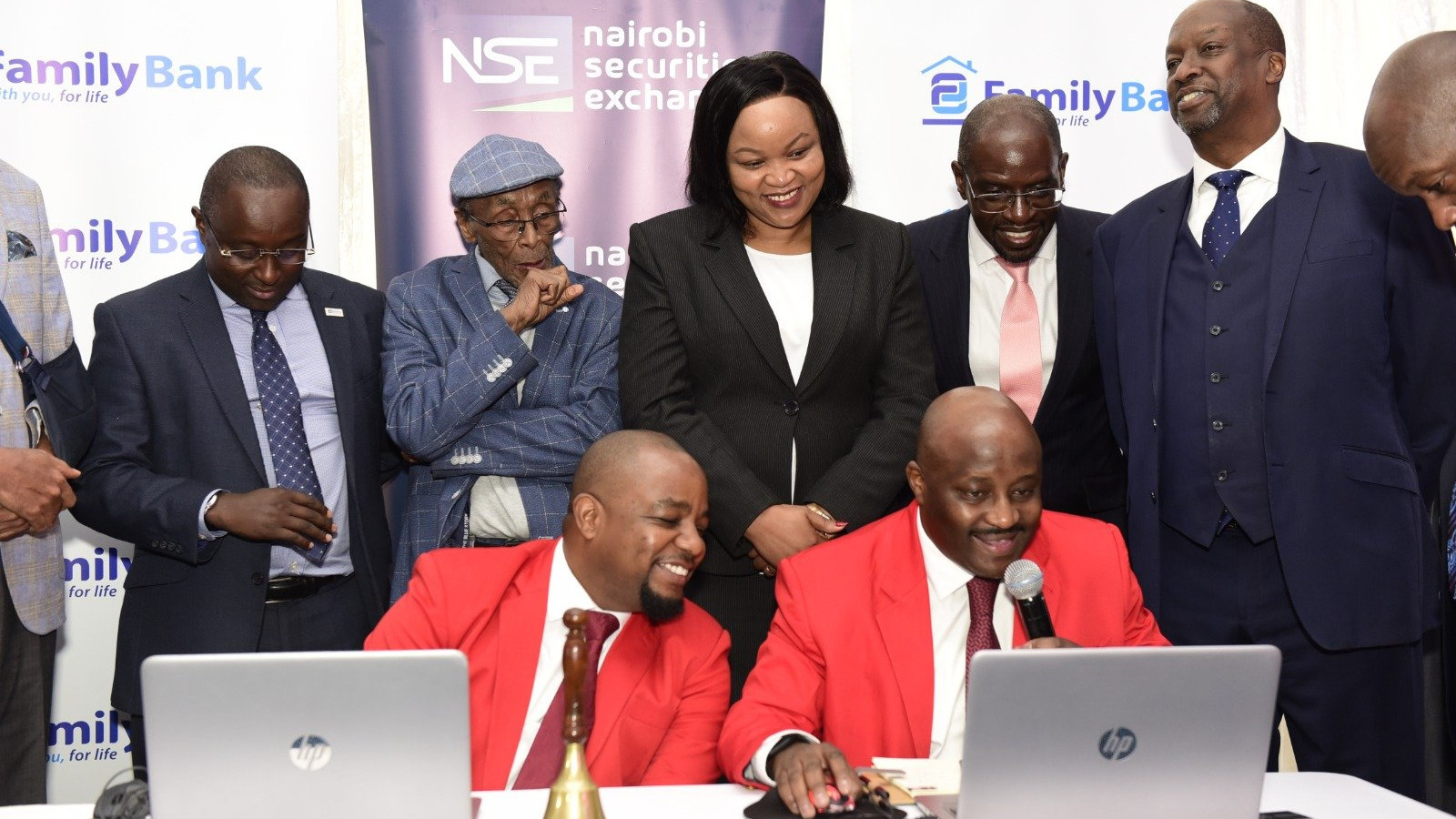
Four decades after Titus Kiondo Muya founded a small building society in Nairobi with a KSh 500,000 loan and a conviction that ordinary Kenyans deserved better access to credit, Family Bank Limited began trading on the Nairobi Securities Exchange on June 23, 2026.
The listing marks the largest private sector debut on the exchange in 17 years and signals a turning point not just for the bank, but for Kenya’s capital markets.
Family Bank listed approximately 1.66 billion fully paid ordinary shares on the Main Investment Market Segment of the NSE at an introduction price of KES 18.00 per share, representing an implied market capitalisation of KES 29.9 billion. The bank trades under the ticker symbol FMLY.
The listing took place by way of introduction, meaning no new shares were issued and no fresh capital was raised. The 1.66 billion shares already held by the bank’s 6,345 shareholders moved from the over-the-counter market, where they had traded since 2006, onto the NSE’s regulated platform, giving existing shareholders greater liquidity and a transparent, market-driven mechanism for price discovery.
By close of trading on its debut day, FMLY shares had surged to KES 26.00, well above the KES 18.00 introduction price, pushing the bank’s market capitalisation to KES 33.9 billion and placing it among the 16 most valuable counters on the exchange.
A Discount That the Market Quickly Closed
Standard Investment Bank, acting as lead transaction adviser, applied five valuation approaches ahead of the listing. Weighting them equally produced a blended fair value of KES 29.62, putting the listing price 39% below that estimate and below all five individual benchmarks. Residual income valuation produced the highest fair value estimate at KES 43.06 per share, followed by the dividend discount model at KES 33.05.
The bank’s profit after tax more than doubled from roughly KSh 2.5 billion in 2023 to KSh 5.38 billion last year, while book value per share climbed to about KSh 20.91, making the KSh 18 listing price equivalent to a price-to-book multiple of about 0.86 times. Management maintained the discount was deliberate: since the listing involved no capital raise, the usual pressure to maximise proceeds did not apply. The goal was to draw in new investors and build early momentum.
Shares climbed 44% above the introduction price on day one, generating what CBK Chairman Andrew Musangi described at the listing ceremony as “close to KSh 40 billion in wealth created within minutes of trading.”
Four Decades to This Moment
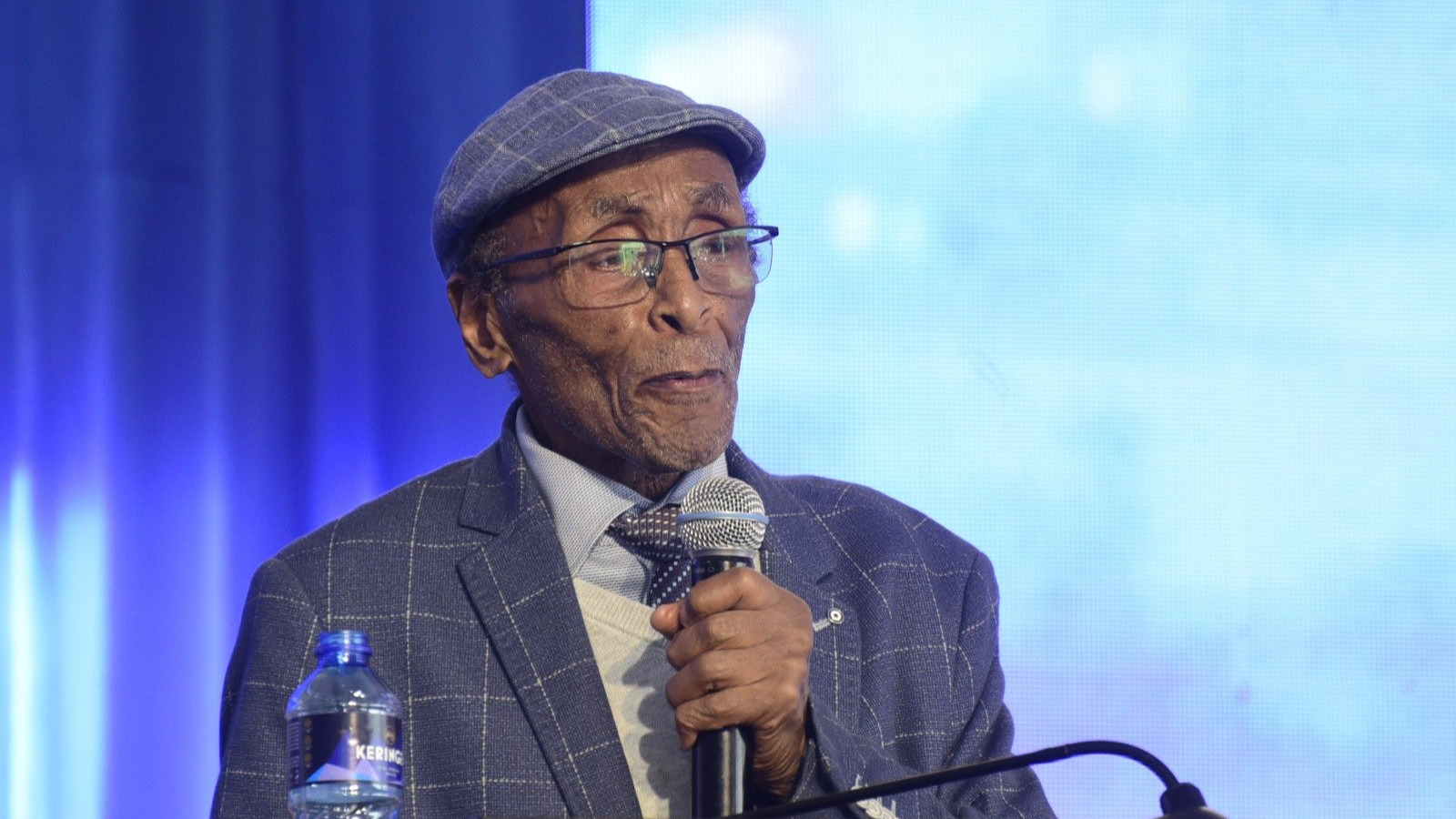
Muya’s vision stretches back further than the bank itself. “What began as a dream in my youth over six decades ago became reality in 1984, when we set out as a building society with a simple but powerful mission — to provide affordable credit to those excluded by the traditional financial system,” he said at the listing ceremony.
“This milestone is not mine alone. It belongs to every shareholder, partner, and member of staff who has walked this journey with us.”
The building society first grew by serving smallholder farmers before expanding its branch network nationwide. In 2007, it obtained a commercial banking licence from the Central Bank of Kenya and became Family Bank Limited, completing its transformation into a fully-fledged bank.
The NSE debut did not arrive easily. Family Bank initially targeted a 2023 listing but postponed it due to unfavourable market conditions: NSE market capitalisation had fallen to KSh 1.43 trillion, down from KSh 1.96 trillion a year earlier, against a backdrop of high inflation and a weakening shilling. The bank held its nerve. Conditions shifted decisively in 2025 and 2026 as inflation eased, the shilling stabilised and the NASI index rose more than 34% through 2024.
Strong Financials Underpin the Listing
Family Bank entered the public market from a position of measurable strength. The bank reported a 55.4% increase in profitability in 2025 and maintained its growth momentum into the first quarter of 2026, with profit after tax rising 52.6% to KSh 1.6 billion from KSh 1.0 billion during the same period the previous year, driven by growth in interest-earning assets, diversified income streams and a robust balance sheet.
Shareholders’ funds stood at KSh 34.77 billion as at March 2026, translating to a book value of approximately KSh 20.91 per share. The bank’s ownership remains anchored by institutional investors: Kenya Tea Development Agency Holdings held the largest stake at 18.98%, followed by the Estate of Rachael Njeri Muya at 10.05% and Daykio Plantations Limited at 9.53%.
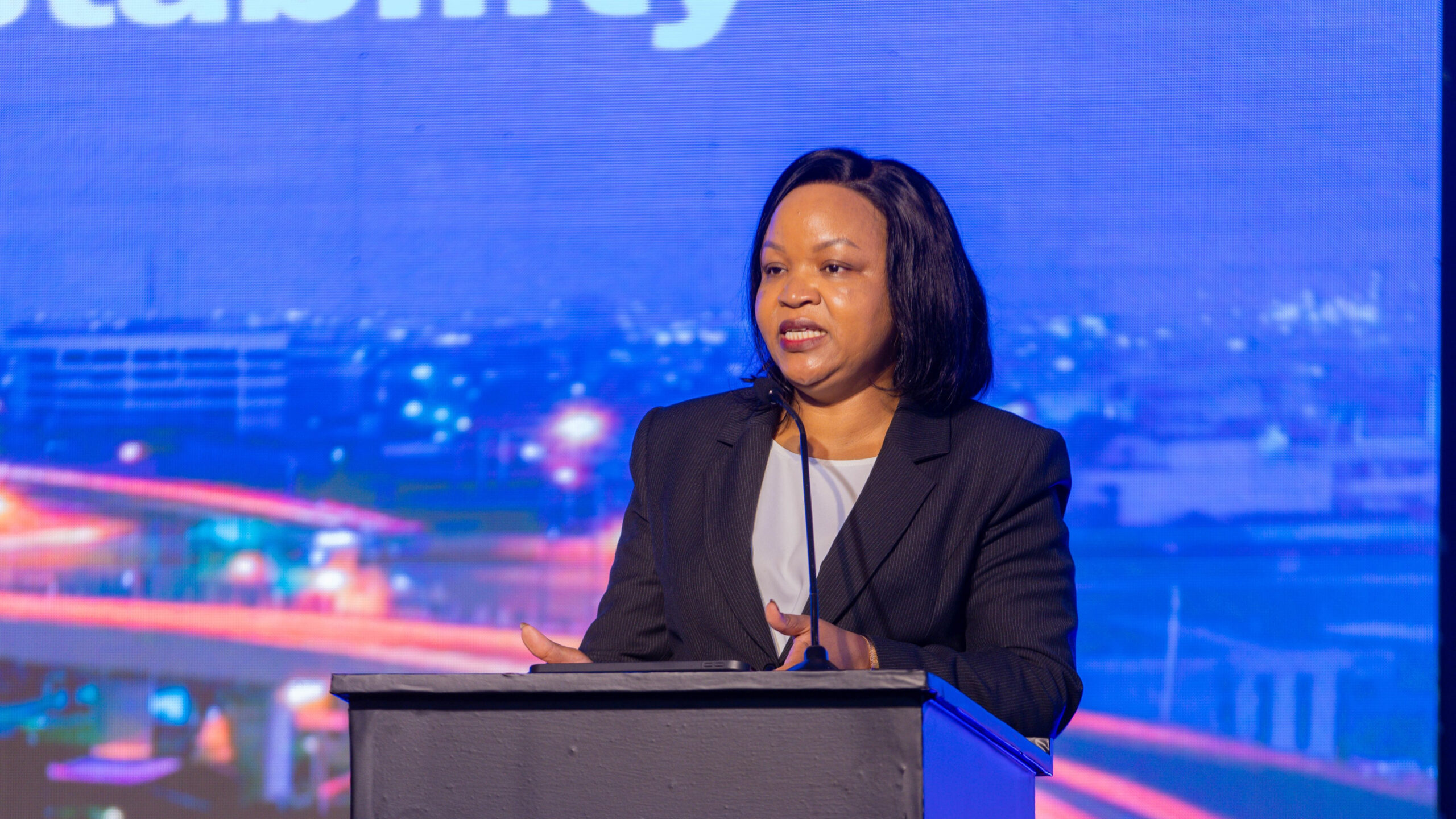
Managing Director Nancy Njau framed the listing as the product of deliberate, long-range preparation. “Our vision to positively transform people’s lives in Africa has remained unchanged, and this listing will accelerate the realisation of that vision. We list from a position of strength,” she said.
Growing Closer to Customers: New Nakuru Market Branch Opens
The NSE listing is not the only milestone Family Bank marked this month. The bank opened a new Nakuru Market branch at Azuri Plaza along Oginga Odinga Street in Nakuru Town, relocating to a larger, more accessible space that better reflects the branch’s role in one of Kenya’s fastest-growing urban economies.
Nakuru, Kenya’s fourth-largest city and the administrative centre of Nakuru County, has expanded rapidly over the past decade following its elevation to city status in 2021. Family Bank operates 95 branches across 32 counties, with a strategic focus on reaching underbanked communities and supporting financial inclusion in areas where access to formal banking remains limited. The Azuri Plaza location deepens that presence at the heart of Nakuru Town, giving traders, small business owners, salaried workers and families a branch with the space and capacity to serve them properly.
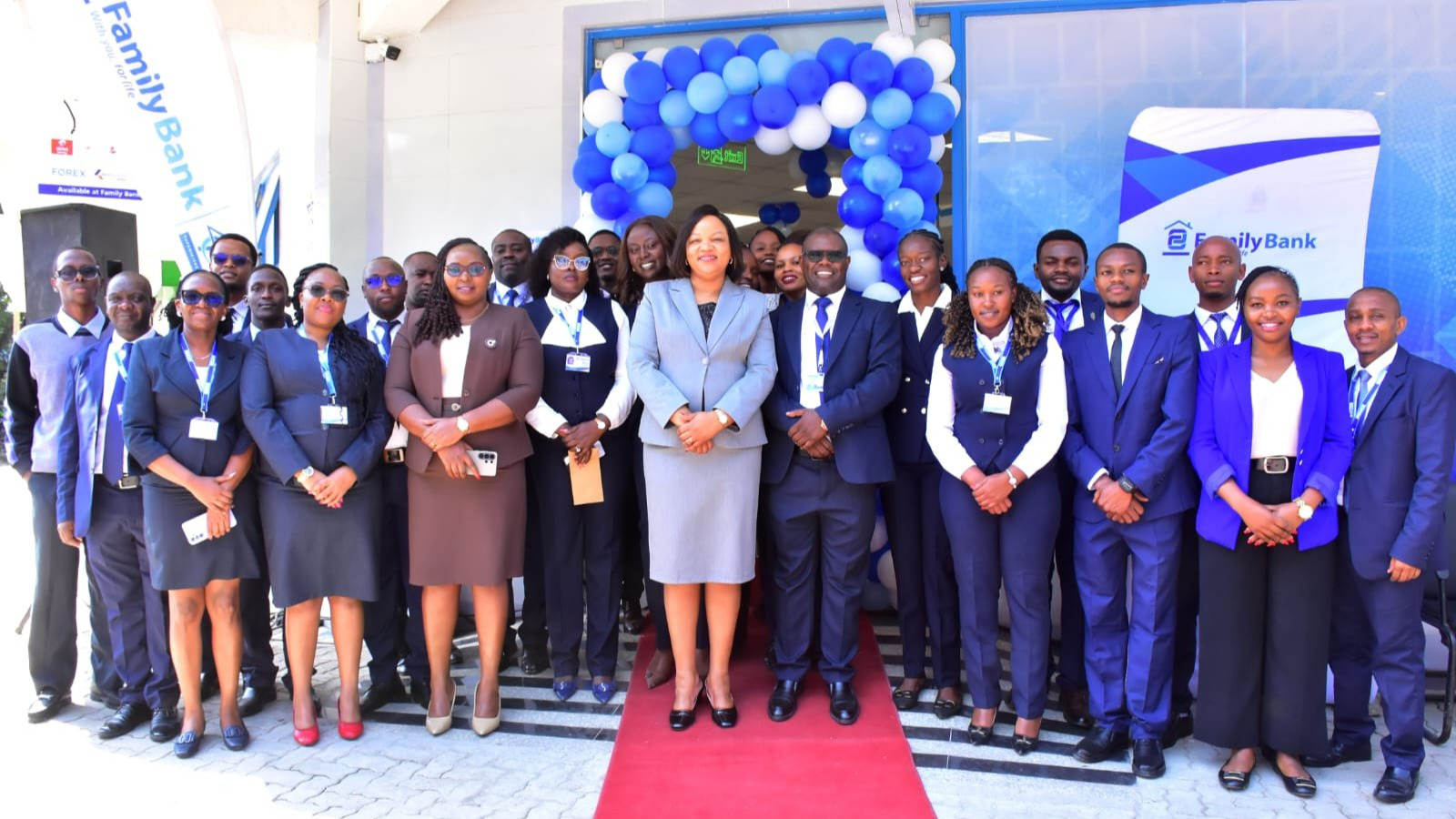
The move from Njoro House on Bondeni Road to Azuri Plaza along Oginga Odinga Street brings the branch into one of Nakuru’s most commercially active corridors, placing it within reach of the markets, businesses and residents that drive the city’s economy. For existing customers, the transition means the same team and services in a more spacious environment. For new customers, it opens the door to a bank that built its identity on serving people that larger institutions often overlook.
The Nakuru expansion reflects a deliberate pattern. As Family Bank grows its public profile through the NSE listing, it also continues to grow its physical footprint in the communities where that growth matters most.
What the NSE Listing Means for Kenya’s Capital Markets
Family Bank’s debut arrives at a moment of genuine revival for the NSE. No company floated on the Kenyan, Ugandan, Tanzanian or Rwandan exchanges in all of 2025. Family Bank follows Kenya Pipeline Company’s March 2026 debut, the country’s largest listing since Safaricom in 2008, which raised KSh 106.3 billion and was heavily oversubscribed. The NSE’s total value has since crossed KSh 3 trillion, roughly $23 billion, for the first time, with its All-Share Index up more than 18%.
NSE Chairman Kiprono Kittony said, “For many years, market participants have called for more listings, greater market depth and increased participation from high-quality private-sector issuers. The admission of Family Bank reinforces the position of the NSE as the premier platform for capital formation in East Africa.”
The Capital Markets Authority echoed that framing, reaffirming its commitment to responsive regulation and investor protection while working alongside the National Treasury and market intermediaries to sharpen Kenya’s competitive edge in regional capital markets.
The listing also arrives as digital trading platforms and mobile-based investment tools have significantly broadened access to the NSE, with Safaricom’s Ziidi Trader allowing millions of new investors to participate in equities trading directly from their phones. Family Bank, a lender that built its identity on reaching Kenyans underserved by conventional finance, now trades on an exchange increasingly accessible to the same people it set out to serve.
