



Huawei and Xiaomi rushed new foldable phones to market this week, timing their launches to land just before Apple unveiled its first folding iPhone. The move gave both Chinese companies a chance to put their devices in front of shoppers before Apple’s Wednesday event, letting consumers compare options while the Chinese phones already sat on store shelves.
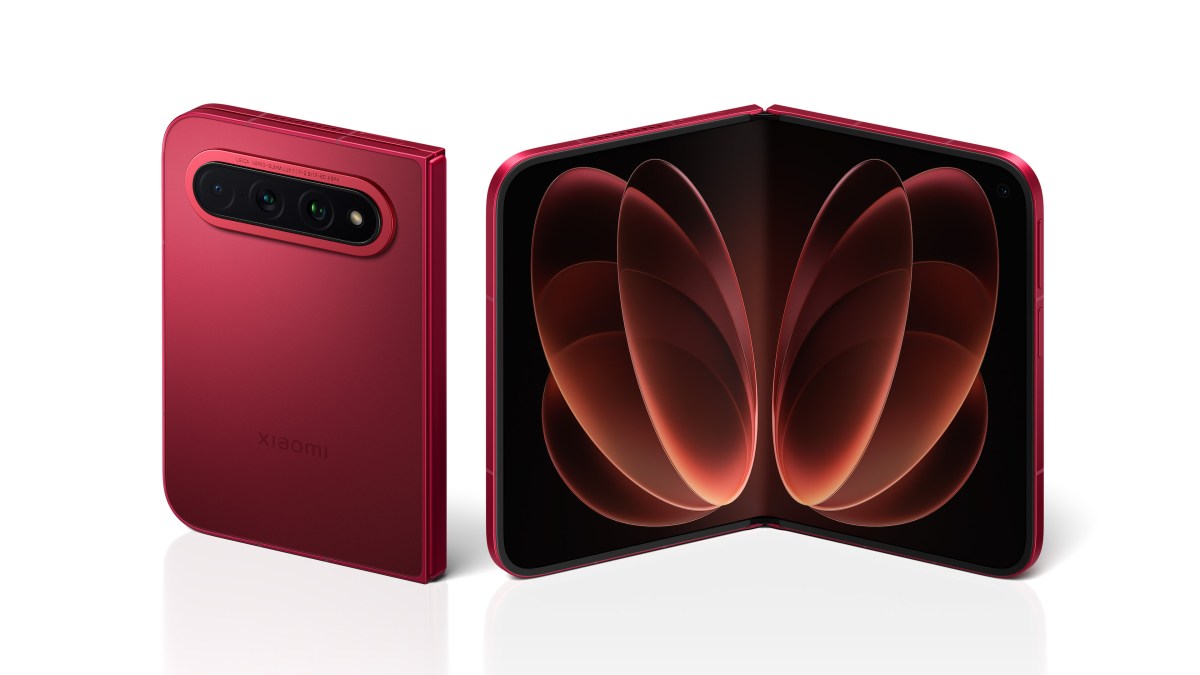
Xiaomi, the world’s third largest smartphone maker, introduced the Xiaomi 18 Fold on Monday. The device is sized like a passport, similar in form to Samsung’s Galaxy Z Fold8, which reached the market in July. Huawei followed the same day with the Mate XT2, the third generation of the trifold phone it pioneered.
Xiaomi Beat Apple to the Punch by Two Days
Xiaomi’s announcement landed just two days ahead of Apple’s own foldable reveal, and the company clearly wanted the comparison drawn. The 18 Fold shares the same wide book style form factor widely expected for Apple’s device, and it even ships in a cherry red colorway, a shade that had circulated in early rumors about Apple’s foldable.
The resemblance stops at the outside of the phone. Xiaomi built the 18 Fold around its own processor, the Xring O3, a chip the company designed in house and has touted as a major step forward in power efficiency. Buyers can choose 12 or 16 gigabytes of RAM alongside 256 gigabytes, 512 gigabytes, or a full terabyte of storage, with the 16 gigabyte configuration running on the faster LPDDR6 memory standard.
The folding display measures 7.58 inches across with a resolution of 2364 by 1672 pixels, while the outer cover screen comes in at 5.38 inches with a 1168 by 1712 pixel resolution. Both screens run at a 120Hz refresh rate and reach up to 4,000 nits of peak brightness, and the cover screen carries Xiaomi’s Shield Glass 3.0 for scratch protection.
On the camera side, Xiaomi paired a 200 megapixel main sensor, built on Samsung’s ISOCELL HP5 hardware, with a 50 megapixel periscope telephoto lens capable of 3.5 times optical zoom and 7 times zoom through sensor cropping, plus a 50 megapixel ultrawide camera. Each of the phone’s two screens gets its own 16 megapixel selfie camera.
A 6,000 mAh battery keeps the phone running, charging at up to 67W over a wired connection or 50W wirelessly. The 18 Fold runs Xiaomi’s HyperOS 4 software on top of Android 17, unlocks through a fingerprint sensor built into the power button, and includes stereo speakers with Dolby Atmos support. Folded, the phone measures 117.8 by 83.6 by 10.68 millimeters and weighs 219 grams.
Xiaomi 18 Fold Pricing
| Configuration | Price in Chinese Yuan | Approximate USD |
|---|---|---|
| 12GB RAM, 256GB storage | CNY 10,999 | $1,638 |
| 12GB RAM, 512GB storage | CNY 11,999 | $1,787 |
| 16GB RAM, 512GB storage | CNY 12,999 | $1,936 |
| 16GB RAM, 1TB storage | CNY 14,999 | $2,234 |
| Ceramic special edition, 16GB RAM, 1TB storage | CNY 15,999 | $2,383 |
The Mate XT2 Ultimate Design
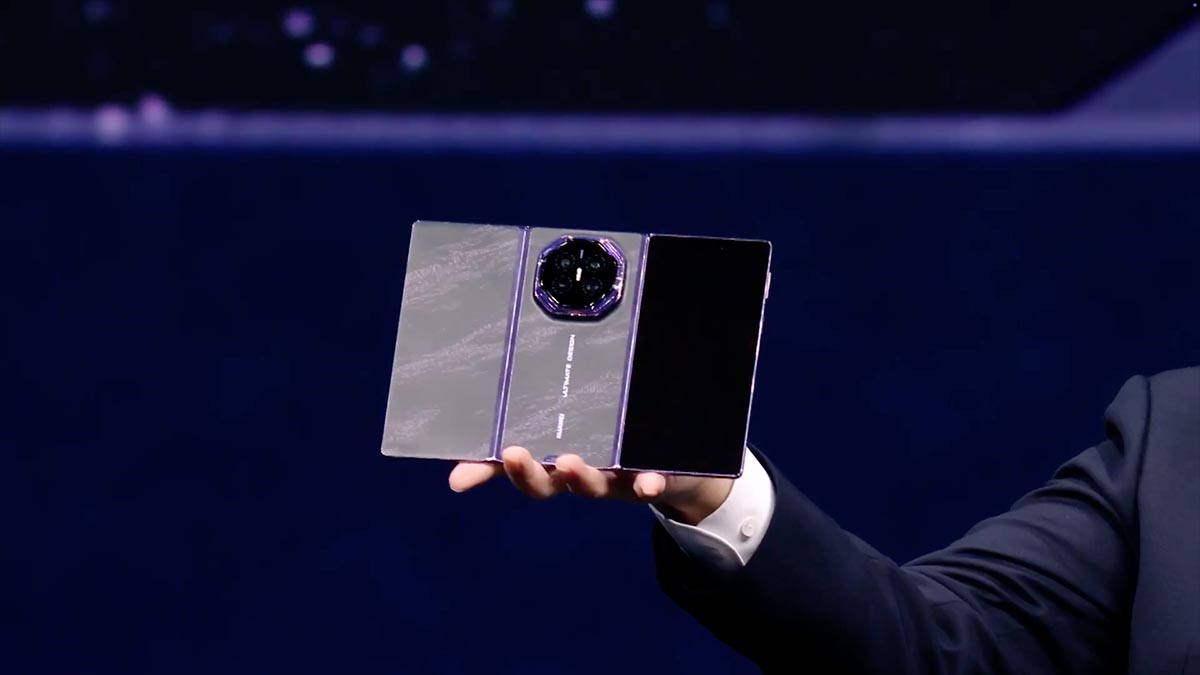
Huawei’s entry, formally named the Mate XT2 Ultimate Design, reworks the trifold concept it introduced with the original Mate XT. Where that first phone folded outward, the new model folds inward, tucking the screen away from scratches and drops when the phone sits closed in a bag or pocket.
Opened flat, the Mate XT2 reveals a 10.2 inch OLED display running at 3K resolution with an adaptive refresh rate that scales between 1Hz and 120Hz depending on what is on screen. Closed, users interact through a 6.5 inch cover screen shaped like a standard phone display, with a cutout for the selfie camera and face unlock sensor and a reflective coating meant to improve visibility at wide viewing angles.
Despite packing three folding panels, the phone measures just 3.5 millimeters thick when fully unfolded and weighs 299 grams, which Huawei says makes it the lightest trifold phone available. The design carries IP58 and IP59 ratings, giving it protection against dust and splashing water. Huawei also redesigned the hinge to keep the slim profile while smoothing out the folding motion, and the phone ships with distinct rear panel finishes alongside a large octagonal camera housing.
The standout feature sits underneath the folding hardware. The Mate XT2 is the first foldable phone to include a built in privacy screen, letting people use the device in public without a passerby easily reading the display over their shoulder.
Huawei built a four camera system around a 50 megapixel main sensor with a large 1/1.28 inch size, variable aperture, optical stabilization and an RYYB color filter arrangement designed to pull in more light. A 40 megapixel ultrawide camera and a 50 megapixel periscope lens with 3.5 times optical zoom round out the rear setup, alongside a multispectral camera Huawei says produces more accurate color. Both the inner and outer screens carry an 8 megapixel selfie camera with face unlock support.
Power comes from a new Kirin 9050 Pro chipset, built on Huawei’s LogicFolding architecture and rated 46 percent faster than the previous Kirin 9030 Pro. A 5,600 mAh battery backs up the hardware, charging at up to 66W over a wired connection and 50W wirelessly.
The phone runs HarmonyOS 7, Huawei’s newest software release, which leans on an on device AI model to power its Celia assistant and adds AI generated content tools alongside deeper multitasking support. Huawei has also refreshed the interface with animated light style sliders for volume and brightness controls.
Mate XT2 Ultimate Design Pricing
All storage tiers ship with 16GB of RAM.
| Configuration | Price in Yuan | Approximate USD |
|---|---|---|
| 256GB storage | CNY 19,999 | $2,979 |
| 512GB storage | CNY 21,999 | $3,277 |
| 1TB storage | CNY 23,999 | $3,575 |
| 1TB storage with privacy display | CNY 24,999 | $3,724 |
A Calculated Head Start
Industry analysts said both companies wanted their newest foldables available before Apple’s launch, so shoppers weighing a purchase would have a direct point of comparison already in hand.
Neil Shah, a partner at Counterpoint Research, said many longtime iPhone owners have held off switching to Samsung’s foldables while they waited to see what Apple would build, and some who did switch could return once an Apple option exists.
Counterpoint expects Apple to ship 6 million foldable iPhones this year, enough for a 25 percent share of the global foldable market. The firm projects that share could climb to 40 percent by 2027 as the category matures.
China Remains the Toughest Battleground
Globally, Samsung stands as Apple’s clearest foldable rival, having launched the first mainstream folding phone back in 2019. Inside China, though, Apple faces a deeper bench of competitors, led by Huawei, which controls more than two thirds of the country’s foldable market on its own.
Shah said Apple’s arrival is likely to pull in status conscious buyers who have been waiting for the brand to enter the category. He expects a wave of upgrades from existing iPhone owners in China moving toward the new foldable once it becomes available there.
Homegrown Chips Take Center Stage
Both Chinese companies used their launches to highlight processors they designed in house. Xiaomi said the 18 Fold runs on its latest chip, the XRing O3, built using an advanced manufacturing process. Huawei’s Mate XT2 runs on the new Kirin 9050 Pro, the first chip built on the company’s LogicFolding architecture, which Huawei says delivers 46 percent more performance than the previous Kirin 9030 Pro.
The chip announcements matter beyond bragging rights. Both companies have spent years building processor capability partly in response to United States trade restrictions that limited their access to American made chips, and each new release is a signal of how far that effort has progressed.
Foldable Lineup Comparison
| Phone | Maker | Screen Format | Starting Price | Key Feature |
|---|---|---|---|---|
| Xiaomi 18 Fold | Xiaomi | Passport sized fold | $1,638, China only | Xring O3 chip |
| Mate XT2 Ultimate Design | Huawei | Inward folding trifold | $2,979 | First foldable with a built in privacy screen |
| Galaxy Z Fold8 | Samsung | Book style fold | Released in July | Established market leader |
| iPhone Duo | Apple | Book style fold | $1,999 | Apple’s first foldable, unveiled Wednesday |
What This Means for Kenyan Shoppers
Foldables remain a small slice of the smartphone market, but the segment keeps growing even though its phones rank among the most expensive on the shelf.
With Huawei, Xiaomi, Samsung and now Apple all fighting for the same buyers, the next year will show whether folding phones can finally move from niche gadget to mainstream purchase.
