



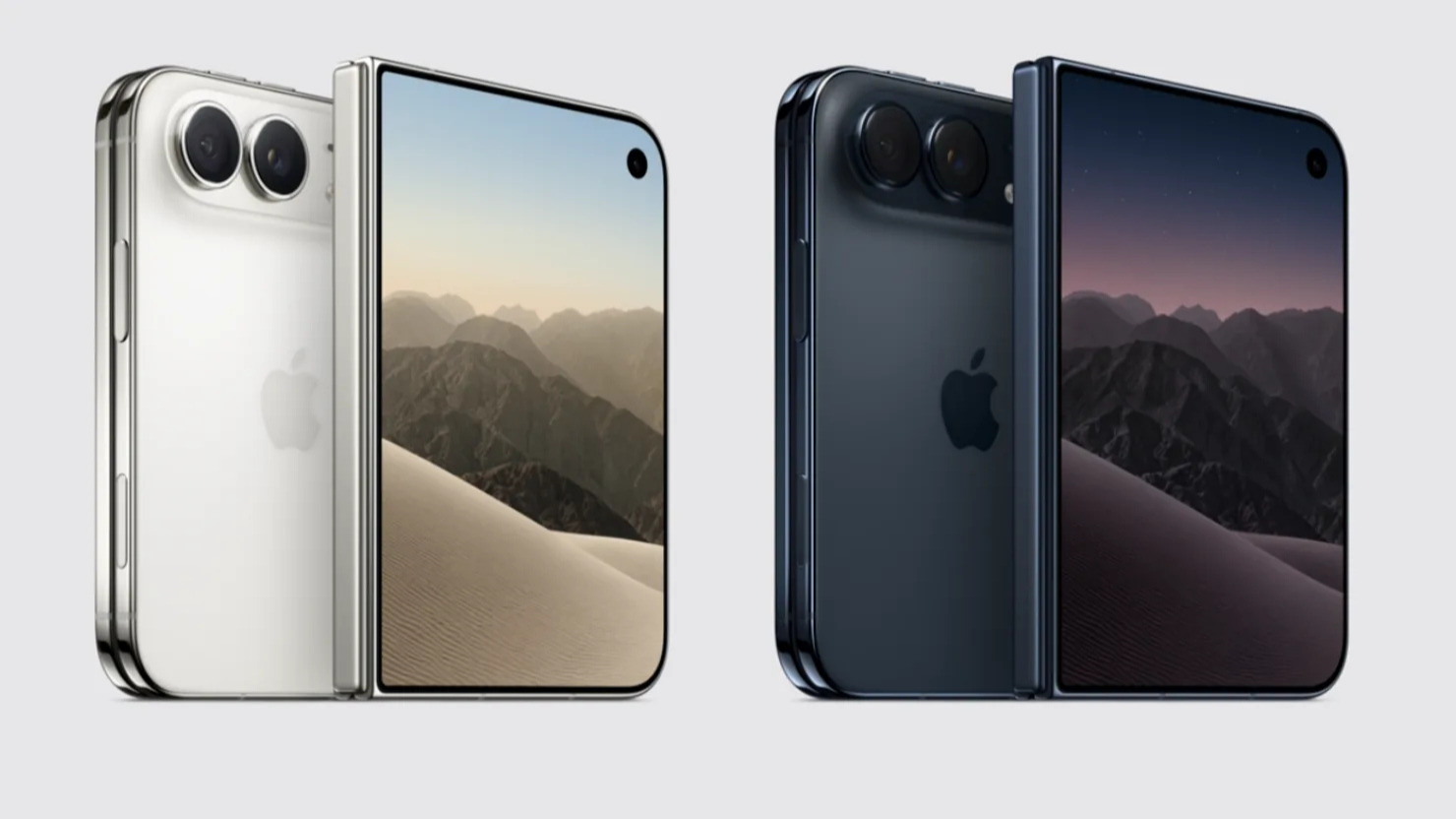
Apple introduced its first foldable phone on Wednesday, closing out a launch event that also marked new CEO John Ternus’s debut on stage. The iPhone Duo opens like a book into a wide interior screen, and it arrives seven years after Samsung shipped the first mainstream foldable.
Ternus took over from Tim Cook earlier this month and used his opening remarks to frame the iPhone as the device best suited to deliver artificial intelligence to everyday life. He then moved through a lineup that included the iPhone 18 Pro, AirPods 5, an updated Apple Watch and, finally, the Duo.
What the Duo Offers
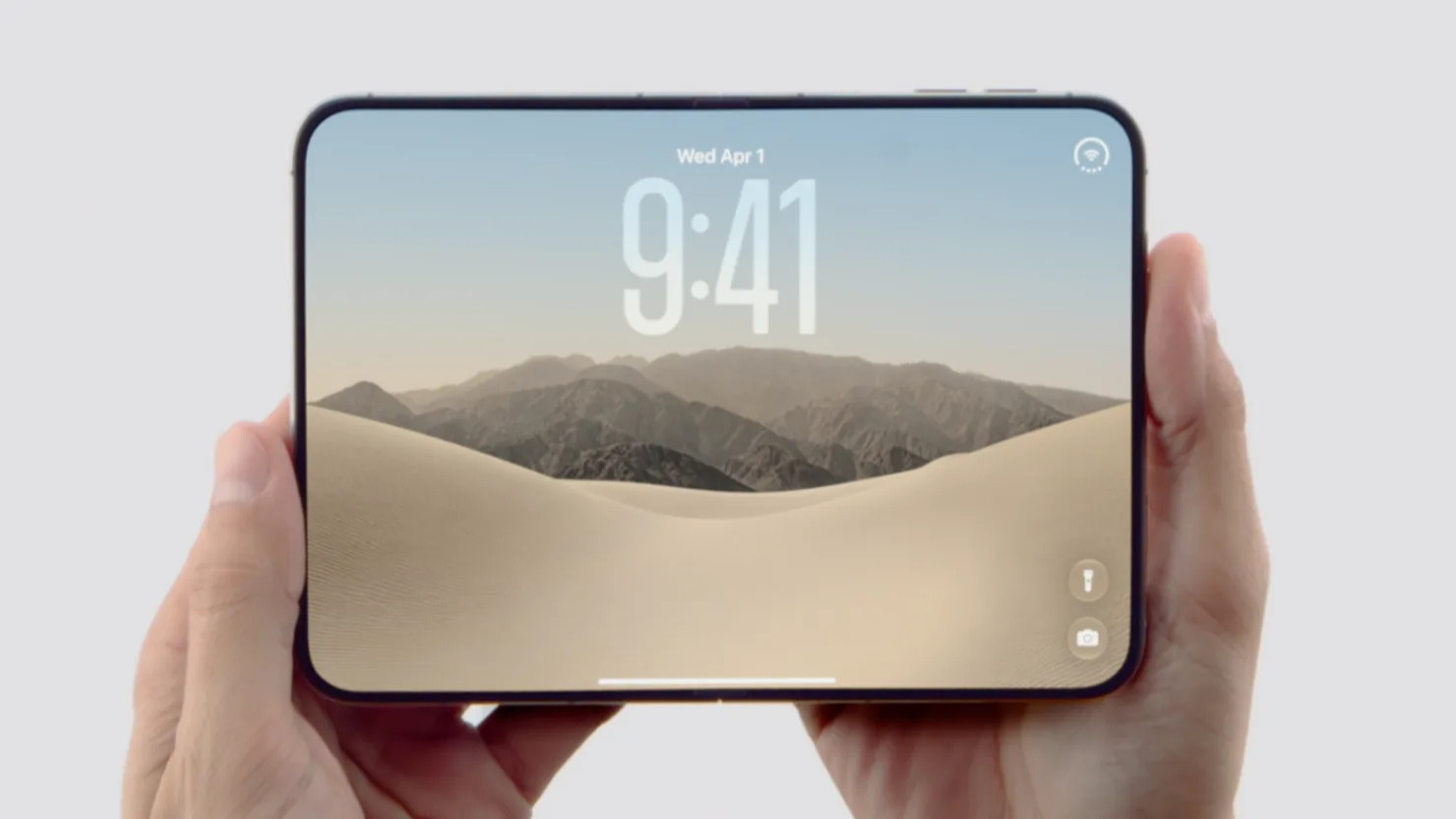
The Duo unfolds to a 7.6 inch Retina display, with a 5.4 inch screen on the outside. Apple built the case from titanium and placed the fingerprint sensor inside the side button rather than under the screen. A nanotexture finish on the inner display is meant to soften the crease and cut down on glare, a persistent complaint about earlier foldables from other brands.
Software chief Craig Federighi said Apple rebuilt large parts of iOS to take advantage of the second screen, moving controls and enabling split screen multitasking. The phone also supports Apple’s stylus, called Pencil.
Ternus argued that Apple’s approach avoids the compromises of rival designs. He said other foldables feel like two phones stuck together, and pitched the Duo as a single device built around a larger display from the start.
The iPhone Duo costs $1,999 for the 256GB model. Preorders open October 16, with the phone reaching stores on October 23.
iPhone Duo
iPhone 18 Pro and iPhone 18 Pro Max
Apple Watch Series 12 and Apple Watch Ultra 4
AirPods 5… and Joz pic.twitter.com/TWj3GjDSmk
— John Ternus (@johnternus) September 9, 2026
Price Increases Across the Lineup
Component costs, particularly for memory, pushed prices higher across the new iPhone lineup. The iPhone 18 Pro starts at $1,199, and the Pro Max starts at $1,299, both $100 more than last year’s models. Preorders begin Saturday, and the phones ship September 18.
The new A20 Pro chip powers the Pro models and is the first high volume smartphone processor built on a 2 nanometer manufacturing process. Apple said the chip’s six core processor runs up to 20 percent faster, while its new graphics cores deliver up to a 40 percent performance gain. Memory bandwidth rose by half, which Apple attributed to placing the logic and memory chips side by side on the same package.
Apple also debuted a second generation modem called C2, cutting further into Qualcomm’s hold on iPhone connectivity. Hardware chief Johny Srouji said the modem runs 50 percent faster than its predecessor while using 15 percent less power, and it adds support for 5G millimeter wave networks in the United States.
Apple Watch pricing held steady. The Series 12 starts at $399, and the Ultra 4 starts at $799.
Siri Finally Arrives, Plus New Health and Privacy Tools
Apple’s AI powered Siri, first previewed in June, made its full debut at the event. The company said the assistant can now act inside apps the user already has installed, including apps built by other companies, and that it works across more than 300,000 apps.
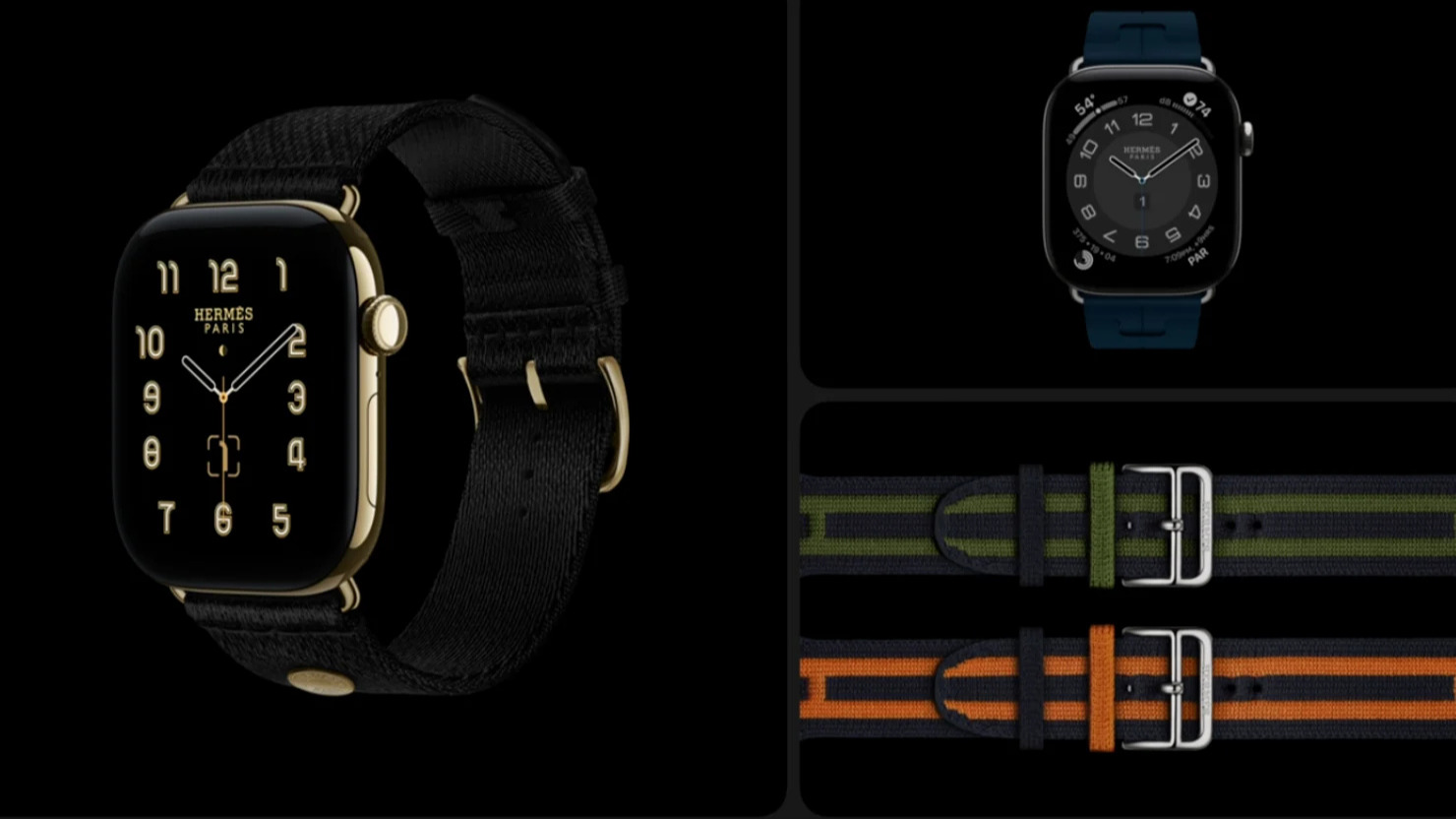
The Apple Watch Series 12 gained a feature called Audio Intelligence, which uses the watch’s microphone to capture conversations and let users replay the last 15 seconds of what was said. A companion feature, Siri Recap, summarizes longer conversations such as meetings into short notes with a title and key points. Apple said the feature runs without storing or sharing raw audio, and the tools will reach beta later this year.
On the camera side, Apple added a feature called Reference Image, which signs photo data at the pixel level when a picture is captured, giving users a way to prove an image came from an iPhone rather than an AI tool. Apple said the feature will not be available in the European Union or China.

Samsung Moves to Defend Its Turf
Samsung is not standing still while Apple enters the foldable market it built. A company spokesperson told CNBC that the share of iPhone owners switching to Samsung’s latest Galaxy Z Fold8 lineup, launched in July, ran 1.6 times higher than the switching rate for the previous Z Fold7 and Flip7 generation.
In the United States, 30 percent of Galaxy Z Flip8 buyers came from competing brands, and Samsung said most of them were buying a foldable phone for the first time. Fold8 buyers cited the phone’s thin design and inner screen for multitasking, while Fold8 Ultra buyers pointed to its larger screen as a substitute for carrying a separate tablet.
Samsung has also worked to lower the barrier for iPhone owners considering a switch, recently upgrading its Smart Switch tool to move data between the two ecosystems more easily.
Samsung pioneered the folding phone category with the original Galaxy Fold in 2019 and has led the segment ever since, shipping about 19.6 million foldable units in 2025.
Chinese rivals Huawei and Xiaomi also released new foldables this week, with Huawei’s Mate XT2 trifold and Xiaomi’s passport sized 18 Fold arriving just before Apple’s event. Foldables still make up a small slice of the smartphone market, roughly 2.2 percent of global unit shipments, but Apple’s entry is widely expected to pull the category into the mainstream.
What It Means for East African Buyers
Khusoko has not yet published Kenyan pricing for the iPhone Duo, but its coverage of Samsung’s February launch offers a useful preview of what shoppers in the region should expect.
When Samsung introduced the Galaxy S26 series in Nairobi, it raised prices across the lineup and pointed to the same global memory shortage now pushing Apple’s costs higher.
Samsung’s Galaxy S26 and S26 Plus each rose by $100 over their predecessors, mirroring the increase Apple just applied to the iPhone 18 Pro line, and Khusoko reported that analysts expect average smartphone prices worldwide to keep climbing into 2027 as memory supply stays tight.
New Lineup at a Glance
| Product | Starting Price | Availability |
|---|---|---|
| iPhone Duo | $1,999 | Preorder Oct 16, ships Oct 23 |
| iPhone 18 Pro | $1,199 | Preorder Sept 13, ships Sept 18 |
| iPhone 18 Pro Max | $1,299 | Preorder Sept 13, ships Sept 18 |
| Apple Watch Series 12 | $399 | Later this year |
| Apple Watch Ultra 4 | $799 | Later this year |
| AirPods 5 | $129, $149 with wireless charging | Available now |
Apple built its foldable debut around a simple bet: that a decade of watching Samsung, Huawei and Xiaomi refine the category gave it room to launch a more polished version.
Whether that patience pays off now depends on customers willing to pay nearly $2,000 to find out.
