


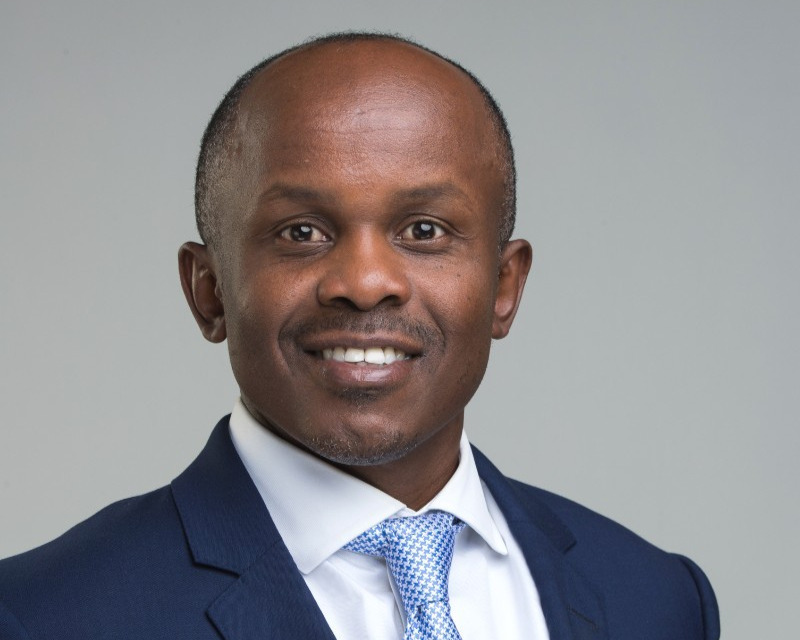
Dr James Mworia has been appointed founding Chief Executive Officer of the National Infrastructure Fund (NIF), the National Infrastructure Fund Board announced on Monday, September 7, handing him the task of mobilising billions of shillings for the country’s biggest infrastructure projects.
The board said the appointment followed a competitive recruitment process and took effect immediately.
“The Board of the National Infrastructure Fund is pleased to announce the appointment of Dr James Mworia, MBS, as founding Chief Executive Officer, following a competitive recruitment process with effect from 7 September 2026,” the board said in a statement.
What The National Infrastructure Fund Does
President William Ruto signed the National Infrastructure Fund Act into law in March 2026, opening the door to an estimated Sh5 trillion in spending on roads, railways, ports, airports, irrigation and energy over the next decade. The legislation, sponsored by National Assembly Majority Leader Kimani Ichung’wah, shifts Kenya away from debt-dependent, budget-cycle financing toward a fund built to pull in private capital alongside public money.
The blended-finance model aims to make every shilling the government commits attract as much as Sh10 from private sector partners, including pension funds and international financial institutions. Kenya’s pension industry gives the fund a sizeable pool to draw from. Pension assets grew by roughly Sh700 billion last year, a 25 percent rise that pushed the total pool to about Sh2.81 trillion, and the fund is designed to channel part of that capital into infrastructure.
Government seed capital will come largely from privatisation proceeds. The Jomo Kenyatta International Airport expansion sits first in line for funding, with an estimated Sh15 billion to Sh20 billion, roughly $155 million, from proceeds of the Kenya Pipeline Company IPO, which raised Sh106.3 billion through the sale of a 65 percent government stake. Ruto has pointed to similar national funds already running in Nigeria, Ghana, India, Canada, the United Kingdom and South Africa as models for the approach.
Beyond JKIA, the pipeline includes the Loosuk-Lessos power transmission line, plans to extend the Standard Gauge Railway to Malaba, roughly 2,500 kilometres of dual carriageway, and 10,000 megawatts of new clean energy capacity.
From Board Member To Chief Executive
Mworia’s appointment as CEO comes two months after he first joined the institution. Treasury Cabinet Secretary John Mbadi appointed him to the NIF board on July 8, 2026, alongside five other members, as the government worked to get the fund’s governance structure in place before opening the CEO recruitment. The NIF board seats eight members in total: four competitively recruited independent directors, three public officers and the CEO, with a governing council chaired by Mbadi setting overall investment policy.
The board said Mworia’s background in investment management, enterprise development and capital mobilisation would matter as the fund begins operating.
“The Board is confident that Dr Mworia’s record of building institutions and enterprises, mobilising capital and bringing investments to market will enable NIF to deliver critical infrastructure, deepen Kenya’s capital markets, raise productivity and strengthen Kenya’s competitiveness,” the board said.
A Track Record Built At Centum
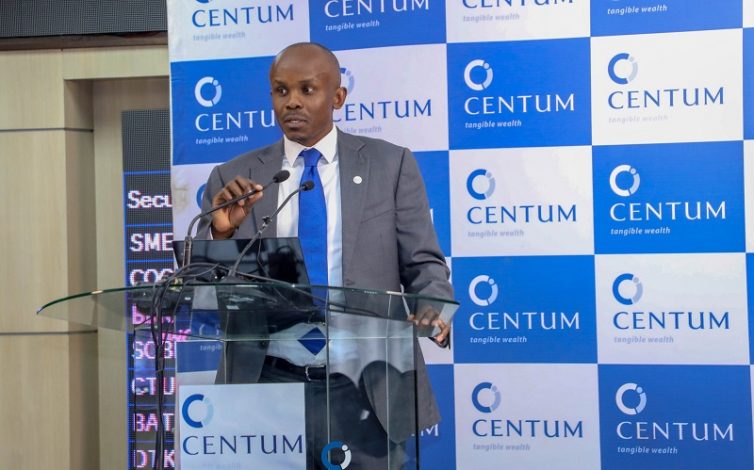
Mworia brings more than 25 years of experience in investment management, enterprise development and capital allocation, and has operated at principal-investment level since 2005. He spent 17 years as Group Chief Executive Officer and Managing Director of Centum Investment Company Plc, one of East Africa’s leading publicly listed investment firms.
Under his leadership, Centum’s total assets grew tenfold, from Sh4 billion on a Sh200 million overdraft in December 2008 to roughly Sh46 billion. He retired Sh20 billion in group debt, eliminated holding company leverage, and built out flagship strategic platforms including Vipingo SEZ, Pearl Marina and TRIFIC SEZ without raising additional equity, delivering an estimated Sh5.8 billion in cumulative dividends to shareholders along the way.
Centum’s board announced Mworia’s exit in a separate statement issued the same day, appointing Thomas Omondi-Acholla, currently the company’s Group Chief Operating Officer and Partner for Portfolio Operations, as Acting Group CEO. Centum board chairman Dr Donald Kaberuka called Mworia’s departure the end of “a legendary era of service” and said his move to the NIF was “a testament to his exceptional leadership.”
Mworia holds a Bachelor of Laws degree from the University of Nairobi and is an Advocate of the High Court of Kenya. He is also a Certified Public Accountant, a Chartered Global Management Accountant and a CFA charterholder, and belongs to the Law Society of Kenya, the Institute of Certified Public Accountants of Kenya, the Chartered Institute of Management Accountants and the CFA Institute. He has also served on the boards of the Nairobi Securities Exchange and the Central Depository and Settlement Corporation.
His appointment lands as the government looks for ways to fund infrastructure without piling on more public debt, a pressure that has shaped much of its economic policy over the past two years.
Own Words
Mworia framed the appointment as both a personal milestone and a national responsibility.
“I am deeply honoured to have been appointed the founding Chief Executive Officer of Kenya’s National Infrastructure Fund,” he said. “I accept this responsibility with gratitude, humility and a clear sense of the work ahead.”
He credited the NIF board for the confidence placed in him and pointed to work already under way. “Having had the privilege of serving on the Board, I have seen firsthand the important foundational work already undertaken, and I look forward to working with the Board and our team to translate that foundation into execution and impact,” he said, also thanking the government “for the vision and boldness to establish and seed the NIF.”
Mworia described infrastructure as fundamentally a human concern rather than a technical one. “Infrastructure is about people,” he said. “It connects people to opportunities, businesses to markets and communities to essential services. It should make people’s lives better and create the conditions for them to thrive.”
He pointed to a specific problem the fund is built to solve: the shortage of patient, long-term equity capital for infrastructure projects. “There is substantial domestic and global capital seeking well-structured infrastructure investments,” he said. “The challenge is converting infrastructure needs into commercially viable and investable assets.”
His strategy centres on using NIF money to unlock much larger pools of outside capital. “By deploying NIF capital catalytically, particularly into project development and equity, we can develop viable projects, take them to financial close and crowd in substantially larger amounts of domestic and international capital,” he said. “Our ambition is to preserve and grow the endowment while continuously recycling capital into new generations of infrastructure, creating a permanent engine for infrastructure investment.”
He signalled urgency around near-term priorities. “Kenya has important infrastructure projects that need to move from plans into execution,” he said. “Our immediate priority is to identify viable projects, resolve the remaining commercial, technical and financing issues, and take some of them to financial close as soon as possible.”
Mworia closed by tying his own career to the mandate ahead. “I have spent much of my professional life investing, building enterprises and mobilising capital,” he said. “I now have the extraordinary privilege of applying that experience to a broader national mission. The work now is to translate this mandate and capital into investable projects and infrastructure that improves lives, expands opportunity and enables Kenyans to thrive.”
“Today was my first day in this new role,” he added. “The work has begun, and I am deeply grateful for the opportunity to serve.”
