



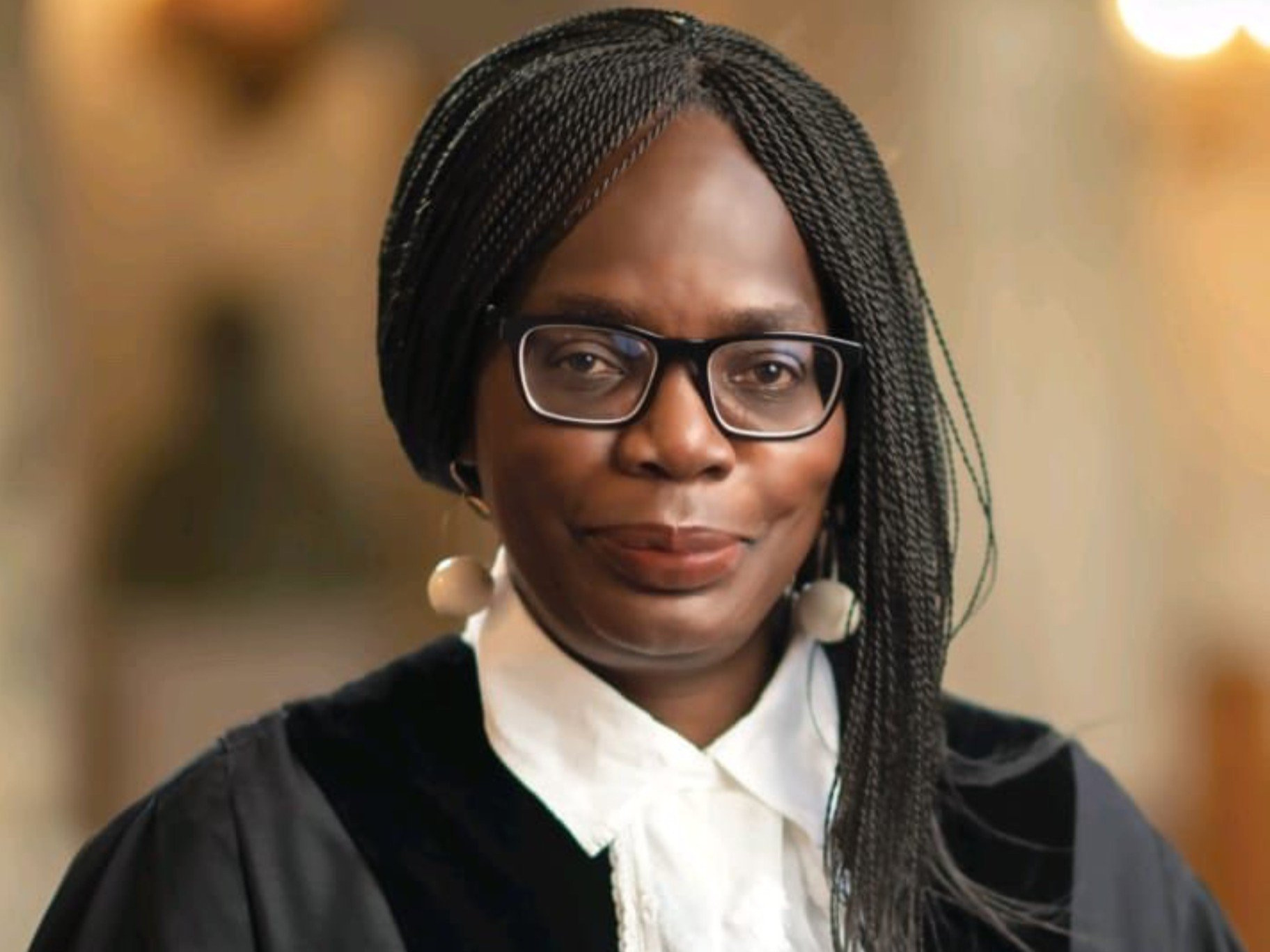
Professor Phoebe Okowa has won a full nine year term as a judge of the International Court of Justice (ICJ). She secured the required majority in both the UN General Assembly and the Security Council, which voted at the same time on Tuesday, November 3, 2026.
The vote
Nine candidates competed for five seats. The court’s statute requires each winner to hold an absolute majority in both bodies, and the two vote separately.
Okowa won alongside four other candidates:
- Dapo Akande, United Kingdom, professor of Public International Law at the University of Oxford and a member of the UN International Law Commission.
- François Alabrune, France, a legal expert and diplomat.
- Mahmoud Daifallah Hmoud, Jordan, a sitting ICJ judge first elected in 2025 to fill a vacancy.
- Rena Lee, Singapore, her country’s Ambassador for International Law. She previously led the negotiations behind the UN agreement on conserving marine biodiversity in areas beyond national jurisdiction.
The five winners start their terms on February 6, 2027, and serve until 2036. The court has 15 judges and sits in The Hague, Netherlands.
Why this was a second election
Okowa already sits on the court. She won a by election in November 2025 to fill the seat left by Somalia’s Abdulqawi Yusuf, who resigned. Khusoko reported her win as the first time a Kenyan had been elected to the ICJ. That term runs only until February 5, 2027, so Kenya ran a second campaign to secure her a full term.
In January 2026, the Ministry of Foreign Affairs formally launched her candidacy for the 2027 to 2036 term. Foreign Affairs Principal Secretary Korir Sing’oei later said 26 national groups had co-nominated her, the most for any African ICJ candidate to date.
What Kenya’s officials said
Sing’oei said the result reflects the international community’s confidence in her ability to serve the court at a consequential time. He thanked members of both UN bodies and the teams that ran the campaign. He also acknowledged Sierra Leone, Korea and Ecuador, which withdrew their candidates after the third round of voting. In his view, that helped avoid a prolonged election.
The African Union’s mission to the UN congratulated Okowa and said her election sustains African representation on the court. It added that African women continue to contribute to international judicial leadership.
President William Ruto called her election a moment of pride for Kenya and an affirmation of the legal expertise and integrity the country contributes internationally.
Who Okowa is
Okowa is a professor of Public International Law at Queen Mary University of London, where she also serves as Director of Graduate Studies. She was elected to the UN International Law Commission in 2021 and became the first African woman to serve on that body. Kenya appointed her to the Permanent Court of Arbitration in The Hague in 2016.
What the court does
The ICJ was established under the UN Charter in 1945. It settles legal disputes between states and gives advisory opinions on legal questions referred to it by authorised UN bodies and agencies. Its rulings shape how international law is interpreted and applied.
For Kenya, Okowa’s election keeps a Kenyan judge on the bench for the next nine years.
