



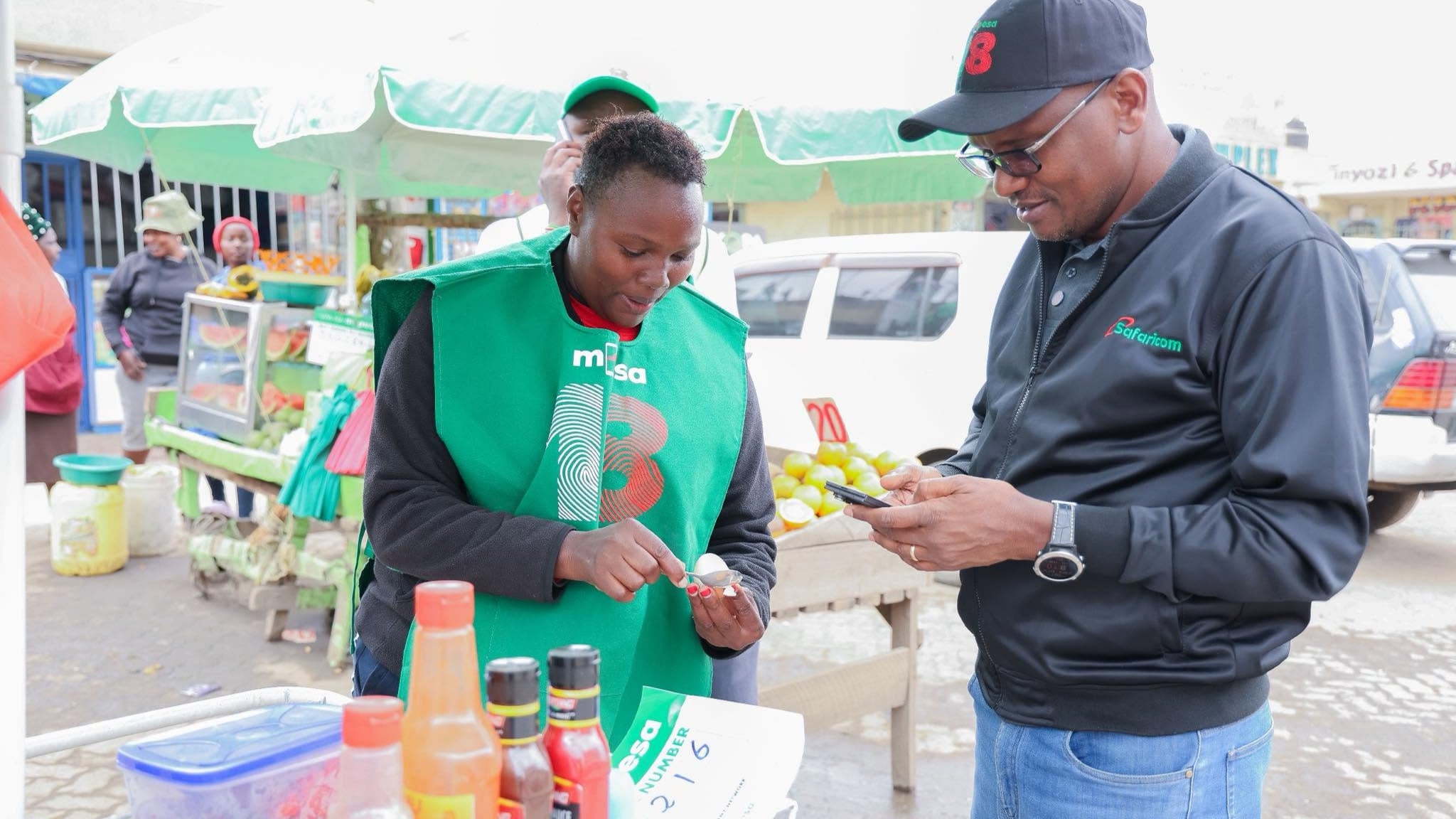
About 81% of M-Pesa merchant payments by volume carried no fee in Safaricom’s latest half-year, while M-Pesa revenue topped KSh100 billion for the first time.
Safaricom Chief Financial Officer Dilip Pal said the company raised the payment limits that qualify for no fee. Most payments at a till now fall under those limits.
Revenue still climbed. M-Pesa revenue grew 13.6% in the first half of the 2026/27 financial year (HY27), while transaction volume grew 25%. Revenue rose more slowly than activity.
M-Pesa revenue passed KSh100 billion as volume rose 25%
M-Pesa supplied 55% of the growth in Safaricom Kenya’s service revenue and now makes up 46.3% of the total, according to the results presentation. Kenya service revenue grew 11.3% to KSh216 billion.
Transaction value rose close to 17%. Volume in business payments, global payments and financial services rose 56%, Pal said, while traditional areas stayed close to flat.
M-Pesa merchant payments up to a set limit now carry no fee
Pal said Safaricom raised the no fee limit for smaller merchants from KSh100 to KSh200 and for formal merchants from KSh200 to KSh500. With both changes in place, he said, “81% of the volume is zero.”
Chief Executive Peter Ndegwa said Safaricom delivers value, he said, “with approximately 80% of our merchants’ transactions now free.”
Consumer payments follow the same pattern. They grew 14% while 63% of them carried no fee, Pal said.
Pal linked the shift to pressure on household budgets. Ndegwa said higher food, fuel and transport costs squeeze incomes and customers are “seeking value.”
Safaricom accepts a falling take rate and relies on volume
The take rate is the revenue Safaricom earns on each transaction. Pal said it has fallen and will keep falling, by design. He called the business “a platform game.”
The number of chargeable transactions per customer per month, meaning those that carry a fee, rose from 13.1 in 2020 to 51 this half year. It grew 31.5% over the period.
Pochi tills doubled to 3.2 million as street traders joined
Safaricom’s KPI table shows 4.62 million merchants, up 93.3% from 2.39 million a year earlier. Lipa na M-Pesa active merchants rose 55% to 1.39 million. Pochi tills rose from 1.50 million to 3.23 million.
Pal said Pochi tills serve merchants on the street and in small markets. He said the product did not exist four years ago, to the best of his recollection.
The counts cover active merchants only, he said, so they exclude those who dropped off. Merchant transaction volume rose 53%. Business payments supplied about a third of the growth in M-Pesa revenue and volume, with volume up 26%.
Safaricom plans credit and software for merchants next
Ndegwa said the second half will bring “more services to those merchants, especially credit services,” with partners, plus tools to help them run their businesses.
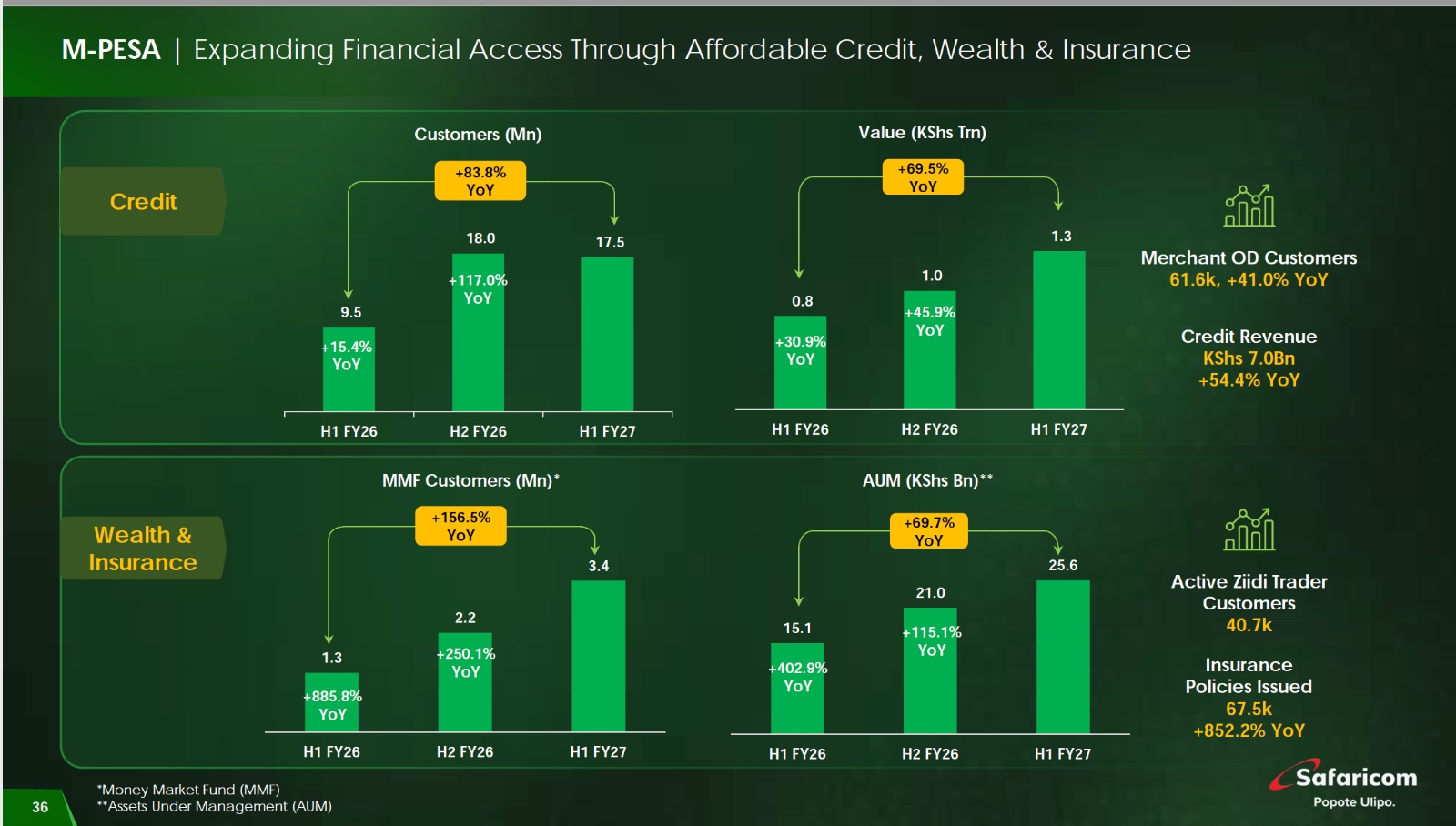
Safaricom has already moved into lending. Financial services revenue grew 55%, which Safaricom said includes credit, wealth and insurance. Credit customers rose 84% to 17.5 million, and credit revenue rose 54%. Loans disbursed rose 70% to KSh1.3 trillion.
Group service revenue grew 13.1% in the same period, with Ethiopia contributing 17% of the increase.
The figures to watch in the second half are the share of merchant payments at no fee and M-Pesa revenue growth against volume growth. Ndegwa’s merchant credit and software services will show whether Safaricom can earn from merchants in other ways.
