


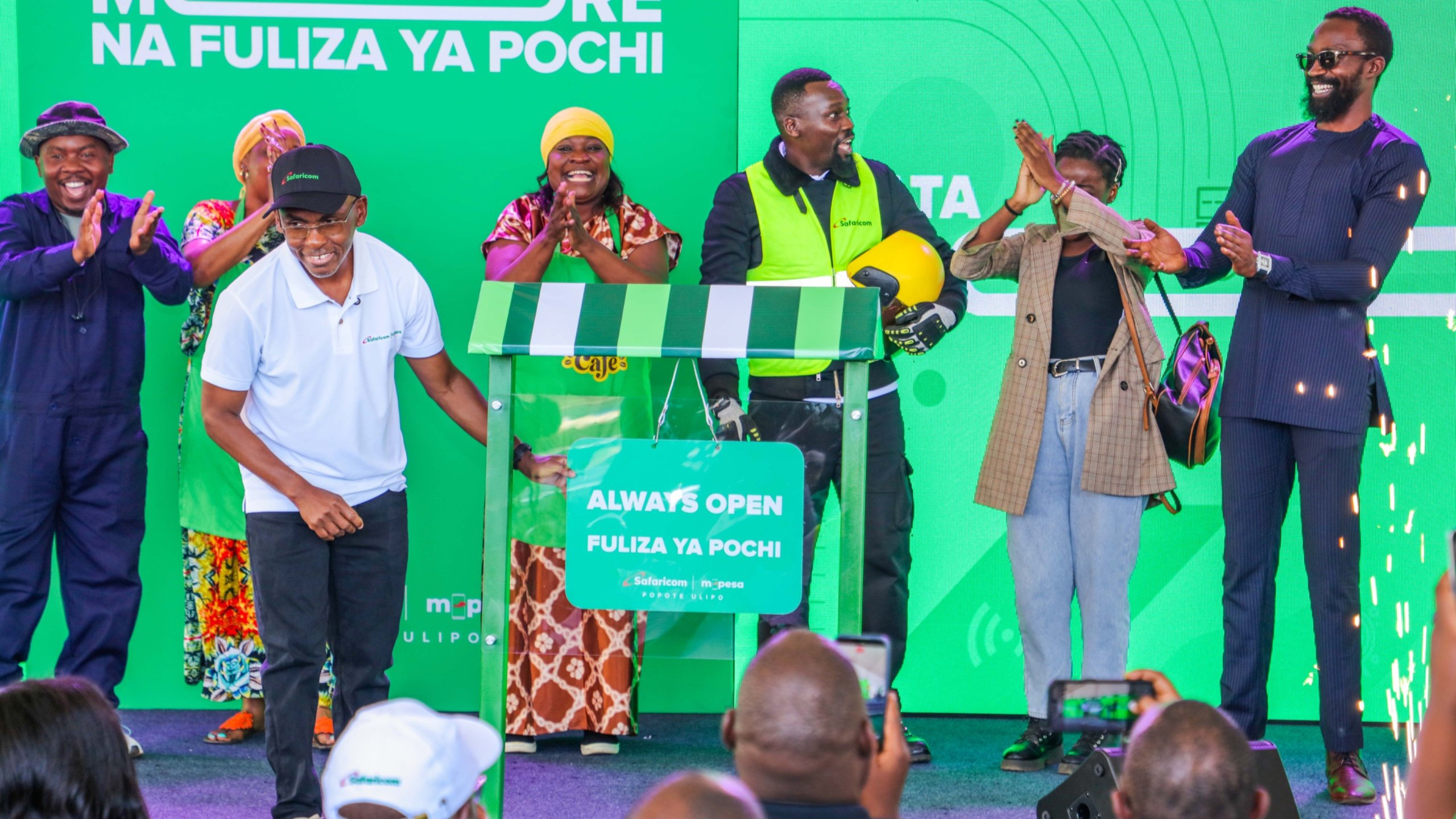
Safaricom launched Fuliza Ya Pochi in Thika on 22 October 2026. The overdraft lets qualifying Pochi La Biashara merchants complete payments when their wallet balance falls short. More than one million merchants qualify, out of more than two million on the platform. Safaricom’s FAQ gives the charges: a 1 percent fee on each disbursement, a 48 hour interest free period, and a daily fee after that.
The company said the product gives merchants credit “based on how their business actually moves.” The FAQ calls the product Pochi Fuliza.
What merchants can pay for
Merchants can use the overdraft to pay a Buy Goods till, send money to a mobile number or customer, and pay utilities through Pay bill. Safaricom’s launch release adds supplier payments to the list. The aim is to keep shops trading when a wallet runs empty before the next sale.
Peter Ndegwa, Group CEO of Safaricom PLC, said micro businesses face “daily cash flow gaps” that can mean “missed sales, delayed stock purchases, or postponed supplier payments.” It is “a credit product for all our Pochi customers.”
Who qualifies and how to enrol
A merchant must opt in to Pochi La Biashara and must have been active on it for more than six months. Merchants enrol through the Pochi Mini App on My OneApp or by USSD. Safaricom lists these USSD steps:
- Dial *334# from the Pochi wallet number.
- Select option 8, Pochi la Biashara.
- Select option 4, Pochi Fuliza.
- Select option 1, Join now.
- Accept the terms and conditions.
- Enter the PIN.
A text message then confirms the opt in and states the limit assigned. Safaricom sets each limit from the merchant’s business activity.
How the overdraft works
When a payment exceeds the wallet balance, the merchant gets a prompt that states the amount about to be overdrawn. The merchant accepts or rejects it, and the payment completes only on acceptance. A merchant can keep making payments until the limit is reached. The minimum transaction is KES 1.
What the overdraft costs
Safaricom’s FAQ states the pricing. The merchant gets a 48 hour interest free period before a daily maintenance fee applies. Each disbursement carries a 1 percent interest fee. The daily fee depends on the amount overdrawn:
| Amount overdrawn (KES) | Fee (KES) |
|---|---|
| 0 to 100 | 0 |
| 101 to 500 | 3 |
| 501 to 1,000 | 6 |
| 1,001 to 1,500 | 21.60 |
| 1,501 to 2,500 | 24 |
| 2,501 to 70,000 | 30 |
Repayment and default
The overdraft is payable within 30 days, and Safaricom encourages merchants to clear it sooner. Repayment comes out automatically from payments into the Pochi wallet. If the wallet holds no funds, the system keeps retrying until money arrives. A merchant can also pay early.
Late payment has consequences. The merchant loses access to the overdraft and the limit shrinks. Safaricom lists a defaulter on the credit reference bureau 91 days after the due date.
Limit, balance and opt out
Safaricom ties limit growth to use: “The more you transact the more you grow your limit,” the FAQ says, and it asks merchants to encourage customers to pay through the Pochi wallet. Merchants check the balance, mini statement and due date by USSD. They dial *334#, select option 8, then option 4, then query balance.
They can opt out from the same menu once they have settled any balance. Support runs through lines 100 and 200, Safaricom’s social media accounts and retail shops.
How it fits Safaricom’s credit range
Fuliza Ya Pochi is the fourth credit product aimed at small traders on M-PESA.
- Fuliza (2019): Customers complete transactions when their M-PESA balance falls short.
- Fuliza ya Biashara: Qualifying Lipa na M-PESA merchants get an overdraft.
- Mkopo wa Pochi (2024): Safaricom and Pezesha introduced loans for micro entrepreneurs such as food vendors, kiosk owners and boda boda operators. At the time, Pochi La Biashara had more than 632,000 active merchants, who processed KES 73 billion between March 2023 and March 2024. Late repayments carried a 1 percent daily penalty for up to seven days.
- Taasi Pochi (2025): Safaricom introduced loans from KES 1,000 to KES 250,000, paid straight into the Pochi wallet.
The earlier products required a loan application. Fuliza Ya Pochi works as an overdraft, drawn at the point of payment. Safaricom launched Pochi La Biashara in October 2020, as a wallet that keeps business money apart from personal funds.
Lower charges on Pochi payments
The launch follows a Safaricom cut in Pochi La Biashara charges. For three months, customer payments up to KES 200 carry no charge. Payments above KES 200 carry half the usual charge, capped at KES 50.
What merchants should weigh
Borrowing costs matter more as prices rise. Khusoko reported that Kenya’s annual inflation rose to 7.3 percent in October from 6.8 percent. A credit bureau listing after 91 days adds a longer term cost to a missed repayment.
Fraud is a second risk. Khusoko published a guide to spotting deepfake Fuliza adverts in three steps. Safaricom cut fraud incidents by 82 percent in its 2026 financial year, though it missed its target.
Merchants should enrol only through the Pochi Mini App or *334#, and should read the fee table before they accept an overdraft prompt.
