



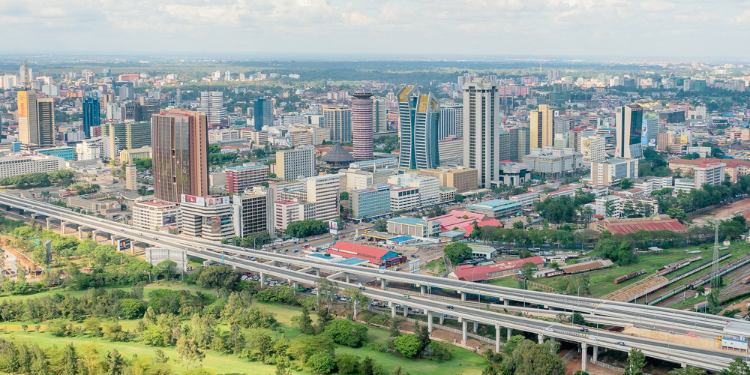
Kenya informal jobs made up 83.8 per cent of employment in 2025, the World Bank said at the launch of its 34th Kenya Economic Update in Nairobi on Wednesday 4 November 2026.
Treasury Principal Secretary Chris Kiptoo cited growth averaging 5 per cent a year from 2022 to 2025 at the same event. The report also records October inflation of 7.3 per cent, as higher fuel and food prices raise the cost of living.
Kiptoo represented Cabinet Secretary for the National Treasury John Mbadi at the launch in Upper Hill. He said average growth of 5 per cent beat the global average of 3.5 per cent and the Sub-Saharan Africa average of 4.1 per cent. He credited improving conditions, rising government revenue and investor confidence.

The World Bank confirms 5 per cent growth, but yearly figures slowed
The report says growth averaged about 5 per cent over 2022 to 2025. Its yearly figures show 5.7 per cent in 2023, 4.7 per cent in 2024 and 4.6 per cent in 2025, before growth rose to 5.2 per cent in the first half of 2026.
The report projects 4.6 per cent growth for 2026 and 4.4 per cent for 2027. A year ago the World Bank projected 4.9 per cent for 2026.
Kenya informal jobs stay at 83.8 per cent while formal work grows slowly
Total employment rose 4.0 per cent in 2025. Formal jobs made up 16.2 per cent of the total, and formal wage employment grew 3.1 per cent, up from 1.8 per cent in 2024. Real wage earnings rose about 2 per cent.
The 2026 Economic Survey from the Kenya National Bureau of Statistics (KNBS) puts informal workers at about 18.1 million and formal workers at 3.5 million. Qimiao Fan, the World Bank Division Director for Kenya, Rwanda, Somalia and Uganda, said the task is “more and better jobs”.
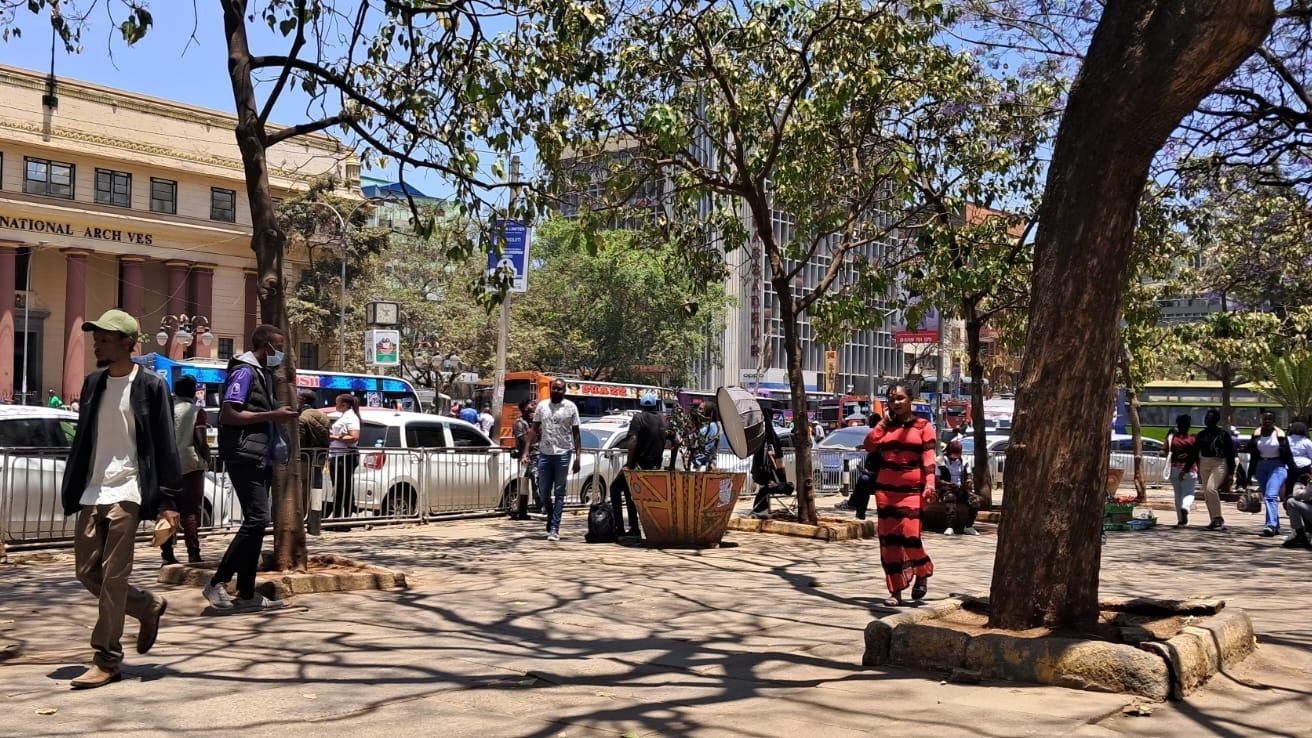
Informal workers also lose pay to bribes, the report says. Traffic police and municipal inspectors demand payments that can take up to 20 per cent of daily earnings. Boda boda riders earn around KSh1,100 a day.
Inflation at 7.3 per cent raises costs for households
Headline inflation reached 7.3 per cent in October from 4.6 per cent a year earlier, the report says. Energy prices rose 10.4 per cent and food prices 10.2 per cent. Khusoko reported the 4.6 per cent reading for October 2025.
The Central Bank of Kenya (CBK) held its policy rate at 8.75 per cent in October, a fourth straight hold. The CBK’s inflation target range runs from 2.5 to 7.5 per cent. Khusoko covered the earlier hold at 8.75 per cent in June.
Commercial bank lending rates fell to 14.4 per cent in September from 15.1 per cent a year earlier, which lowers the cost of a new loan. The report also estimates that 1.0 million to 2.4 million more Kenyans could fall below the international poverty line in 2026 because of higher fuel prices.
A 6.8 per cent deficit and a large interest bill limit state spending
The fiscal deficit reached 6.8 per cent of GDP in the 2025/2026 financial year, against an original target of 4.7 per cent. Revenue reached 17.3 per cent of GDP. Public debt stood at 69.9 per cent of GDP in June 2026.
Interest payments absorb 33.6 per cent of government revenue. The report says Kenya remains at high risk of debt distress.
The Kenya Revenue Authority collected KSh2.84 trillion in 2025/2026, up 10.6 per cent, the report says. Kiptoo cited government revenue rising from KSh2.2 trillion in 2021/2022 to KSh3.2 trillion in 2025/2026. The report does not carry that figure.
Foreign investment figures differ between Treasury and the report
Foreign direct investment (FDI), money foreign investors put into businesses in Kenya, doubled to US$3.2 billion, Kiptoo said. At an event in Kilgoris on 2 November he put the comparison at about US$1.5 billion in 2021.
The report gives a different figure. It says FDI inflows rose 170.5 per cent to a record US$2.74 billion in the 12 months to September 2026.
The World Bank names corruption as the main constraint on growth and jobs
The special focus section says corruption is the key binding constraint on growth. Moderate anti corruption reforms could lift GDP 8.7 per cent by 2035 against a no reform scenario, the report says. Stronger measures could lift it 22.3 per cent.
The report estimates better control of corruption could bring more and better jobs for up to 7.7 million people. These are World Bank model scenarios, not forecasts.
Power costs for business users run more than double the price in Viet Nam and close to 50 per cent above Uganda, the report says. Mombasa port ranks 375 out of 403 in the World Bank’s Container Port Performance Index. In 2025, 39 per cent of firms called corruption a major or severe constraint, up from 25 per cent in 2013.
