


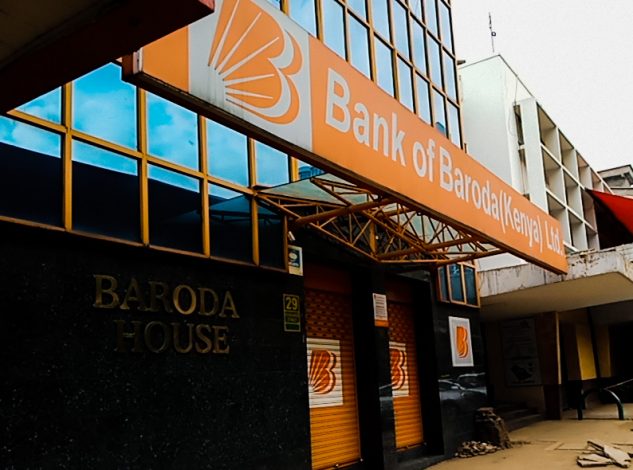
Bank of Baroda Kenya has dismissed reports that it is closing its operations as false and misleading, moving to calm customers days after a court ordered the attachment of its assets in a Ksh2.99 billion dispute.
In a statement issued on 18 September 2026 and titled Official Clarification, the lender said reports circulating about an alleged shutdown of its Kenyan business had no basis in fact. It urged customers, employees, business partners and members of the public to ignore the claims and rely only on official communication from the bank and its regulators.
“The Bank continues to operate normally in Kenya and remains fully committed to serving its customers and supporting businesses and households across the country,” the statement read.
What sparked the rumours
The denial followed a High Court warrant issued on 15 September 2026 directing Moran Auctioneers to attach movable property belonging to the bank. The warrant, filed at the commercial and tax division in Nairobi, named Infinity Industrial Park Limited as the decree holder and Bank of Baroda as the judgment debtor in a dispute worth Ksh2.99 billion, made up of the decretal amount plus costs and collection fees.
Court records place the case under Commercial Case No. E322 of 2024. Justice Peter Mulwa issued the underlying decree on 1 September 2026, and the court gave the auctioneer until 15 October 2026 to report back on whether the warrant was executed and, if not, why.
A money decree of this kind compels a defendant to pay from its assets. It does not touch a banking licence, which sits with the Central Bank of Kenya, and it is not the same thing as insolvency. But in a market where lenders have genuinely shut branches before, the line between an enforcement order and a closure signal blurred fast online.
Citibank Kenya’s decision to permanently close its Mombasa branch this year, and the Central Bank’s earlier decision to shut down Dubai Bank, Imperial Bank and Chase Bank in quick succession over insider lending and fabricated financial reporting, gave the speculation a foothold.
The Kenyan case also landed on top of separate pressure on Bank of Baroda’s global business. The lender agreed in July 2026 to pay $600 million to administrators winding up the collapsed UAE healthcare group NMC Health, a dispute it had contested in Abu Dhabi and London courts before settling.
What the bank says about its numbers
The clarification pointed to the bank’s own regulatory filings rather than to the court case, describing a strong capital position, growth in its loan book and a stable balance sheet.
For the six months to 30 June 2026, Bank of Baroda Kenya reported profit after tax of Ksh3.16 billion, up from Ksh2.51 billion in the same period a year earlier. Total operating income rose to Ksh6.52 billion from Ksh5.02 billion, and net interest income climbed to Ksh6.29 billion from Ksh4.76 billion. Loans and advances to customers grew to Ksh70.15 billion.
| Metric (H1 2026) | Ksh billion | H1 2025 | Change |
|---|---|---|---|
| Profit after tax | 3.16 | 2.51 | +25.9% |
| Total operating income | 6.52 | 5.02 | +29.9% |
| Net interest income | 6.29 | 4.76 | +32.1% |
| Loans and advances | 70.15 | — | Growth reported |
Those figures describe a bank expanding its lending and earning more from it, which sits awkwardly next to reports of an imminent exit. The Ksh2.99 billion claim from Infinity Industrial Park is real and enforceable, but it is a single commercial dispute set against a loan book more than 23 times its size.
A bank with seven decades in the country
Bank of Baroda’s Kenyan history runs deeper than the current dispute. The Indian lender opened its first branch on the continent in Mombasa in 1953, later expanding to Nairobi and across East Africa. It is now one of the longest continuously operating banks in Kenya, a claim the clarification repeated: “Established in Kenya in 1953… among the longest continuously operating banks in the country and has served generations of Kenyan customers for more than 70 years.”
The bank operates 14 branches and one sales and service centre at Imaara Mall in Nairobi, spread across Nairobi, Mombasa, Kisumu, Eldoret, Nakuru, Kakamega, Thika, Nyali and Meru. Its Nairobi network includes the head office on Muthithi Road, the Koinange Street main branch, Sarit Centre, Industrial Area, Diamond Plaza and Mombasa Road. On the coast, its Nyali branch in Mombasa was historically staffed and run by women, one of the bank’s early moves toward inclusive banking in Kenya.
Services span corporate and retail banking, trade finance, foreign exchange, and international remittances, alongside internet banking, mobile and SMS banking, debit cards and an M-Passbook facility. The bank also runs cross border RTGS transfers through the East African Payment System and offers NRE, NRO and FCNR accounts for the Indian diaspora, a segment that has anchored much of its Kenyan customer base since the 1950s. Bank of Baroda, India, holds roughly 86.7 percent of the Kenyan subsidiary, with the balance held by minority shareholders.
Where things stand
“Bank of Baroda (Kenya) Limited remains firmly committed to the Kenyan market and continues to focus on serving its customers and supporting the country’s economic development,” the bank said in its statement.
