


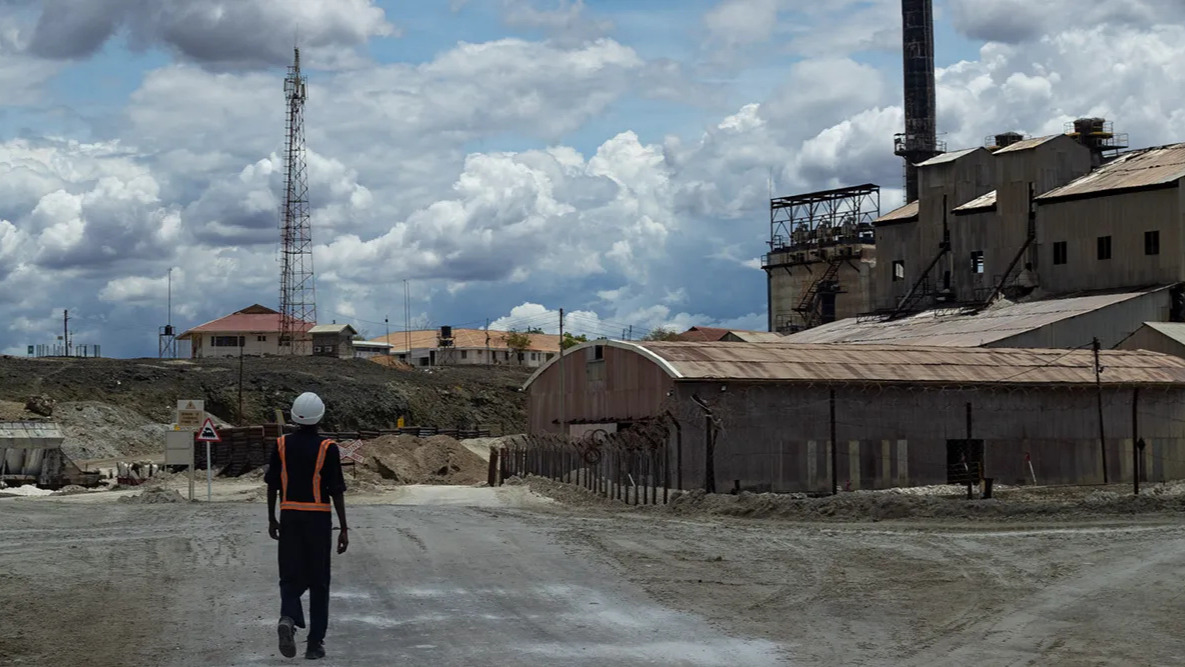
The government has stepped back from confrontation and opened the door to negotiation with Tata Chemicals Magadi Limited.
The Ministry of Mining and Blue Economy has assembled a senior technical committee to resolve the compliance issues that led President William Ruto to order the closure of the company’s operations at Lake Magadi. Mining Cabinet Secretary Hassan Joho announced the move on Tuesday, September 8, following what he described as a productive meeting with the company’s executives at his office.
From Shutdown Order to Negotiating Table
Ruto had previously told Tata Chemicals to “pack their bags and leave,” accusing the company of operating in Kajiado for nearly a century without building local industry or creating meaningful employment. He argued that Kenya should stop exporting raw soda ash and instead demand that investors set up factories on Kenyan soil.
Joho’s statement softens that stance without abandoning it. The Ministry says it still expects full compliance with Kenyan law, but it now wants a structured process rather than an outright shutdown to get there.
“Following the suspension of operations at Tata Chemicals Magadi Limited, today at my office I led a fruitful engagement with the Company’s executives regarding the compliance concerns we raised as a Ministry,” Joho said. “To facilitate a comprehensive and timely resolution of the outstanding matters, we agreed to establish a technical committee.”
Who Sits on the Committee
The committee brings together government and company representation in equal measure. It will be jointly led by Principal Secretary for Mining Harry Kimtai, representing the Ministry, and Tata Chemicals Magadi’s Chief Executive Officer Swaminathan Nagarajan, representing the company.
Their mandate is narrow but urgent: review every outstanding compliance matter, then report back to Joho’s office for a final decision.
What the Committee Will Review
| Issue Area | Focus |
|---|---|
| Mineral beneficiation | Local value addition instead of raw material exports |
| Community benefits | Royalty obligations owed to host communities |
| Land matters | Unresolved disputes tied to the mining site |
| Mineral extraction rights | Opening Magadi to multiple mineral operators |
| County relations | Outstanding matters with the Kajiado County Government |
Joho pointed to a longstanding grievance behind the community benefits question. Kenya’s 2016 Mining Act requires companies to form a committee with affected communities and pay that committee at least one percent of gross income. According to Joho, Tata Chemicals has not met that obligation since it began operating in 1928.
Why the Government Changed Course
Ruto’s shutdown order put roughly a century of continuous operations, and the jobs tied to them, at immediate risk. A phased review process gives the government room to press its demands for local investment and community payouts without triggering the economic disruption a full closure would cause.
Joho framed the shift as pragmatic rather than a retreat. “As Government, we remain committed to constructive engagement with investors while firmly upholding Kenya’s laws, regulations and the interests of its people,” he said.
The Bigger Picture
Tata Chemicals Magadi is one of the world’s largest producers of natural soda ash, a mineral used to make glass, detergents and a range of industrial products. Any prolonged shutdown would have rippled through export earnings and local employment in Kajiado County.
The committee’s findings will determine whether Tata Chemicals resumes full operations, faces new conditions on local investment and community payouts, or loses its hold on Magadi to competing operators, as Ruto has already floated. For now, both sides have agreed to talk first and decide later. The next move belongs to the technical committee, and its report will shape Kenya’s mining policy well beyond this one dispute.
