


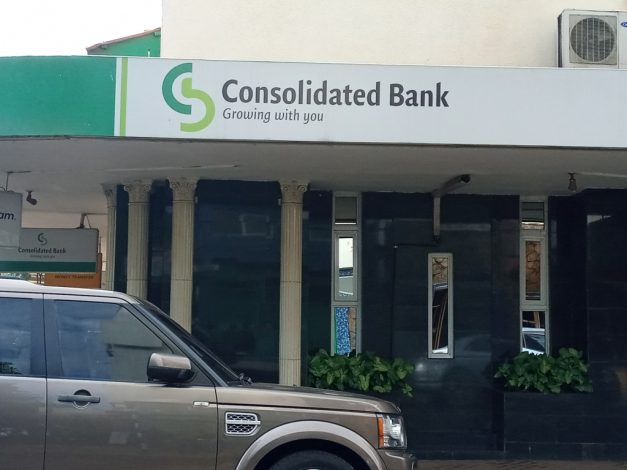
Consolidated Bank of Kenya faces a capital crisis that a KSh1.125 billion National Treasury bailout will not fully resolve.
The state-owned lender closed December 2025 with a negative core capital position of KSh546 million, meaning its liabilities exceeded its assets before a single new regulatory requirement came into force. Then the Central Bank of Kenya raised the minimum capital threshold to KSh3 billion, effective 1 January 2026. That single adjustment widened the bank’s capital shortfall to at least KSh3.546 billion. The Treasury injection covers barely a third of that gap.
A plan that raises more questions than it answers
To bridge the remaining shortfall, Consolidated Bank plans to sell fixed assets including buildings, lean on internally generated revenue and submit a capital build-up plan to the regulator. Each of those options carries execution risk. Asset sales depend on finding buyers at acceptable prices. Internal revenue generation assumes continued trading momentum. A capital plan buys time but does not itself produce capital.
The harder question sits underneath all of this. Whether Consolidated Bank survives is almost beside the point. Whether a bank this structurally fragile should remain a going concern at all, or whether a merger, acquisition or structured wind-down serves the public interest better, demands a clearer answer than the bank or Treasury has so far provided.
The numbers tell two stories
Set against that backdrop, Consolidated Bank’s 2025 financial results tell a genuinely complicated story.
The bank reported a net profit of KSh198.2 million for the twelve months to December 2025, a recovery from a loss of KSh155.2 million the previous year. Total operating income rose 28 percent to KSh1.9 billion from KSh1.5 billion, the strongest performance the bank has recorded.
Interest earnings from loans and advances drove much of that growth, rising 38 percent to KSh1.3 billion from KSh940 million. Non-funded income grew 11 percent to KSh631 million. The bank also held costs largely in check, with operating expenses edging up just one percent to KSh1.7 billion.
Acting Chief Executive Dr Dominic Murage credited the turnaround to a deliberate efficiency drive. “This performance demonstrates the impact of the strategic efficiency measures we implemented across the business, which have enabled significant cost savings,” he said. “Maintaining these efficiency levels will remain a priority going forward.”
Total assets grew 11 percent to KSh19.5 billion, supported by investment in government securities. The loan book expanded marginally from KSh8.5 billion to KSh8.6 billion, while provisions for loan impairments rose 23 percent to KSh288 million, reflecting both the difficult operating environment and what the bank describes as prudent risk management.
Where the bank goes next
Dr Murage confirmed that Consolidated Bank will continue focusing on small and medium enterprise lending, which accounts for the bulk of its client base. He also pointed to the public sector as a growth avenue. “As a government-owned institution, we are uniquely positioned to support public sector financing needs,” he said. “We aim to strengthen our collaboration with government agencies, parastatals, universities and ministries to position Consolidated Bank as the preferred banking partner for the public sector.”
The bank is also under active consideration for privatisation by National Treasury, a process that takes on sharper urgency now that its capital position is formally below the regulatory floor.
A state-owned bank posting its best revenue in years while simultaneously requiring a public bailout to stay compliant is not a contradiction. It is a warning. Profitability and solvency are different problems, and Consolidated Bank has not yet solved the harder one.
