



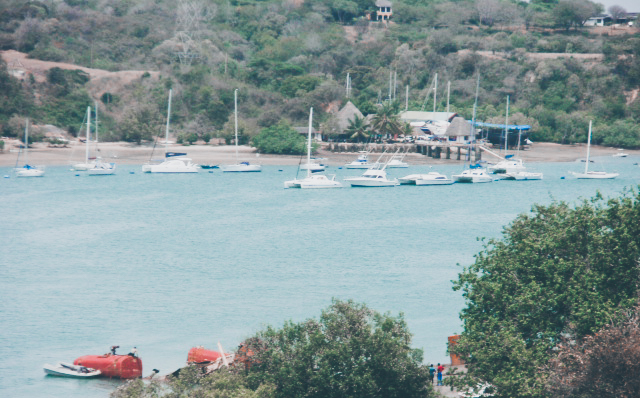
The beach has become a balance sheet.
HassConsult launched Kenya’s first Coastal Land Price Index Tuesday, tracking land values across 12 towns from Lamu to Diani using a decade of price data. What it found reshapes how to think about Kenya’s coast as an investment destination. Land prices in Diani rose 79.1 percent between Q4 2020 and Q4 2025. Watamu climbed 70.4 percent over the same period. Lamu gained 59.7 percent and Bamburi 56.6 percent. These are not speculative outliers. They reflect a structural shift in who buys coastal land, why they buy it, and what they are willing to pay.

“Coastal land has delinked from general economic trends in Kenya on new dynamics during the 2020s,” said Sakina Hassanali, Co-CEO and Creative Director at HassConsult. “Across remote working, retirement relocation, and the long tail of international and domestic buyers who first discovered the coast as tourists, it has developed its own, distinct land dynamics.”
Beauty Now Sets the Price
The index’s central finding is that beach quality determines land value more than location alone.
Diani Beach stretches between 30 and 80 metres wide, with a slope that makes it usable year-round. Watamu’s shoreline offers similar width, broken by bays and inlets, with conservation zoning that limits overdevelopment. Both recorded the index’s top growth figures. Nodes with beaches that run narrower and face more tidal exposure — Malindi at 22.9 percent growth and Mombasa City at 38.3 percent — lagged, not because demand collapsed, but because the physical asset was weaker from the start.
The report calls this a “beauty premium.” The index now documents it along Kenya’s coast for the first time with systematic data. In Nyali, HassConsult tracked several thousand price records during 2025 and found that beachfront land commanded a 19 percent premium over the area average. One row back and the price dropped 9 percent below that average. Beyond a kilometre from the beach, land traded at 20 percent below. “A sea view is a priceable asset,” said Ms Hassanali.
Research from elsewhere reinforces this. A 2020 study from Hilton Head Island off the US coast found that each additional foot of beach width added over $3,000 to property values. Beach width above 30 metres creates usable recreation space and reduces erosion risk. Below that threshold, land value falls sharply. Kenya’s index reflects the same pattern.
Who Is Actually Buying
The buyers driving this growth do not fit a single profile. They fall into four overlapping groups, each with its own logic.
The first group converted from tourists. Around 2.4 million international tourists arrived in Kenya in 2024, with 50 to 60 percent visiting the coast according to tourism officials. Studies across multiple destinations consistently find that between 20 and 30 percent of post-visit tourists consider buying, investing, or relocating. That conversion rate, applied even conservatively to the coast’s visitor numbers, generates substantial demand.
The second group relocated for lifestyle. The Kenya Private Sector Alliance reports that around 2.4 million Kenyans now work remotely. International research shows that two days a week of remote work increases the probability of relocating to a lifestyle location by 50 percent. Four days raises it by 90 percent. Along Kenya’s coast, 4G connectivity covers most of the strip, 5G reaches Mombasa and its surrounds, and fibre broadband operates in Watamu and Malindi. The coast now functions as a remote work destination. The land market reflects that.
The third group came from the diaspora. Around 20 percent of all real estate transactions in Kenya now trace to diaspora buyers, up from 10 percent five years ago. Diaspora remittances into Kenya reached KShs 593 billion in the first 11 months of 2025, up 35 percent on the previous year. Property developers now run roadshows in Seattle, Toronto, and Edmonton specifically targeting Kenyans abroad. Coastal land features prominently in these pitches.
The fourth group invests commercially. Knight Frank reports that 25 to 35 percent of plots sold in Kilifi and Malindi target rental income rather than owner occupation. The hospitality sector rebounded after 2023, with boutique hotels, eco-resorts, and larger developments moving through the pipeline across Diani, Watamu, and Kilifi.
Where the Index Stands Town by Town
The composite Hass Coast Land Index recorded a 2.36 percent annual gain in 2025 and 40.7 percent growth over five years. But those averages mask wide divergence between nodes.
Diani leads the market. Its average price per acre reached KShs 36 million at end 2025 for non-beachfront land, rising to KShs 65.3 million on the beachfront. The 153 percent gap between beach and non-beach prices is the widest on the coast. TripAdvisor’s Travellers’ Choice Awards ranked Diani Beach the third best beach in Africa and one of the top 25 in the world.
Watamu follows at 70.4 percent growth over five years, with an average price of KShs 35 million per acre. Conservation zoning limits supply and signals to buyers that the beach will not be built over. Land title complications and flood risk constrain parts of the node, but demand from buyers focused on ecotourism keeps growth elevated.
Kilifi Town recorded the index’s strongest annual growth at 8.78 percent in 2025, drawing spillover demand from Mombasa and buyers seeking creek frontage at prices below the leading nodes. Five-year growth of 40.1 percent reflects that position, held back by access constraints in the hinterland and unresolved land titles.
Nyali carries the coast’s highest average price per acre at KShs 114 million, built on urban services and proximity to Mombasa. Five-year growth of 24 percent reflects a market running out of land to sell. Almost no developable plots remain. Investor attention has moved to nodes with room to grow.
Mombasa City sits at the bottom of the growth table, with annual growth of 1.3 percent and a quarterly decline of 1 percent in Q4 2025. Congestion, infrastructure pressure, and limited expansion space weigh on the market despite the city’s role as the coast’s commercial centre.
What Limits Growth
The index does not only track prices upward. It maps the constraints that cap growth in specific locations.
Kenya has 536 kilometres of coastline, but around 30 percent falls under protection from development. Over 100 kilometres of wetlands on unstable silt sit beside water channels that shift over time. Mangrove swamps, legally protected under the Forests Act 2005, cover more than 50,000 hectares clustered across 15 deltas and creeks. Sand dunes block development across roughly 50 kilometres between Malindi and the Sabaki River area. Sacred Kaya forests protect another 10,000 to 15,000 hectares across Kwale and Kilifi, including 40 UNESCO sites.
Water sits at the centre of the development constraint. The coast currently meets only around 55 percent of local demand. Along the north coast, 94 percent of sampled boreholes carry salinity above World Health Organization limits. In Kilifi County, groundwater samples show contamination levels that make water drinkable only in wet seasons. A World Bank study found that mains or borehole supply increased land prices in Lamu and Kilifi by 12 to 18 percent. Where a saline borehole remains the only source, prices fell by 15 percent.
Land ownership adds a further layer. Community land dominates much of the coastal strip, particularly in Lamu, Tana River, and parts of Kilifi and Kwale, where colonial and early post-independence processes did not convert customary rights to formal titles. Development has consequently clustered in titled zones: Nyali, Bamburi, Diani, Vipingo, and central Kilifi town. Outside those nodes, buyers face uncertainty that directly depresses values.
“Professionals moving to the coast to work remotely, or relocating from all over the world to enjoy leisured retirements, simply will not buy when land titles are uncertain or water precarious,” said Ms Hassanali.
What This Means for Each Type of Buyer
For the investor tracking capital returns, the index signals that the leading nodes — Diani, Watamu, Lamu — have already run hard. Five-year gains of 70 to 79 percent outpace most asset classes. The question now is whether Kilifi and Kikambala, which recorded 40.1 and 42.1 percent growth at lower entry prices, offer the next stage of that trajectory as infrastructure catches up.
For the diaspora buyer weighing a coastal plot against other uses for remittance income, the index provides something that previously did not exist: a price benchmark across 12 towns, with documentation of what drives value and what erodes it. The beauty premium is quantified. The water risk is mapped. The title concentration areas are identified.
For the professional considering whether to lease or buy on the coast, the data on remote work demand matters. The coast no longer competes only against other holiday markets. It now competes against Nairobi’s Karen, Runda, and Kilimani for the long-stay resident. Land prices along much of the coast still run below Nairobi comparables. The experience of living there increasingly does not.
The composite index growing 40.7 percent over five years is not the story. The divergence between 79 percent in Diani and 22 percent in Malindi, driven by beach width, ocean clarity, and the presence or absence of a water supply, is the story. Coastal land in Kenya no longer prices itself. The beach does it.
