



Thousands of commuters across major towns in Kenya woke up stranded on Monday morning as matatu operators grounded their fleets in protest against soaring fuel prices, exposing the domestic cost of a war Kenya did not start and cannot stop.
The Transport Sector Alliance, in a joint statement issued on Sunday 17 May, announced a nationwide shutdown of public transport operations in response to the latest fuel price increase gazetted by the Energy and Petroleum Regulatory Authority. The Truckers Association of Kenya joined the action hours later, raising the prospect of supply chain disruptions extending well beyond the capital.
Mbadi Calls the Strike Unnecessary but Acknowledges the Pain
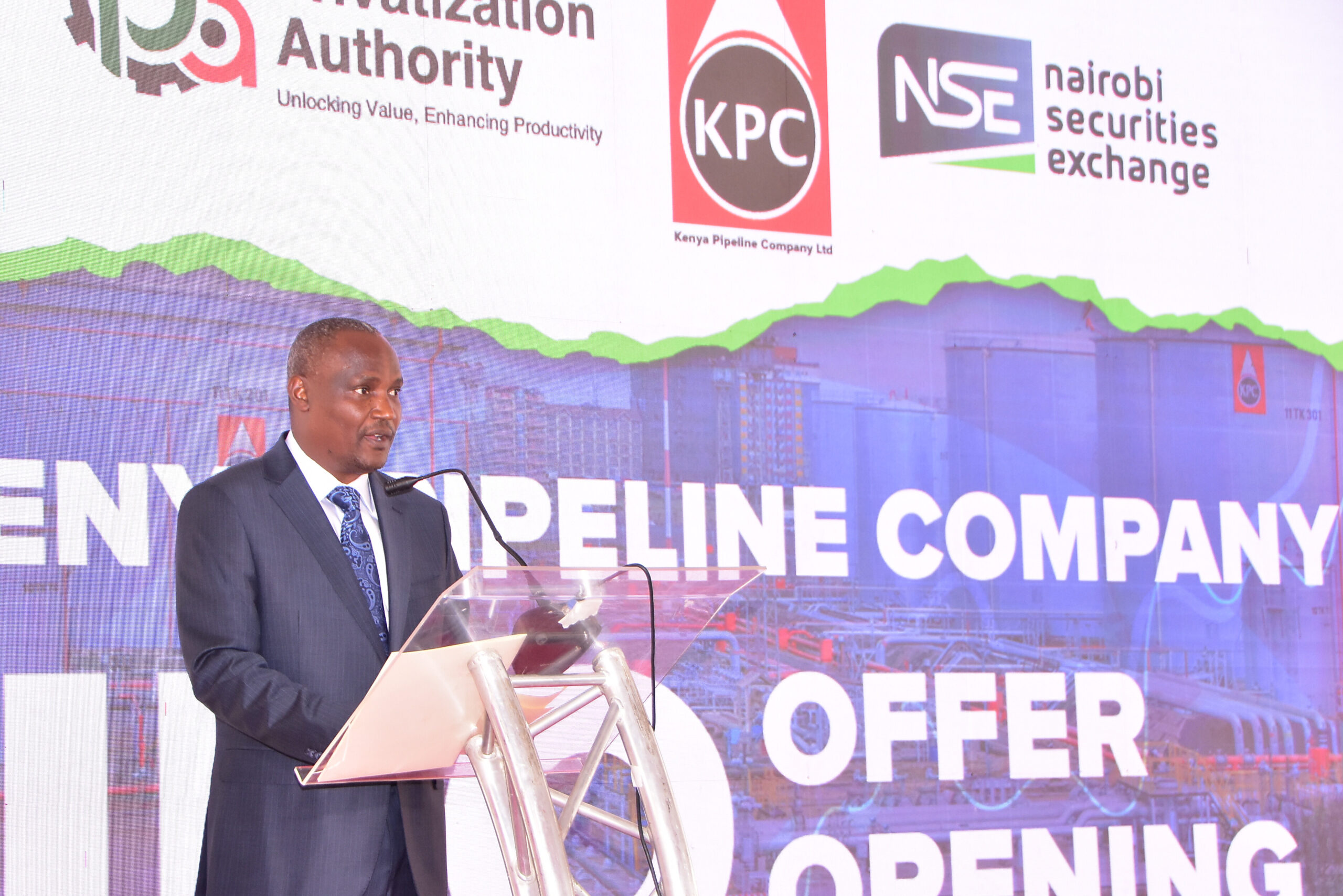
National Treasury Cabinet Secretary John Mbadi did not dispute that fuel prices were hurting ordinary Kenyans. What he disputed was the logic of a domestic strike against a global shock.
“In my view, the strike is completely uncalled for even though the prices of fuel have gone up,” Mbadi told NTV Kenya on Monday. “My concern is that we are trying to solve a global problem by applying domestic means, which is not appropriate.”
CS John Mbadi: Matatu strike uncalled for. Fuel prices would be higher without government interventions.
“This is not a time to make emotional decisions.” #FixingTheNationNTV @nationfmke @ericlatiff @mariambishar @blinkypenguin pic.twitter.com/jDZ2LkmHAX
— NTV Kenya (@ntvkenya) May 18, 2026
The CS traced the price surge directly to the ongoing Iran conflict, which has disrupted global oil markets and sent shockwaves through economies far beyond the Middle East. “We hope the Iran war will stop quickly. It is a war we have not caused and we do not have the ability to stop it, but it has hit our economy,” he said.
His position was clear: the government would act on evidence, not pressure. “This is a matter we are watching closely as a government and we will be making decisions which are informed and not emotional. It is not time to make emotional decisions. We need to understand why these prices have gone up.”
The Government Has Already Moved, But the Gap Remains Wide
Mbadi revealed that the government had stepped in to absorb part of the price increase through subsidies. Diesel prices have climbed approximately 55 percent since February, but the state has covered more than 20 percentage points of that rise.
“If we were to leave prices without intervention, diesel would be costing not less than Sh35 more and petrol would be Sh70 more,” he said. “Already the government has intervened, although there may be calls for more to be done.”
“We have done something, we will do more. Our budget is also facing strain so there is a limit to how far we could go. But we may end up sacrificing more depending on happenings in the Middle East.”
“The economy will not perform as projected because with high fuel prices there will be high inflation, we will have a problem with interest rates, we may have a problem with foreign reserves.”
What the Numbers Say
The economic data running beneath the political noise confirms the CS’s concern.
Kenya’s real GDP grew at 4.6 percent in 2025, broadly in line with the 4.7 percent recorded in 2024. However, according to the NCBA Monthly Economic Report for May 2026, the combination of inflation and growth shocks traced to the Middle East conflict has pushed the 2026 growth forecast down to a range of 4.0 to 4.5 percent.
Sector level data tells a more granular story. Accommodation posted the strongest annual growth at 15.6 percent, while mining recovered sharply to 14.9 percent after contracting 7.8 percent in 2024. Manufacturing, by contrast, expanded only 2.0 percent, and construction, despite a strong fourth quarter, ended the year at 6.8 percent. The ICT sector grew 4.8 percent for the year.
Headline inflation accelerated to 5.6 percent in April 2026, up from 4.4 percent in March. Food and transport costs drove the increase. Flooding damaged crops and disrupted road logistics, pushing vegetable prices higher when the market had expected them to ease. That sequence compressed household budgets at precisely the moment energy costs were rising.
Private sector credit growth, now running at 8.1 percent, could slow to between 6.0 and 8.0 percent by year end as real incomes tighten. Treasury bill yields reflect the same pressure, with the 91 day, 182 day, and 364 day instruments sitting at 8.04, 8.21, and 8.51 percent respectively. The NCBA report notes that a hawkish posture from the US Federal Reserve, combined with rising local inflation and climbing yields, points toward a similarly hawkish position from Kenya’s Monetary Policy Committee at its June meeting.
On the fiscal side, tax revenue collections reached KES 1,717 billion through March, representing nominal growth of 8.7 percent but falling KES 232 billion short of target. A reduction in VAT on petroleum products to 8 percent will narrow collections further. Net domestic borrowing targets have risen from an initial KES 635 billion to KES 996 billion, with the current run rate sitting at approximately 84 percent of that revised figure.
The shilling has held relatively steady, ending April at 129.20 against the dollar from 130.00 in March, supported by central bank intervention. Foreign exchange reserves, however, declined to USD 13,226 million from USD 14,022 million at the end of March.
The War Driving It All
The immediate cause of Kenya’s fuel crisis sits 4,000 kilometres away in the Strait of Hormuz.
The Iran conflict, which showed no sign of resolution through April, sent Brent crude oil prices up 16 percent in the month and 92 percent year to date. Falling oil inventories across Europe and Asia, combined with the prospect of further military escalation, have led analysts to expect prices to remain above USD 100 per barrel for several weeks at minimum.
Iran presented a 14 point peace proposal to the United States in April, suggesting both parties could reach an agreement within 30 days. The plan included lifting restrictions on Strait of Hormuz shipping and a gradual withdrawal of the US naval blockade. However, Iran stated it would not open its nuclear programme to negotiation, a condition the NCBA report describes as a deal breaker for Washington. The absence of a clear successor following the death of Supreme Leader Khamenei further complicates any path to a settlement.
One structural shift warrants attention. On 28 April, the United Arab Emirates announced it would end its 59 year membership of the Organisation of Petroleum Exporting Countries, freeing itself from the cartel’s production quota system. Before the war began, the UAE held production capacity of 4.8 million barrels per day, constrained under its OPEC agreement to 3.2 million barrels per day. While Iran’s control of the Strait of Hormuz currently limits UAE export volumes, the prospect of that additional supply entering the market once the conflict subsides carries meaningful implications for long term oil prices.
In the interim, financial markets have priced in a stagflation scenario. Sovereign bond yields are rising across multiple markets. Gold prices are easing. The dollar is strengthening. Emerging markets have borne the sharpest adjustment, reflecting their exposure to volatile capital flows and risk sensitive investors. Kenya’s Eurobond yields have risen an average of 75 basis points since the conflict escalated, a level the NCBA report characterises as within manageable bounds relative to the 2022 Russia-Ukraine shock.
The Pressure Point
Kenya faces a compression of forces that no single policy lever can resolve. A war it cannot influence is raising the cost of fuel, food, and transport simultaneously. The government has intervened, but its fiscal space is narrowing. Growth projections are sliding. And a transport sector pushed to its limit chose, on a Monday morning in May, to make the cost of inaction visible on every street corner in Nairobi.
Mbadi’s final word was a request not to turn the crisis into a political contest. “This is a crisis that we do not know when it will end. It is not right to politicise this crisis.”
Whether that appeal holds may depend less on domestic politics than on what happens next in the Strait of Hormuz.
