


Kenya Power grew profit for the year to June 2026, but the gain came from the financing line rather than the trading floor.
The utility reported profit after tax of KES 24.99 billion, up KES 522 million or 2.13 percent from KES 24.47 billion a year earlier. Profit before tax rose KES 639 million to KES 36.01 billion. Earnings per share edged up to KES 12.81 from KES 12.54.
The board recommended a final dividend of KES 1.20 per ordinary share. Added to the interim dividend of KES 0.30 already paid, that takes the full year payout to KES 1.50, up 50 percent from the KES 1.00 distributed for FY2025 and more than double the KES 0.70 paid the year before that.
Investors responded. The counter closed 4.12 percent higher at KES 22.75, stretching its gain for the year to 67.65 percent and valuing the company at roughly KES 44.4 billion on 1.95 billion shares in issue.
Revenue climbed on volume and tighter losses
Electricity revenue rose KES 18.96 billion, or 8.64 percent, to KES 238.24 billion.
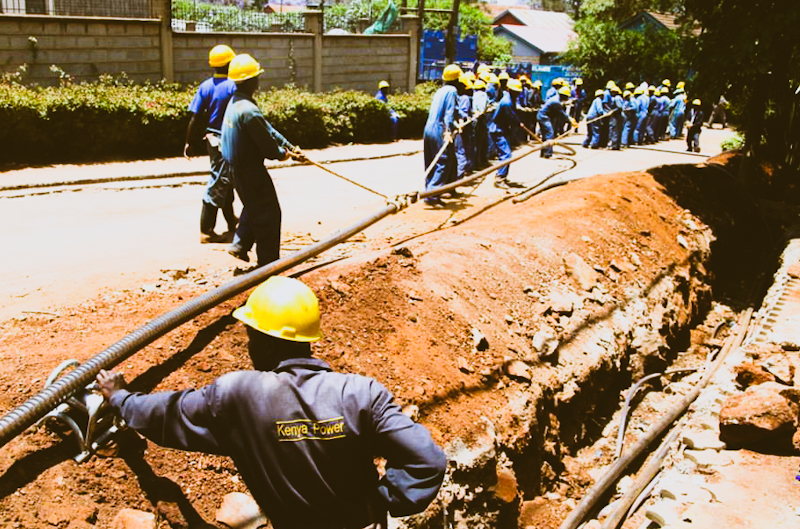
Units sold did the heavy lifting. Total electricity sales grew 12 percent to 12,777 GWh from 11,403 GWh, supported by demand across all customer categories and by 411,710 new customers connected during the year. Revenue protection work aimed at recovering units that previously went unbilled added to the total.
Distribution and transmission efficiency climbed to 81.42 percent from 78.79 percent, meaning more of every unit bought from generators reached a meter and turned into a bill. The company still loses close to a fifth of what it buys, far above the benchmark for well run utilities.
Cost of sales grew 5.52 percent to KES 152.65 billion, slower than revenue. That gap lifted gross profit KES 10.97 billion to KES 85.59 billion and widened the gross margin to 36 percent from 34 percent.
Operating costs swallowed the gross margin gain
The improvement stopped there.
Net operating expenses surged 26.71 percent, or KES 11.33 billion, to KES 53.75 billion. Management pointed to higher expected credit losses alongside increases in staff costs, depreciation and other operating expenses.
That jump wiped out the gross margin gain and then some. Operating profit slipped 2.28 percent to KES 38.57 billion, and the operating margin narrowed to 16.2 percent from 18.0 percent.
The charge reflects bills the company does not expect to collect, and it is rising at a time when the company has added more than 400,000 customers in twelve months. Collection disputes have tested the utility before, including the standoff with Nairobi County over wayleave charges that shut down services in the city centre.
Cheaper debt rescued the bottom line
Finance costs fell 34.68 percent, or KES 1.64 billion, to KES 3.08 billion after the company cut outstanding loan balances.
That saving carried the profit growth. Even with it, the net profit margin thinned to 10.5 percent from 11.2 percent, a reminder that the company kept less of each shilling of revenue than it did a year ago.
Balance sheet turned a corner
The financial position strengthened across several measures.
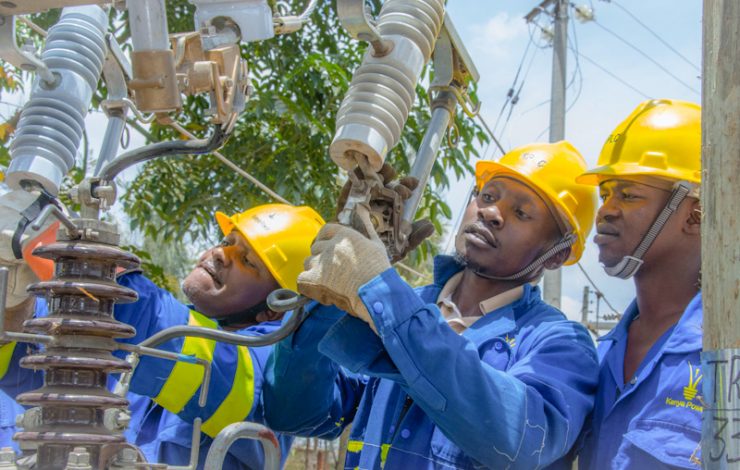
Total assets grew KES 32.45 billion to KES 421.49 billion, supported by capital expenditure of KES 28 billion on network expansion, reinforcement and modernisation.
Working capital swung from negative KES 19.21 billion in June 2025 to positive KES 1.90 billion, a turnaround of KES 21.11 billion. The current ratio crossed above one, improving to 1.02 from 0.84.
Total borrowings declined to KES 79.82 billion from KES 84.23 billion at the half year mark. Debt falling due within twelve months dropped 39.21 percent to KES 10.64 billion, easing the annual repayment burden. Equity rose 20.55 percent to KES 131.80 billion on retained earnings, pulling gearing down to 55 percent from 73 percent and the debt to equity ratio to 0.60 from 0.80.
The distance travelled is worth noting. Six years ago the same company reported net profit of KES 262 million after a 91 percent collapse driven by power purchase and finance costs, and its auditor had qualified the prior set of accounts.
The numbers at a glance
| Item | FY2026 (KES m) | FY2025 (KES m) | Change |
|---|---|---|---|
| Revenue | 238,240 | 219,285 | +8.6% |
| Cost of sales | 152,647 | 144,664 | +5.5% |
| Gross margin | 85,593 | 74,621 | +14.7% |
| Other income | 6,724 | 7,267 | –7.5% |
| Operating costs | 53,750 | 42,421 | +26.7% |
| Operating profit | 38,567 | 39,467 | –2.3% |
| Finance costs | 3,081 | 4,717 | –34.7% |
| Profit before tax | 36,014 | 35,375 | +1.8% |
| Tax | 11,025 | 10,908 | +1.1% |
| Profit after tax | 24,989 | 24,467 | +2.1% |
| Earnings per share (KES) | 12.81 | 12.54 | +2.2% |
| Total assets | 421,485 | 389,039 | +8.3% |
| Shareholders’ equity | 131,801 | 109,335 | +20.6% |
| Ratio | FY2026 | FY2025 |
|---|---|---|
| Gross margin | 35.9% | 34.0% |
| Operating margin | 16.2% | 18.0% |
| Net margin | 10.5% | 11.2% |
| Current ratio | 1.02 | 0.84 |
| Gearing | 55% | 73% |
| Debt to equity | 0.60 | 0.80 |
| System efficiency | 81.42% | 78.79% |
The second half carried the year
Kenya Power booked profit after tax of KES 10.40 billion in the six months to December 2025 on revenue of KES 114.87 billion.
Back out those figures and the second half delivered about KES 14.59 billion in profit on roughly KES 123.37 billion of revenue. The stronger half came after the company had already flagged rising operating expenses at the interim stage.
Cash flow tells a quieter story
Cash generated from operating activities eased to KES 38.22 billion from KES 39.77 billion. Investing activities absorbed KES 28.13 billion and financing activities a further KES 10.84 billion.
The company closed the year with KES 6.95 billion in cash, down from KES 7.69 billion. Capital spending and debt repayment consumed almost everything the business generated, which is the shape of a utility rebuilding its network while clearing its loan book.
What management said
Managing Director and Chief Executive Joseph Siror tied the result to a sustained push on operational excellence, customer service, financial sustainability and staff development.
He listed the priorities ahead as grid automation, smart metering, revenue protection, customer facing digitalisation, workforce renewal and infrastructure investment to meet rising demand. The company also plans to pursue new revenue streams, strengthen regulatory readiness and support additional generation and transmission capacity. It has already been building out electric vehicle charging infrastructure as one such stream, and has been consolidating payments onto its own digital channels since ending third party token vending.
Company Secretary Imelda Bore signed the audited results on 17 September 2026. Shareholders on the register at the close of business on 27 November 2026 will qualify for the final dividend, payable before 31 December 2026 if approved.
What to watch
At KES 22.75 the stock trades at about 1.8 times earnings and yields roughly 6.6 percent on the declared payout, a valuation that still carries doubt despite a share price that has run away this year.
The next result will test whether the gains hold. Finance costs cannot fall by another third, so the operating line has to carry the weight. Three numbers will decide it: whether expected credit losses settle, whether system efficiency keeps climbing past 81 percent, and whether the tariff cycle leaves the company room to keep more of what it collects.
