



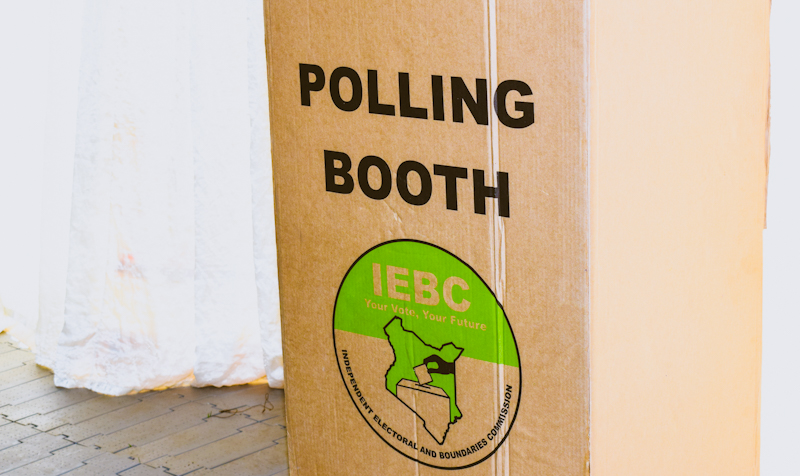
Kenya’s High Court has ruled that the next presidential election is constitutionally due on 11 August 2026, not August 2027 as currently planned, but stopped short of ordering the Independent Electoral and Boundaries Commission to hold a vote this year.
The Ruling
Delivering judgment in Malindi, Lady Justice Mugure Thande held that Article 136(2)(a) of the Constitution requires the presidential poll to fall on the second Tuesday of August in the fifth year following the previous election, not after that fifth year has elapsed. Since Kenyans last elected a president on 9 August 2022, the fifth year began on 9 August 2026, making 11 August 2026 the constitutionally correct date rather than 10 August 2027, the date IEBC has been preparing for.
The judge found that holding the election on any date other than 11 August 2026 would breach the Constitution, ruling that such a vote “will violate and contravene Articles 2, 3, 10, 136(1) & (2)(a), 142(1), 249, 259(1) & (5)(c) of the Constitution, and will consequently be null and void.”
She also rejected the argument that a president is constitutionally entitled to serve a full five year term, declaring that neither Article 142 nor any other provision of the Constitution confers a five year term of office on the president.

Why The Vote Will Not Move To This Year
Despite that finding, the court declined to direct IEBC to organise an election in 2026. The judge noted that the petition reached court rather late, in October 2025, by which point IEBC, prospective candidates and Kenyans generally were already geared toward an election in August 2027.
Granting the order sought would mean forcing through a poll that was, in her words, logistically impossible to implement, and one that would risk plunging the country into instability. She said the court had to balance enforcement of the rule of law with judicial restraint, to avoid triggering what she called unmitigable national instability.
To manage that balance, the judge suspended the declaration of invalidity until after the next General Election takes place, giving IEBC room to correct the defect for future cycles rather than disrupt the vote already underway. The court made no order as to costs.
The ruling drew on IEBC’s own Election Operation Plan 2025 to 2027, which the court noted confirms the commission has made no preparations for an election in August 2026 and is instead working toward the fourth general election under the 2010 Constitution on 10 August 2027.
Where IEBC’s Timetable Stands Now
10 August 2026, marks exactly one year before the General Election currently scheduled for 10 August 2027. IEBC’s roadmap toward that date includes several fixed milestones. Public officers seeking elective office must resign by 9 February. Party membership and nomination processes follow, ahead of a campaign period that opens on 29 May. Candidate nominations close on 9 June, and campaigning ends on 7 August 2027, two days before the vote.
That timetable remains unchanged for now. IEBC has not issued a public response to the ruling, and no appeal has been announced.
What It Means Going Forward
The immediate election calendar stays fixed on August 2027, but the ruling puts a firm constitutional marker down for every election after that, and raises a question IEBC will need to answer: how it aligns its future planning with a court finding that its own five year counting method, and its assumption of a guaranteed five year presidential term, conflict with the Constitution as written.
