




Kenya’s financial markets ended the week of June 4, 2026 on a broadly stable footing, but the numbers underneath the surface tell a more uncomfortable story.
Inflation climbed to a two-year high, Treasury bill rates pushed further upward, and the NSE staged a strong recovery, all against the backdrop of an MPC meeting days away.
Inflation reaches a two-year high
The cost of living continues to rise. Overall inflation climbed to 6.7 per cent in May 2026 from 5.6 per cent in April, driven by higher energy prices and transport costs as global oil prices remain elevated. Non-core inflation, which captures the most volatile price movements including food and fuel, surged to 16.0 per cent from 13.4 per cent over the same period. Core inflation, which strips out those volatile components, also ticked up to 3.2 per cent from 2.8 per cent.
For ordinary Kenyans, this means the weekly shopping bill and the cost of getting to work both cost more than they did a month ago. Transport prices rose 16.5 per cent year on year in May, following two successive upward fuel price reviews. Food prices, particularly vegetables, added further pressure. The cumulative effect on household budgets has been swift: inflation stood at just 4.4 per cent in March and has since climbed by more than two percentage points in two months.
The MPC meets on June 9. The Kenya Bankers Association has already called for a rate increase to anchor expectations before second-round effects from higher oil prices spread further through the economy.
The shilling holds its ground
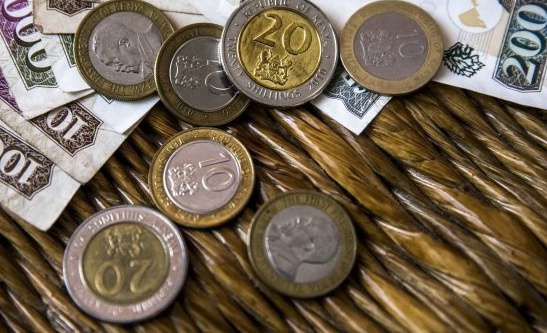
Despite the inflation pressure, the Kenya shilling remained stable against major currencies during the week. It traded at KSh 129.37 per US dollar on June 4, compared to KSh 129.52 on May 28, a marginal strengthening. The shilling also held steady against the euro, sterling, and regional currencies including the Ugandan and Tanzanian shilling.
Stability in the exchange rate matters for inflation. A weaker shilling would amplify the cost of imported fuel and food, compounding the price pressures already in motion. For now, that risk remains contained.
Foreign exchange reserves stay comfortable
Kenya’s foreign exchange reserves stood at USD 13,201 million as of June 4, equivalent to 5.6 months of import cover. That comfortably exceeds the CBK’s statutory minimum of four months.
Reserves have held broadly steady since April, fluctuating in a narrow range between USD 13,201 million and USD 13,507 million over the period.
| Date | Reserves (USD Million) | Import Cover (Months) |
|---|---|---|
| 30 Apr 2026 | 13,226 | 5.6 |
| 07 May 2026 | 13,414 | 5.7 |
| 14 May 2026 | 13,507 | 5.7 |
| 21 May 2026 | 13,211 | 5.6 |
| 28 May 2026 | 13,209 | 5.6 |
| 04 Jun 2026 | 13,201 | 5.6 |
Adequate reserves give the CBK room to intervene in the foreign exchange market if needed and reduce Kenya’s vulnerability to external shocks at a moment when global conditions remain unsettled.
Money market stays liquid but activity slows
The money market remained liquid during the week, with commercial banks holding excess reserves averaging KSh 16.0 billion above the 3.25 per cent Cash Reserve Ratio requirement. The Kenya Shilling Overnight Interbank Average Rate, known as KESONIA, held steady at 8.75 per cent throughout the week, matching the CBR.
Interbank activity pulled back. The average number of transactions declined to 17 from 24 the previous week, while the average value traded fell to KSh 10.7 billion from KSh 18.6 billion. The slowdown likely reflects caution ahead of the MPC meeting rather than any tightening of liquidity conditions.
T-bill auction draws record demand as rates rise
Investor appetite for short-term government paper surged at the June 4 Treasury bill auction. Total bids reached KSh 54.6 billion against an advertised amount of KSh 24.0 billion, a performance rate of 227.4 per cent. The 91-day bill attracted the largest share of that demand, drawing KSh 32.8 billion in bids alone.
Rates moved up across all tenors:
| Tenor | 28 May 2026 (%) | 04 Jun 2026 (%) |
|---|---|---|
| 91-day | 8.388 | 8.559 |
| 182-day | 8.250 | 8.525 |
| 364-day | 8.627 | 8.763 |
T-bill rates have risen steadily since April, when the 91-day bill yielded 7.4 per cent. Investors are pricing in the possibility of a CBR increase on June 9. The strong oversubscription also signals that banks and institutional investors prefer the certainty of short-dated paper over longer commitments at a moment of policy uncertainty.
By contrast, the Treasury bond auction of June 3, which reopened 15-year and 25-year paper, drew bids of KSh 34.4 billion against an advertised KSh 40.0 billion, a performance of just 86 per cent. Investors are shortening duration. That is a textbook response when a rate hike looks likely.
NSE rallies strongly on the week
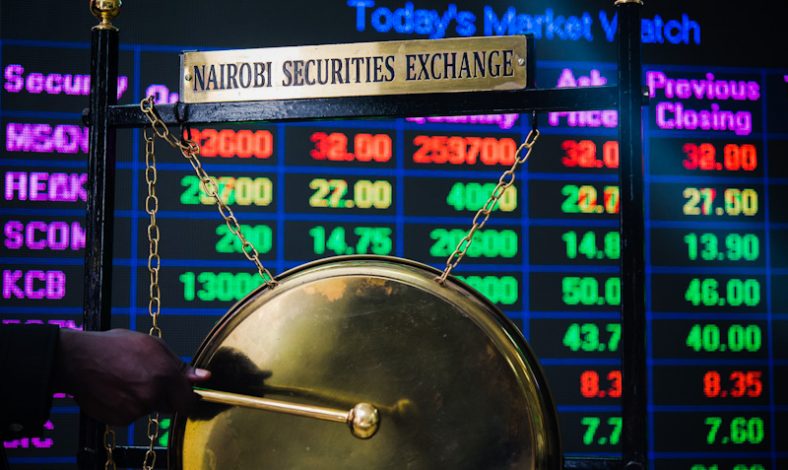
The Nairobi Securities Exchange delivered a broad recovery during the week ended June 4. The NASI gained 1.78 per cent, the NSE 25 rose 2.20 per cent, and the NSE 20 added 1.49 per cent. Market capitalisation expanded by the same margin as the NASI, reaching KSh 3,472.9 billion by close on June 4.
Trading volumes surged. Total shares traded jumped 104 per cent week on week to 137 million shares, while equity turnover more than doubled, rising 132 per cent to KSh 5.4 billion. That kind of volume increase alongside rising prices suggests genuine buying interest rather than thin-market moves.
Bond market activity ran in the opposite direction. Secondary market bond turnover fell 31.4 per cent during the week to KSh 25.4 billion, consistent with the broader trend of investors preferring shorter maturities as rate expectations shift.
Kenya’s Eurobond yields continue to fall
In the international debt markets, yields on Kenya’s Eurobonds declined by an average of 6.11 basis points during the week. The 2028 bond yielded 7.01 per cent on June 4, down from 7.16 per cent on May 28. Yields on bonds issued by Côte d’Ivoire and Angola also fell.
| Bond | 28 May 2026 (%) | 04 Jun 2026 (%) | Change (bps) |
|---|---|---|---|
| Kenya 2028 (10yr) | 7.16 | 7.01 | -15 |
| Kenya 2031 (6yr) | 7.38 | 7.33 | -5 |
| Kenya 2032 (12yr) | 7.78 | 7.69 | -9 |
| Kenya 2034 (13yr) | 8.28 | 8.25 | -3 |
| Kenya 2048 (30yr) | 8.94 | 8.96 | +2 |
Falling Eurobond yields signal that international investors view Kenya’s external debt as less risky than they did a week ago. That is a meaningful signal given that Kenya’s public and publicly guaranteed external debt stood at USD 43.74 billion as of March 2026, equivalent to KSh 5,683 billion.
Government domestic debt climbs past KSh 7 trillion
Kenya’s gross domestic debt reached KSh 7,247 billion as of May 29, 2026, up from KSh 6,326 billion at the end of June 2025, a rise of KSh 921 billion in less than a year. Treasury bonds account for 82 per cent of total securities outstanding, while Treasury bills make up the remaining 15.7 per cent.
Financial corporations, led by commercial banks, pension funds, and insurance companies, hold nearly 80 per cent of domestic government debt. Households hold 6.3 per cent, while non-residents account for 4.2 per cent, down from 4.7 per cent at end-2025 as foreign appetite for local paper has moderated.
Total public debt, combining domestic and external obligations, stood at KSh 12,833 billion as of March 2026.
Global backdrop: oil eases, inflation lingers
International oil prices retreated slightly during the week as investors responded to progress in US-Iran peace negotiations. Murban crude fell to USD 87.38 per barrel on June 4 from USD 88.48 on May 28. That compares with levels above USD 93 per barrel earlier in May, suggesting some relief may be building, though NCBA’s analysts caution that structural supply constraints in Europe and Asia could keep prices elevated into the second half of the year.
In the Euro Area, headline inflation rose to 3.2 per cent in May from 3.0 per cent in April, with core inflation climbing to 2.5 per cent from 2.2 per cent. Germany bucked that trend slightly, with its inflation rate easing to 2.6 per cent from 2.9 per cent. In the United States, initial jobless claims rose to a four-month high, though the labour market retained its broader stability. The US Dollar Index strengthened 0.4 per cent on the week.
The global picture reinforces what Kenyan policymakers already know: inflation risks remain tilted to the upside, and the source lies largely outside their control. What happens on June 9 will determine how aggressively they choose to respond.
Kenya’s private sector contracts for a third month as costs bite
