



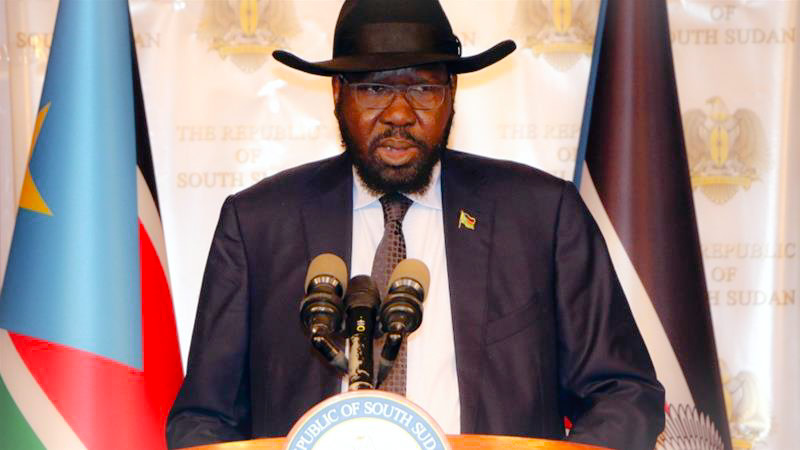
South Sudan just told most of its neighbours to pay up at the border.
Juba’s Interior Ministry has rewritten its visa policy, and the new rules land unevenly across a region that has spent a decade talking about open borders. Egyptians and Tanzanians walk in free. Everyone else, including citizens of Kenya, Uganda, and the Democratic Republic of Congo, now needs a single entry visa priced at 100 dollars, though the ministry has carved out discounted rates for those three neighbours specifically.
South Sudan sits inside the East African Community, a bloc built on the promise of free movement, and it just finished a formal step toward honouring that promise. The gap between the paperwork and the passport stamp is where this story lives.
What the new fees actually require
Under the updated policy, only Egypt and Tanzania receive full visa free access among African nations. Travellers from most other countries must apply and pay before they arrive. Kenya, Uganda, and the DRC do get a break on the standard 100 dollar single entry fee, a nod to their EAC membership, but a break is not an exemption. Ghanaians and Nigerians face the full charge with no discount at all.
This is a tiered system, not a blanket policy, and the tiers matter. A Kenyan businessperson crossing for a three day trip now budgets for a fee that did not exist under the older, looser arrangement. A Ugandan trader moving goods across the border faces the same new math. The e visa portal, evisa.gov.ss, is where most applicants now have to start, and confusion about which category applies to which passport has left many travellers guessing.
Why Ugandans are the loudest
Reaction from Uganda has been sharp, and it carries history behind it. Ugandan commentators online have pointed to their country’s support for the SPLA during South Sudan’s independence struggle and its long record of hosting South Sudanese refugees, arguing that goodwill should translate into reciprocal treatment at the border. The frustration is not really about the fee itself. It is about the sense that a relationship built on solidarity has been reduced to a line item.
Calls for Kampala to respond in kind have followed, though no formal retaliation has been announced. What is clear is that this dispute has become a live test of whether regional loyalty carries any weight when a government needs revenue.

The EAC protocol South Sudan just signed onto, on paper
South Sudan joined the East African Community in 2016, but membership and implementation are two different things. The EAC’s Common Market Protocol, adopted in 2009, is explicit about intent. It commits partner states to the free movement of goods, persons, labour, services, and capital, along with the right of establishment and residence, across the bloc. In practice, free movement of people has lagged behind free movement of goods, and full labour mobility remains limited to specific worker categories listed in the protocol’s annexes.
South Sudan has now taken a formal step toward closing that gap. In late 2025, the Transitional National Legislative Assembly ratified a bill domesticating the EAC treaty and its protocols into national law, a move intended to align the country’s trade and movement rules with the rest of the bloc. Lawmakers involved in the process noted that the ratification also commits South Sudan to its membership subscription payments, addressing a backlog that had left the country’s representatives in the East African Legislative Assembly without their allowances.
That ratification makes the new visa fees harder to square with policy on paper. A country that has just committed, on paper, to free movement for its EAC partners is simultaneously charging three of those same partners for entry. Separately, South Sudan has also received a draft free movement protocol from the Intergovernmental Authority on Development, the regional bloc known as IGAD, which it signed in 2022 but has not yet ratified domestically. Officials say an explanatory note is now being prepared to guide that process forward.
What AfCFTA says about people and trade
The African Continental Free Trade Area, the pact meant to knit the whole continent into one trading bloc, treats movement of people as inseparable from movement of goods. The agreement establishing the AfCFTA states plainly that its core purpose is to create a free trade area for goods and services, facilitated by movement of persons, as part of deepening economic integration across Africa.
That principle has a companion instrument, the Protocol to the Treaty Establishing the African Economic Community on Free Movement of Persons, Right of Residence and Right of Establishment, opened for signature alongside the AfCFTA agreement in Kigali in 2018. South Sudan is among the countries that signed it. But signing and ratifying are not the same act, and continent wide uptake has been slow. Roughly 30 states signed the free movement protocol compared with 44 that signed the trade agreement itself, a gap that trade analysts have flagged as a structural weakness. One assessment from the European Centre for Development Policy Management put it bluntly: African governments have shown through their actions that trade, not the movement of people, is the priority, since ratification of the free movement protocol lags far behind ratification of the trade deal itself, even though the same traders and truck drivers who carry goods across borders are the ones the protocol is meant to protect.
South Sudan’s new visa fees sit squarely inside that contradiction. A continental trade framework says people and goods should move together. A regional bloc South Sudan just domesticated into law says the same thing. And the country’s own border policy, at least for now, says otherwise.
Where South Sudan’s passport actually stands
Context helps explain why Juba might want the revenue. The Henley Passport Index, which ranks passports by the number of destinations their holders can enter without a prior visa, places South Sudan near the bottom of the global table, among the weakest passports on the continent. That weak ranking cuts against South Sudan’s own citizens when they travel abroad, and it stands in contrast to the relatively stronger passports held by its EAC neighbours, including Kenya and Uganda, both of which sit in the middle tier of the same global ranking. Countries with limited outbound travel power sometimes lean harder on inbound visa fees as a revenue source, since they have fewer diplomatic levers to negotiate reciprocal free access abroad.
DRC draws its own line
South Sudan is not acting in isolation. The Democratic Republic of Congo has published its own restrictive visa list, and the contrast is instructive. According to the DRC’s Direction Générale de Migration, only seven countries receive visa free entry for holders of ordinary passports: Burundi, Kenya, the Republic of the Congo, Rwanda, Tanzania, Uganda, and Zimbabwe. Every other African nation, 47 in total, is excluded from free entry. DRC is itself an EAC member, having joined in 2022, which means two of the bloc’s newer entrants are now the two most visibly tightening their border rules even as the wider region talks up integration.
A regional pattern worth watching
Put together, these moves describe a region pulling in two directions at once. Governments keep signing the paperwork of integration, EAC protocols, AfCFTA commitments, IGAD free movement drafts, while individual states quietly protect their border revenue and their own leverage. For ordinary travellers, this means checking the fine print country by country rather than assuming EAC membership guarantees anything at the airport or the land crossing.
The test now is whether South Sudan’s 2025 ratification of the EAC treaty translates into an actual policy reversal on visa fees, or whether it stays a symbolic gesture sitting alongside a genuinely tighter border. Kenyan, Ugandan, and Congolese travellers currently budgeting for that 100 dollar fee will be the first to find out which one it is.
