


Softcare earned Sh13.1 billion ($101.2 million) from Kenya in 2025, up 12% from Sh11.7 billion ($90.5 million) the previous year, making Kenya the company’s largest single market globally.
The growth extends a four-year run:
Kenya leads Softcare’s global markets
Kenya outpaced every other country in Softcare’s portfolio, ahead of Ghana ($91.8M), Uganda ($51M), Tanzania ($50.4M), and Côte d’Ivoire ($46.2M). The company holds one of its nine factories in Kenya, with non-current assets of $25.8 million in the country, more than any other market.
In 2025, Softcare launched a solar project at its Kenya facility it says will “reduce carbon dioxide emissions by approximately 3,547 tonnes annually.”
What sells
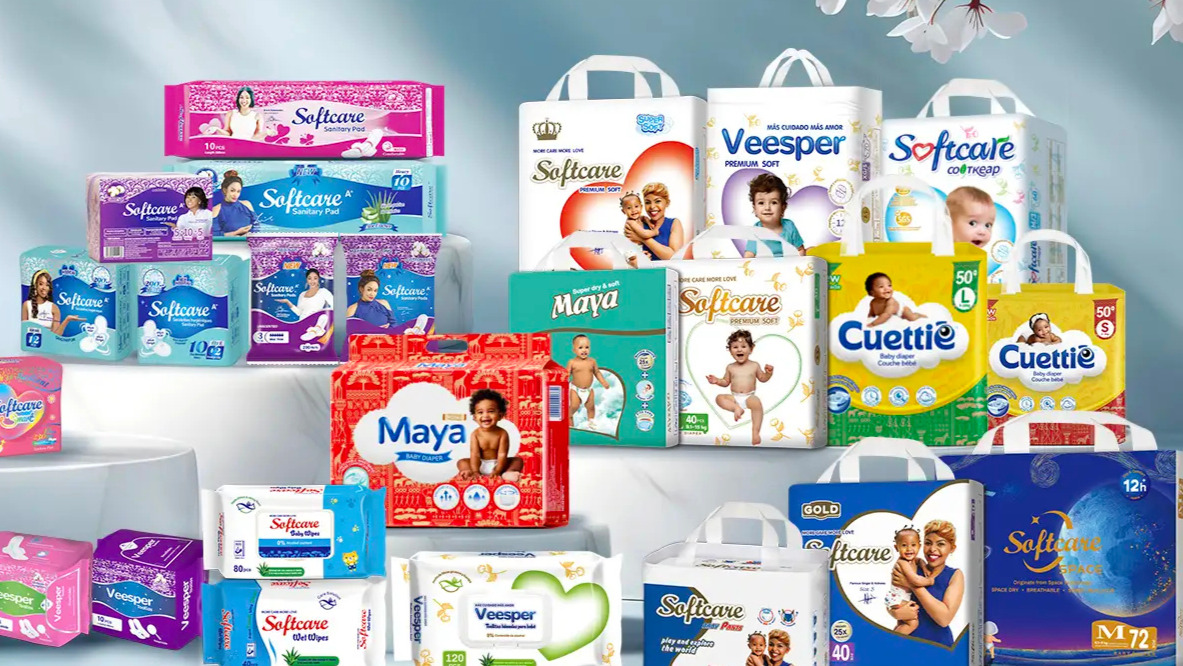
Baby diapers and pants account for 78.6% of total group revenue. Sanitary pads — Feminine Care in company reporting, grew 27.9% globally in 2025. The company says rising urbanisation and “increased promotion and awareness of women’s health in certain countries” expanded demand across Africa.
Wet wipes grew 53.8% year-on-year. The company attributes this to “rising health awareness and the trend towards refined infant care.”
Softcare sells primarily through wholesalers, which contributed 61.1% of revenue, and distributors at 35%. East Africa — where Kenya anchors — generated $256.1 million, or 45.1% of total group revenue.
Company results
Softcare, listed on the Hong Kong Stock Exchange in November 2025 under stock code 2698, posted total revenue of $567.4 million in 2025, up 24.9% from $454.4 million in 2024. Net profit rose 27.4% to $121.2 million.
The company employs 2,906 people, with approximately 91% locally recruited. It operates nine factories and 66 production lines, adding one factory and 18 production lines during 2025.
In Kenya, the Consumer Choice Awards named Softcare the most preferred sanitary pads and baby diapers brand. Brand Africa’s Kenya’s Best Brands Awards gave it most admired personal care brand.
Looking to 2026, the company said its “competitive advantages, built upon ‘localized production + global supply chain + deep distribution’, are expected to further solidify the Group’s leading position in the African hygiene products market.”
