



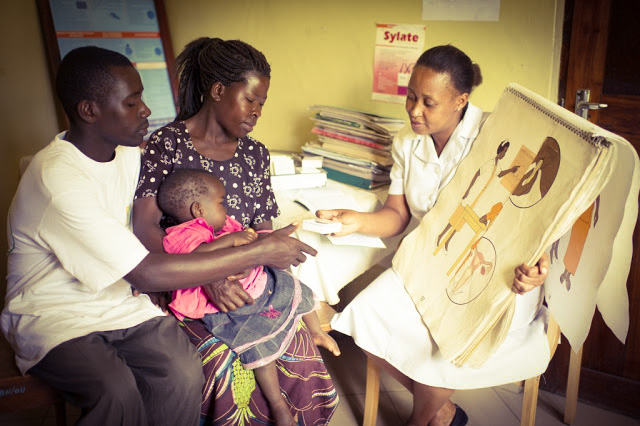
Seven in ten married women of reproductive age in Kenya want to control when, or whether, they have children.
The National Update on Family Planning shows that 76% of married women under 49 need contraception, either to space their pregnancies or stop having children altogether.
Specifically, 46% say they do not want more children, and 30% want to delay their next pregnancy. Compiled by the Division of Reproductive, Maternal, Newborn, Child and Adolescent Health (RMNCAH), the report maps both the progress Kenya has made and the distance it still needs to travel.
The Urban-Rural Divide Still Shapes Who Gets Help
Kenya’s total fertility rate has dropped markedly over the past three decades, falling from 6.7 children per woman in 1989 to 3.4 in 2022. Progress, yes. But it is not shared equally.
Women in rural areas still average 3.9 children, compared to 2.8 in urban settings. The Ministry links this gap directly to unequal access to contraceptives and reproductive health services, not to differing desires. Rural women want to plan their families just as much as urban women do. What differs is what they can reach.
The 7th Edition of the National Family Planning Guideline, published by the Ministry of Health in May 2025, identifies the main barriers to access: distance to health facilities, cost, cultural and religious resistance, provider bias, and myths about contraception. These barriers disproportionately affect young people, unmarried women, people living with disabilities, and hard-to-reach communities including pastoralists, refugees, and mobile populations.
Six in Ten Women Now Use Contraception
At least 60% of women currently use some form of contraception. Among modern methods, injectables lead uptake, followed by implants, pills, and intrauterine devices (IUDs). The modern contraceptive prevalence rate (mCPR) among married women climbed from 53% in 2014 to 57% in 2022, according to the Kenya Demographic and Health Survey (KDHS).
Driving this rise are improvements in supply chains and awareness campaigns, alongside targeted innovations. The Integrated Logistics Management Information System (iLMIS) now tracks contraceptive stock from national warehouses down to the facility level, reducing shortages. The Total Market Approach draws in both public and private sector providers to widen the distribution network.
The Ministry’s stated goal is direct: “to ensure universal access to a wide range of quality, affordable and accessible family planning commodities, information and equitable services.”
One in Seven Women Still Cannot Access Contraception
Despite the gains, 14% of women still have an unmet need for family planning, meaning they want to avoid or delay pregnancy but have no access to contraception. Adolescents and young women bear the sharpest burden, with nearly one in four reporting unmet need.
Teenage pregnancy, though declining from 18% in 2014 to 15% in 2022, remains a pressing concern. The Ministry’s FP2030 commitment includes reducing it to below 10%, an ambition that depends heavily on reaching young women before they face unwanted pregnancies, not after.
A Budget of Ksh 1 Billion, and Why It Is Not Enough
The 2024/25 national Budget Statement allocated Ksh 1 billion for reproductive health commodities, including family planning. It signals political will. But experts are frank about what it does not cover.
“Kenya is now a middle-income country,” said Dr. Edward Serem, Head of RMNCAH, at a media briefing in Nairobi. “The issue is not poverty but the need to reallocate and reprioritise resources from the exchequer.”
For years, Kenya’s family planning programme leaned heavily on donor financing. That support is not guaranteed to continue. Dr. Serem put it plainly: “We cannot afford interruptions,” urging Parliament to ring-fence family planning commodities in the national budget. The Ministry’s long-term vision calls for predictable domestic financing, moving from dependency on external funding to a system Kenya controls and sustains itself.
Self-Care Puts the Contraceptive in Her Hands
One of the most tangible shifts in the updated national guidelines is the emphasis on self-care. The 7th Edition of the National Family Planning Guideline formally integrates self-care interventions as a strategy to expand access, protect privacy, and reinforce the autonomy of women in managing their reproductive health.
DMPA-SC, a self-injectable contraceptive, now sits at the centre of this approach. Women can administer it themselves, pick up multiple doses at once, and maintain up to six months of protection without repeated clinic visits.
Yasmin Chandani, CEO of inSupply Health, spoke to what that means in practice: “Self-care puts control in the hands of women and girls. If they can pick up multiple doses and manage six months of protection, they are less likely to drop out of school or delay their careers.”
DMPA-SC is now available in public health facilities and private pharmacies across Kenya, removing the need for a clinical appointment for every injection.
Digital Counselling and New Guidelines Expand the Offer
The 7th Edition of the National Family Planning Guideline also introduces digital counselling (DC) and direct-to-consumer (DTC) services, changes that allow women to access family planning information and support outside of a clinic setting. The Counselling for Continuation (C4C) framework underpins this shift, placing individual needs at the centre of every interaction to reduce dropout and build consistent use over time.
The updated guidelines also expand the method mix, including the Hormonal Intrauterine Device (H-IUD) and broader fertility awareness-based methods. For the first time, the guidelines incorporate guidance on diagnosing and managing infertility, recognising that family planning is not only about preventing pregnancy but about supporting every person’s right to make a genuine reproductive choice.
Kenya’s Target: 64% Contraceptive Coverage by 2030
Kenya’s FP2030 commitment sets a target of raising the mCPR among married women from 57% to 64% by 2030, and to 70% by 2050. These are not aspirational figures. They anchor budget decisions, supply chain planning, and healthcare provider training.
Reaching them requires more than clinical services. It requires consistent domestic financing, sustained investment in community-based distribution, and a supply chain that reaches every woman regardless of where she lives or how far she is from the nearest facility. Kenya has a constitutional obligation to support this work. Article 43 of the Constitution of Kenya affirms that every person holds the right to the highest attainable standard of health, which includes reproductive health care.
