


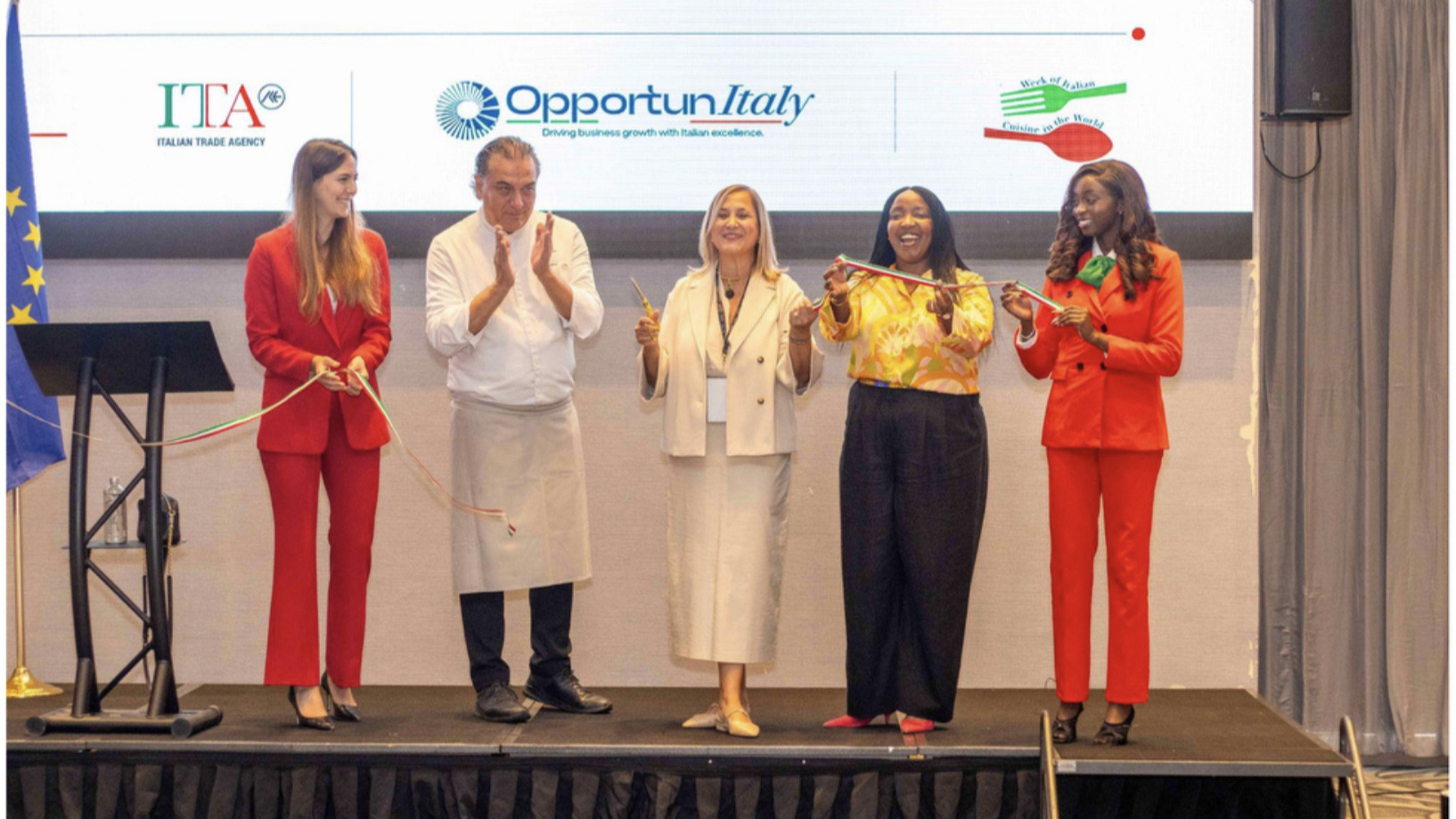
Chef Italo Bassi closed the opening day of Borsa Vini Kenya 2026 at a cooking station in the Trademark Hotel.
He built fusion recipes around Italian ingredients while importers, distributors and hotel buyers watched for dishes they could put on their own menus.
Bassi came as ambassador of the 11th Week of Italian Cuisine in the World. The Italian Trade Agency (ITA) in Nairobi organised the fair with the Embassy of Italy. It opened on 10 November and drew more than 150 industry professionals, including 11 invited buyers from Ethiopia, Rwanda, Tanzania and Uganda. Khusoko covered the market side in its report on Italian wine and Kenya’s import costs.
Italo Bassi cooks Italian ingredients for Nairobi’s menus
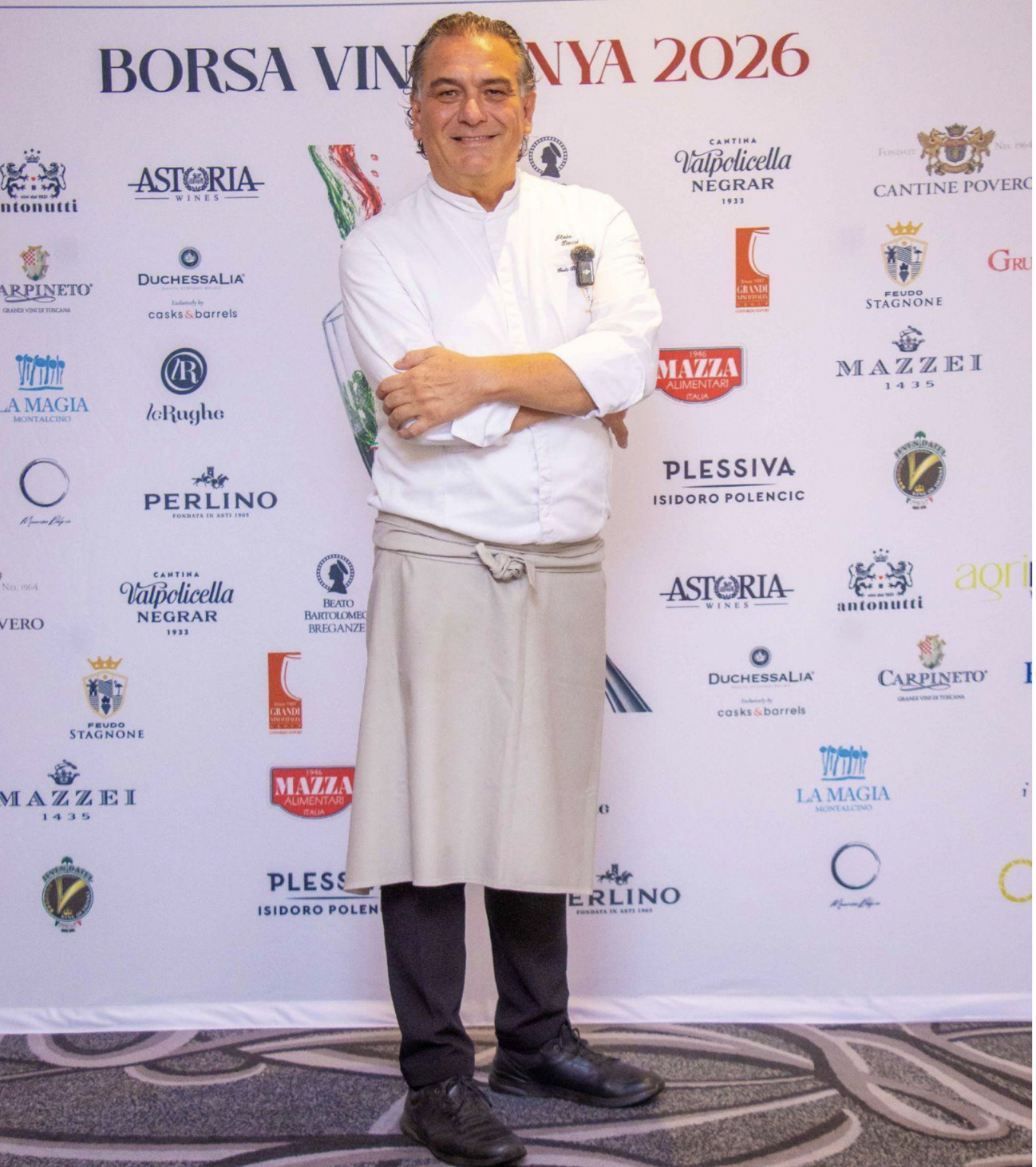
Bassi runs ConFusion in Porto Cervo, Sardinia. The restaurant became the first on the Costa Smeralda to earn a Michelin star, in 2019, and the Costa Smeralda tourism portal still lists it with one star in its 2025 Michelin Guide roundup. The name states his method: local ingredients of high quality paired with elements from abroad, cooked with Italian technique.
“The easiest and most effective way is to use local products,” he said at an earlier Italian Cuisine Week event in Calcutta.
In Nairobi his recipes used Italian ingredients and gave hospitality professionals ideas for their own menus. Italy’s strongest food lines in Kenya, said ITA Nairobi Director Alessandra Rainaldi, are olive oil, balsamic vinegar, preserved foods and artisanal cheeses.
Italy marks UNESCO recognition with a week of food events
Borsa Vini ran alongside the Week of Italian Cuisine in the World, held in Kenya from 8 to 14 November. This year’s programme celebrates UNESCO’s recognition of Italian cooking as intangible cultural heritage, granted in December 2025.
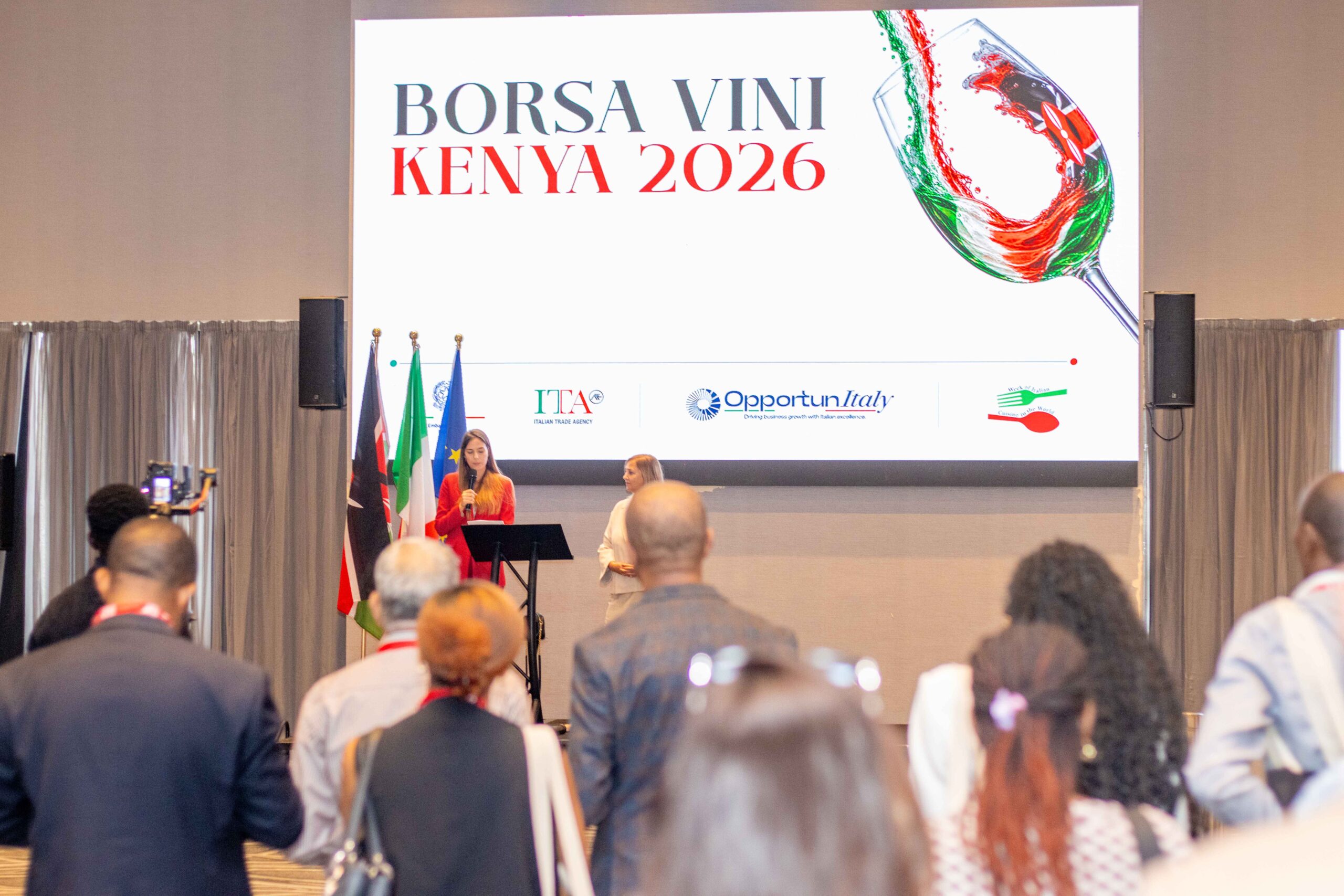
Giulia Orlandi, Second Secretary at the Embassy of Italy in Nairobi, tied wine to that heritage and to the Mediterranean diet.
“Wine is much more than a product because for us, for Italians, it reflects our history, our territories and our cultural heritage,” she said. She called Borsa Vini a platform to consolidate commercial ties between Italy and Kenya.
Twenty five producers from ten regions meet the trade
The exhibitors make wine, spirits and food specialties and come from 10 Italian regions. The two days combined business meetings, wine and food tastings, sommelier led masterclasses and the cooking demonstrations.
On 11 November the producers toured Nairobi’s wine distribution network, covering specialist shops, supermarkets and wine merchants, then held more meetings.
The ITA says Italian products already sell in Nairobi and on the coast, helped by expatriates, tourists and a group of higher-income local consumers. Buyers from four neighbouring countries explain why the agency treats Kenya as the hub for East Africa.
Masterclasses ask buyers to taste, then talk to producers
Victoria Mulu-Munywoki, a Kenyan sommelier and wine consultant, led the masterclasses. Participants tasted different styles, noted aromas and flavours, and named what they like. For hotel and restaurant staff, the sessions covered purchasing, food pairing and what to tell customers.
“Talk to the producers, talk to the people behind all the labels who have made their time to come to Kenya and create your own story to pass on to the Kenyan consumers,” she told participants.
Italy’s wine share rises to 14.5 per cent, and price limits the gain

Rainaldi told the opening that Italy is Kenya’s third largest wine supplier, after South Africa and France. Its share rose from 11.5 per cent in 2025 to 14.5 per cent in the first half of 2026. The gain came more in value than in volume, so Italy took a larger share of import spending without necessarily selling more bottles.
She told Khusoko that “the increase in value should not automatically be interpreted as an equivalent increase in consumer demand.” Price is one reason.
Rainaldi said a bottle can cost up to 160 per cent more in Kenya than at the Italian producer’s gate, once logistics, import tariffs and non tariff barriers, local taxes and distributor margins are added.
EABL shares trade near January level
East African Breweries (EABL) is the Nairobi Securities Exchange’s best known drinks stock, and its share price gives a read on how investors valued the sector this year. Wine importers at the fair do not trade there, but EABL sells beer and spirits across East Africa.
On 18 December 2025 EABL rose 19.3 per cent to KSh299.70 when Diageo agreed to sell its 65 per cent stake to Japan’s Asahi, the highest level in nearly a decade. The stock had gained 70.8 per cent in 2025 by then.
EABL closed at KSh267 on 2 January, fell to KSh255.25 by 9 January, touched KSh225 during trading on 19 January, and closed at KSh258.50 on 30 January and KSh259.50 on 27 February. By 19 August it stood at KSh275.50, up 4.75 per cent for the year, while the broader All Share Index (NASI) had closed at 227.17 on 3 July, up 21.75 per cent for the year. EABL trailed the market, though the two readings come from different dates.
For the year to 30 June, EABL reported net profit of KSh18.2 billion, up 49 per cent, on revenue of KSh145.96 billion, up 13.3 per cent. Spirits grew 30 per cent and mainstream and premium beer grew 9 per cent. The total dividend came to KSh12.70 per share, up 59 per cent: a KSh4 interim payment and a KSh8.70 final payment made on 31 October.
Asahi completed its purchase on 1 October for US$2.354 billion. The stock closed at KSh287.25 on 2 October, KSh274 on 28 October and KSh272 on 13 November. That is about 1.9 per cent above the January close, and the full dividend equals roughly 4.7 per cent of the November price. Asahi plans to bring Asahi Super Dry and Peroni Nastro Azzurro, an Italian lager, to Kenya.
The wider market moved little in the week to 12 November: NASI slipped 0.02 per cent and the NSE 20 rose 0.16 per cent, according to the Central Bank of Kenya’s weekly bulletin as reported by Business Today. The retailer Quickmart then opened 18.7 per cent higher on its NSE debut, valuing the company at KSh35.6 billion. Khusoko’s markets desk has the daily tape, and its report on Phoenix Beverages’ stake in Kenyan craft drinks covers the smaller end of the sector.
Kenya sells KSh15.22 billion to Italy and buys KSh21.21 billion
Provisional figures in the Kenya National Bureau of Statistics (KNBS) Economic Survey 2026 show merchandise exports to Italy rose 50.2 per cent to KSh15.22 billion in 2025, from KSh10.14 billion in 2024.
KNBS linked the rise to higher shipments of fixed vegetable or microbial fats and oils. Kenya’s imports from Italy stood at KSh21.21 billion, which puts two way trade at about KSh36.43 billion and leaves Kenya KSh5.99 billion short.
