



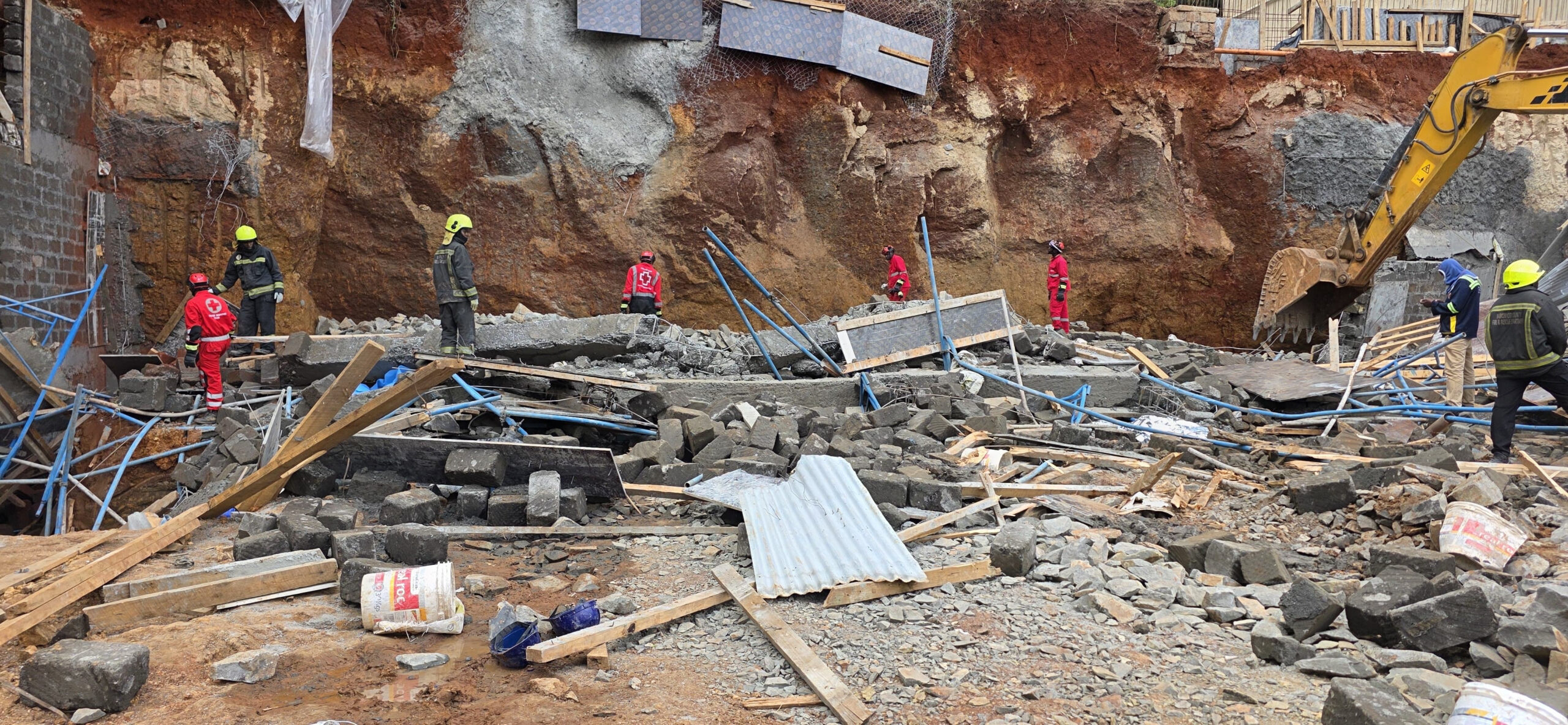
Nine to ten workers died on Nairobi construction sites between Friday and Saturday, and the data shows the deaths follow a pattern.
Stats Kenya, a data research company, has logged at least 84 building collapses in Kenya since January 2020, which killed at least 102 people. Nairobi accounts for 31 of those collapses and 39 of the deaths.
The Institution of Engineers of Kenya (IEK) wants investigations and nationwide audits. Nairobi City County says its Development Control Policy 2026 and Integrated Development Plan already target the gaps. For developers, lenders and buyers off plan, the question is whether enforcement now matches the paperwork.
Three collapses in 22 days, each on an active site
The Eastleigh collapse on 23 October 2026 killed eight, the highest toll in the Stats Kenya dataset. The Syokimau slab failure followed on 13 November, and the Riverside wall failed on 14 November. All three buildings were under construction.
IEK separates the last two: it points to temporary works and concrete placement at Syokimau, and to the excavation support system and retaining walls at Riverside. It says these are “not conclusions on cause or responsibility.”
At Syokimau, police said 405 workers were on site and all were accounted for. Duncan Ochieng, the assistant inspector general of police in charge of disaster management, said: “So far we have confirmed six bodies, but also five people have been rushed to Imara Daima Hospital.”
At Riverside, Nairobi County said 39 workers were on site when the wall gave way, and the Kenya Red Cross sent action teams and ambulances.
Construction and demolition sites hold 78% of deaths
Stats Kenya’s figures show where the risk sits. Of 102 deaths, 80 occurred at buildings under construction or demolition. Occupied buildings account for far fewer.
| Building status | Collapses | Deaths |
|---|---|---|
| Under construction | 41 | 65 |
| Being demolished | 12 | 15 |
| Occupied by tenants or businesses | 11 | 9 |
| Condemned or evacuated | 8 | 3 |
| All collapses, 2020 to Nov 2026 | 84 | 102 (138 injured) |
Most victims are workers. Neighbours, passers by and traders also die when a structure falls onto homes, shops and roads. That puts the cost on payrolls, site contractors and insurers before it reaches tenants.
Nairobi and four neighbouring counties hold 51 of 84 collapses
| County | Collapses | Deaths |
|---|---|---|
| Nairobi | 31 | 39 |
| Kiambu | 13 | 13 |
| Murang’a | 3 | 16 |
| Nairobi, Kiambu, Kajiado, Machakos and Murang’a combined | 51 | 72 |
Murang’a recorded the most deaths per collapse. At least four Nairobi collapses fell in Kamukunji Sub County, which includes Eastleigh, Gikomba and Shauri Moyo.
Kenya recorded 5 to 14 collapses a year from 2020 to 2025, with 14 the peak in 2022. By mid November 2026 the count stood at 25 collapses and 38 deaths. Stats Kenya cautions that older reports are harder to find online, so earlier years likely read low. It also notes that 37 of the 84 collapses fell in March to May, the long rains, though most reports give no cause.
Regulators found the problem before the collapses
The National Construction Authority (NCA) registers contractors and projects. In a 2018 assessment of 14,895 buildings, it found 10,791 needed demolition or strengthening before safe use, and only 2,194 qualified as safe. Its 2020 report counted 87 collapses in the previous five years, with about 200 deaths. In 2022 it inspected 26,060 projects and suspended 18,192, or 69.8%, for failing building regulations.
The 2018 and 2020 figures are reported by The Star.

Approvals and enforcement
The county names collapse as a problem in its own policy. The Executive Summary of the Nairobi City County Development Control Policy (final version dated 14 July 2026) lists buildings built without approval, buildings that depart from approval conditions, and the “collapse of buildings due to weak and unstable structures.”
It says the county has deployed technical staff to sub counties, run periodic audits of the built environment and stepped up enforcement.
| County document | What it says | Where |
|---|---|---|
| Development Control Policy 2026 | Forms an Urban Planning Technical Committee of planners, architects, engineers and surveyors as the main advisory and review body on development control | Section 3, governance |
| Development Control Policy 2026 | Commits to train and recruit staff and move the planning function to ward level | Section 4.1.1 |
| Development Control Policy 2026 | Lets citizens report illegal developments by hotline, mobile application or ward office | Section 3.6 |
| Development Control Policy 2026 | Withholds the Building Permit until the Development Impact Fee clears, and withholds the Occupation Certificate until payment is validated on the electronic permit platform | Section 4.3.5 |
| Development Control Policy 2026 | Plans regulations that define offences, graduated fines, enforcement notices, stop orders and, as a last resort, demolition of illegal structures | Executive Summary, implementation |
| Integrated Development Plan 2023 to 2027 | Strategy to “enhance building safety and compliance” through a multi agency building audit covering inspection and enforcement | Planning sector strategies |
| Integrated Development Plan 2023 to 2027 | Lists collapsed buildings among disasters needing emergency response, with sensitisation and enforcement as the mitigation | Cross sector impact table |
The plan sets numerical targets for statutory inspections. It budgets KSh 85 million across five years for surveillance and statutory inspections to monitor developments.
| Plan year | Inspection target | Budget (KSh million) |
|---|---|---|
| Year 1 | 4,420 | 10 |
| Year 2 | 4,862 | 15 |
| Year 3 | 5,348 | 15 |
| Year 4 | 6,000 | 20 |
| Year 5 | 8,000 | 25 |
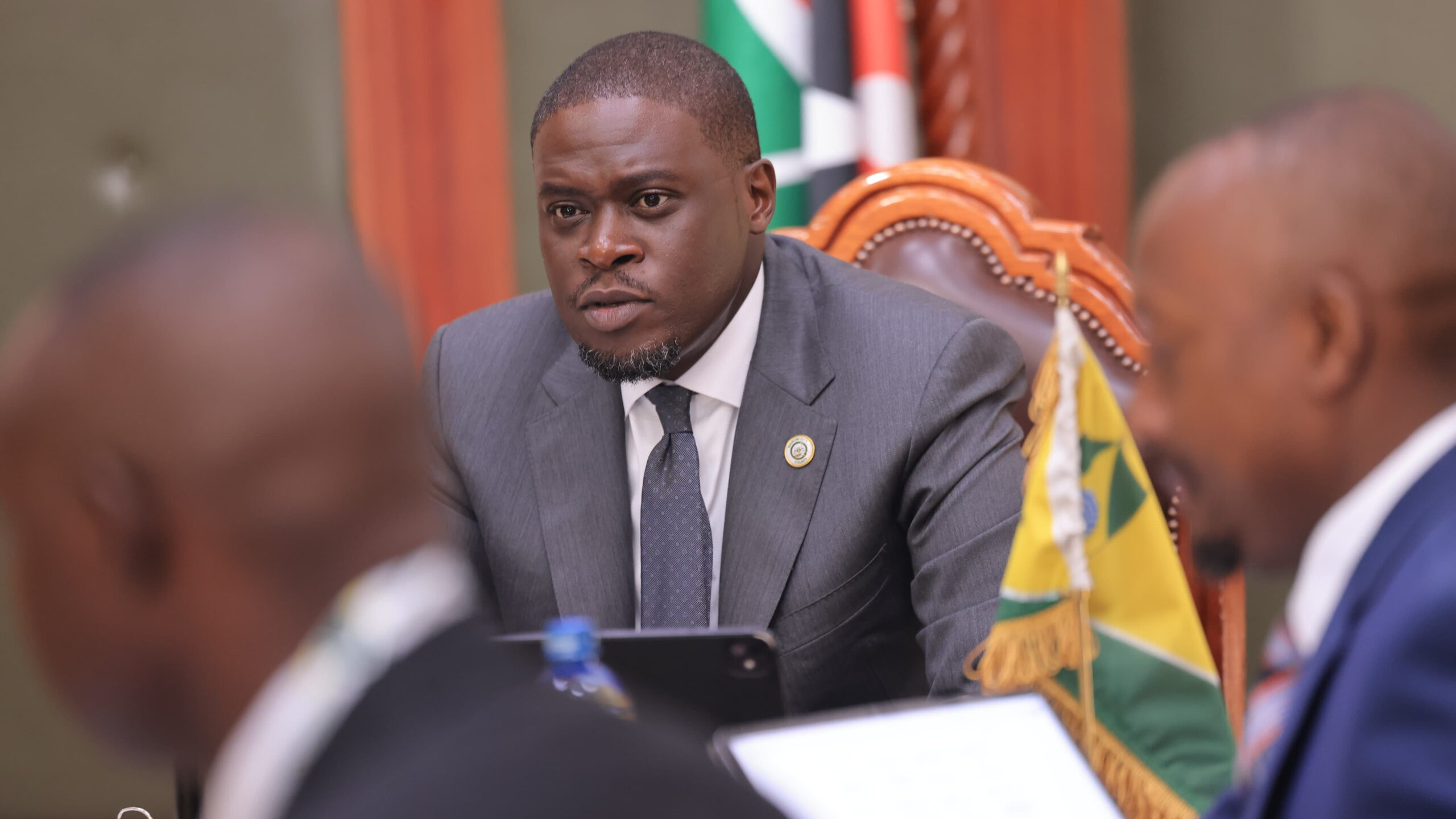
Governor Johnson Sakaja addressed Eastleigh directly on 24 October. He said county records show an application for a 15 storey building with a basement was submitted and never granted. In his words: “The application was never granted, meaning there is no approval for this construction.”
He said a change of user application for the plot was approved in 2024, the Urban Planning Committee raised concerns in November 2024, and an enforcement order followed earlier this year. The county sent its documents to the police and the Directorate of Criminal Investigations (DCI) and called for investigation of the architect, physical planner and engineering firm named in its records.
More than 200 files sit at the Director of Public Prosecutions’ office and asked for prosecution powers to return to the county, as KBC reported. Capital FM reported a counter claim: the DPP’s office said City Hall never submitted an inquiry file on the Eastleigh collapse.
IEK wants audits and independent investigations
IEK addressed national and county governments, the NCA, the Engineers Board of Kenya (EBK), the Directorate of Occupational Safety and Health Services and the National Building Inspectorate. It asked for independent technical investigations, preservation of evidence and a halt to work in affected areas until safety clearance. I
t also asked for registered engineers on design and supervision until the Occupation Certificate issues, risk based audits of high risk projects, and a national review of safety regulations “with clear timelines and public reporting.”
The county’s tools and IEK’s demands overlap on three points: engineer supervision, inspection and enforcement. They differ on who investigates. IEK wants independence and EBK discipline for engineers found culpable. The county has referred matters to police and the DCI.
What this means for owners, lenders and tenants
A project with an approval gap faces stop orders and demolition risk under the county’s planned enforcement rules. Lenders carry that risk on construction loans.
Off plan buyers carry it through delays. Sites that pass inspection keep the permit and Occupation Certificate path open, and the county has tied that certificate to full payment of the Development Impact Fee.
