


The Dangote Group has handed a major engineering consultancy contract to Engineers India Limited (EIL), pushing its planned Lamu mega refinery closer to construction as Kenya prepares to break ground on the project next week.
The Indian state-owned firm will serve as Project Management Consultant and Engineering, Procurement and Construction Management Consultant for the refinery, according to a filing disclosed on the Bombay Stock Exchange on September 22.
Dangote’s source text puts the contract value at US$450 million, though public records point to a US$350 million EIL award in January 2026 tied to the Lekki refinery expansion in Nigeria, a detail worth confirming before the figure runs further.
Dangote picked EIL largely on the strength of its record with the Lagos operation. The consultancy managed the same functions for the 650,000 barrel per day Lekki refinery and remains involved in its expansion, giving the Lamu project a technical partner already familiar with Dangote’s engineering standards and delivery pace.
Groundbreaking Set for Next Week
Construction on the refinery is set to begin next Wednesday, Deputy President Kithure Kindiki announced, with President William Ruto expected to lead the ceremony alongside invited heads of state from across East Africa. Aliko Dangote had earlier told investors and analysts in Botswana that the project would launch on September 30, with construction targeted to wrap within three years.
Speaking after a final preparation meeting in Karen, Kindiki said the refinery would accelerate industrialisation, generate up to 60,000 direct and indirect jobs, and lift the coastal economy. “The strategic prize for Kenya is shifting the country from being predominantly a fuel importer to becoming a regional processing and distribution hub,” he said.
Kenya settled on Lamu after weighing the site against Mombasa and Tanzania’s Tanga region. Dangote’s team cited the deep water berths at Lamu Port and access to the Lamu Port South Sudan Ethiopia Transport corridor, which opens a route to landlocked markets across the region. Devakumar Edwin, Dangote’s Group Vice President for Oil and Gas, has said the site has been selected and that soil testing, design and engineering work are already underway.
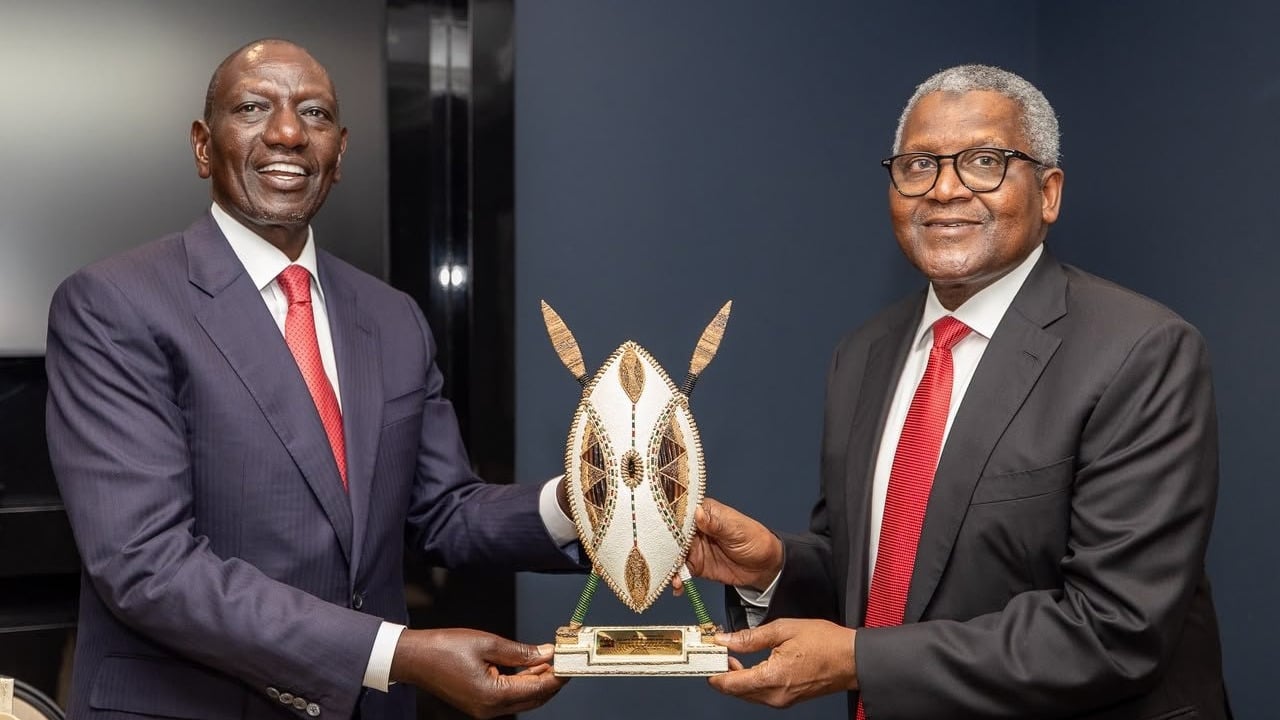
President Ruto, speaking separately in New York during the UN General Assembly, said he had held talks with Dangote and Africa Finance Corporation CEO Samaila Zubairu to finalise financing ahead of the launch.
“We are ready to break ground on the East Africa refinery in Lamu, a transformative project that will enhance the region’s energy security, deepen local value addition, create jobs and advance our industrialisation agenda,” he said.
We are ready to break ground on the East Africa refinery in Lamu, a transformative project that will enhance the region’s energy security, deepen local value addition, create jobs and advance our industrialisation agenda.
Held talks with the President and CEO of Dangote… pic.twitter.com/4pMX5WBxez
— William Samoei Ruto, PhD (@WilliamsRuto) September 21, 2026
How Kenyans Could Buy Into the Project
The Nairobi Securities Exchange is working on a framework that would let Kenyan investors buy into the Dangote Petroleum Refinery and Petrochemicals IPO through locally listed units, with a full cross-listing to be pursued later. The NSE has reportedly engaged Dangote’s team directly, and an announcement is expected once Kenya’s Capital Markets Authority signs off.
AXYS Investment Bank, an NSE-licensed participant, is already facilitating access to the IPO through its network of brokers in Nigeria, charging a 2 percent processing fee on a minimum investment of US$2,000.
The CMA has urged caution. The regulator noted that the Dangote refinery IPO falls under Nigerian jurisdiction and has not been submitted to Kenya’s regulator for approval. It has told investors to verify the authenticity of any prospectus or offer document before paying money or sharing personal and financial details, and to deal only through licensed intermediaries and official communications.
Regional Equity and Financing
Dangote has offered East African governments a combined 30 percent equity stake in the refinery. Kenya is considering a 10 percent stake worth roughly US$500 million, while Ethiopia and Rwanda have also expressed interest.
The project follows a financing structure of 30 percent equity and 70 percent debt, and its projected cost has come down in recent months on the back of efficiencies gained from the Lagos refinery, tighter construction timelines and more favourable financing terms.
Once operational, the facility is expected to supply refined petroleum products to Kenya, Uganda, Tanzania, South Sudan and Ethiopia, cutting into Kenya’s fuel import bill.
What Could Slow It Down
The refinery’s promise comes with real constraints. Kenya has no commercial scale crude production of its own, and regional infrastructure that the project depends on, including oil storage terminals along the LAPSSET corridor, remains largely undeveloped.
Estimates for the refinery’s scale and cost still vary across sources, with figures for capacity, price tag and job creation shifting as the project moves from announcement to execution. Those gaps will need closing well before the first barrel of crude reaches Lamu.
