



State House confirmed on September 8, 2026 that foreign nationals running small businesses in Kenya have 90 days to sort out their immigration, work permit, registration and licensing paperwork. Miss the deadline, and enforcement follows “firmly and strictly,” according to spokesperson Hussein Mohamed.
The window follows a directive President William Ruto issued on September 2 at State House, where he told Micro, Small and Medium Enterprises traders that foreign hawkers selling items such as duvets were taking business from Kenyans in small scale retail. He ordered administrative action to start “from next week” and asked Trade Cabinet Secretary Lee Kinyanjui to act once he returned from Addis Ababa.
Six days later, the government moved from a closure order to a structured grace period, run with embassies of the countries involved. People who register during the 90 days are treated as being in the country legally while the process runs, the State House statement said.
What the 90 days cover
Government agencies will guide traders and apply the rules “fairly, consistently and without discrimination” through the grace period, the statement said. Once it ends, immigration, work permit, registration and licensing requirements move to full enforcement, in line with the law and due process.
Ruto has also directed that the Local Content Bill, 2025, National Assembly Bill No. 45 of 2025, currently before Parliament, be expanded to set out who may trade at small scale in Kenya. The framework would reserve some categories of business for Kenyan citizens while giving foreign nationals lawfully entitled to work, invest and trade legal certainty to keep operating.
State House tied the move to Kenya’s regional commitments, pointing to the East African Community, the free movement of people, labour, services and capital, and the African Continental Free Trade Area as frameworks the government intends to keep honouring alongside the domestic rules.
No room for vigilantes, government says
Only authorised state agencies interpret and enforce the law, the statement said. “No individual or group has the authority to harass, intimidate, threaten or interfere with foreign nationals or their businesses,” it warned, adding that anyone who does so will face action under the law.
The government separated the economic complaints behind the policy from how people respond to them: “Legitimate concerns about economic opportunity can never justify discrimination, excuse lawlessness or sanction violence.”
Trade ministry: a visa is not a work permit
Two days earlier, on September 6, the Ministry of Investments, Trade and Industry issued its own clarification. Cabinet Secretary Lee Kinyanjui laid out the visa rules the crackdown sits inside. Kenya adopted visa free entry for visitors worldwide on January 1, 2024, and dropped Electronic Travel Authorisation requirements for citizens of most African countries in January 2025.
Kinyanjui said some visitors had misused that access, entering on investor or tourist status and then doing work their status does not permit, particularly in retail and local trade. Visas will be revoked for anyone found in breach, he said, adding that free entry or an eTA exemption does not by itself give someone the right to work, trade or run a business in Kenya. Those activities still need to meet immigration, work permit and other regulatory requirements.
He also pointed to Kenya’s status as an East African Community signatory bound to free movement of goods and people across the Customs Union, saying that commitment factors into how immigration and work permit rules apply to citizens of partner states.
Timeline of the directive
| Date | Development |
|---|---|
| Jan 1, 2024 | Kenya opens visa free entry to visitors worldwide |
| Jan 2025 | eTA requirement dropped for most African nationals |
| Sept 2, 2026 | Ruto orders foreign small traders to close, cites competition with Kenyan hawkers |
| Sept 6, 2026 | Trade ministry clarifies visa rules, says visas will be revoked for misuse |
| Sept 7, 2026 | Burundian nationals queue at their Nairobi embassy amid deportation fears; East Africa Law Society issues statement from Arusha |
| Sept 8, 2026 | State House announces 90 day regularisation window; Kenya National Commission on Human Rights issues warning |
Regional pushback
The policy has drawn scrutiny from legal and rights bodies. The East Africa Law Society, in a statement from Arusha on September 7, said Kenya retains the power to enforce immigration, licensing, tax and labour law, but that enforcement should rest on the law and the facts of each case, not on nationality. The society pointed to reports of Burundian nationals seeking consular help in Nairobi and cited the EAC Common Market Protocol’s requirement of non-discrimination on the basis of nationality, while noting that the protocol does not exempt East African citizens from the laws of the country where they live or trade.
The Kenya National Commission on Human Rights followed on September 8, saying it had received complaints from refugee and migrant communities in several counties, including threats, intimidation, discriminatory treatment and online attacks, with reports from Miritini in Mombasa County. The commission referenced Operation Usalama Watch, the 2014 security sweep that drew allegations of rights violations against Somali residents, and said Kenya should build in safeguards before violations happen, not after. It called for enforcement based on individual conduct, not the profiling of entire communities.

How Kenya defines a small trader
The rules Ruto wants applied to foreign nationals sit inside a system that already sorts Kenyan businesses by size. The Micro and Small Enterprises Act, 2012 splits firms into three bands, based on how many people they employ and how much they turn over in a year.
| Category | Employees | Annual turnover | Examples |
|---|---|---|---|
| Micro | Under 10 | Up to Ksh 500,000 | Mama mboga stalls, kiosks, street hawkers |
| Small | 10 to 49 | Ksh 500,000 to Ksh 5 million | Hardware shops, neighbourhood bakeries, tailoring workshops |
| Medium | 50 to 99 | Ksh 5 million to Ksh 50 million | Wholesale distributors, mid sized manufacturers |
These businesses cluster in a handful of sectors. Retail and wholesale trade cover open air market stalls and general shops. Agribusiness covers smallholder farming, milk vending and produce aggregation. Jua Kali manufacturing covers informal metalwork, carpentry and textile production. Services cover boda boda transport, salons and cybercafes.
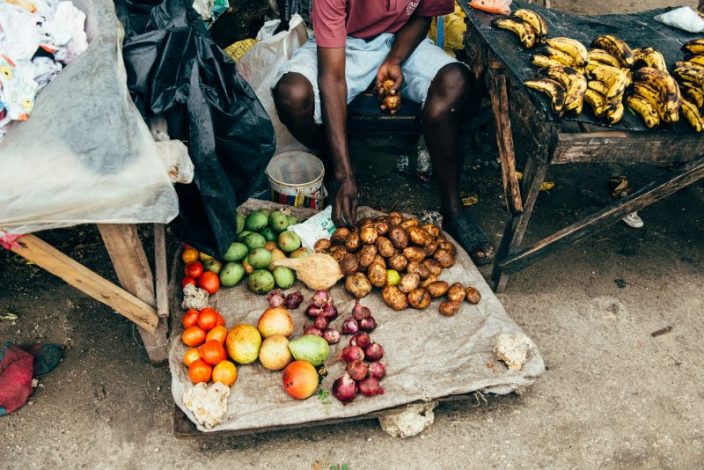
It is the micro end of that scale, hawking and small retail, where Ruto’s directive is aimed, and where foreign traders and Kenyan traders are most likely to be selling side by side in the same markets.
The stakes for the informal economy
Kenya’s informal sector, known as Jua Kali, employs most of the country’s workforce and produces most of the new jobs each year. Khusoko has reported that the sector contributes over 35 percent of GDP and employs close to 80 percent of the workforce, acting as a shock absorber during periods of slow job growth.
In an earlier analysis of Economic Survey data, Khusoko found that 83.6 percent of new jobs created in 2018 came from the informal sector, against 16.4 percent from formal employment, with wholesale and retail trade among the leading contributors.
Small scale retail and hawking sit inside that informal economy, and it is this segment the Ruto directive targets. It is also the segment where undocumented workers, Kenyan or foreign, are hardest to track, and where a blanket enforcement push risks catching lawful traders alongside those working outside the rules.
Kenya now has until early December to show it can run the regularisation exercise the way State House has described it: case by case, coordinated with foreign missions, and without the harassment its own statement warns against.
The Local Content Bill, once expanded, will decide whether the current administrative directive becomes settled law, and how far it goes in setting aside trade for Kenyan citizens without shutting the door on the foreign investment the government says it still wants.
