



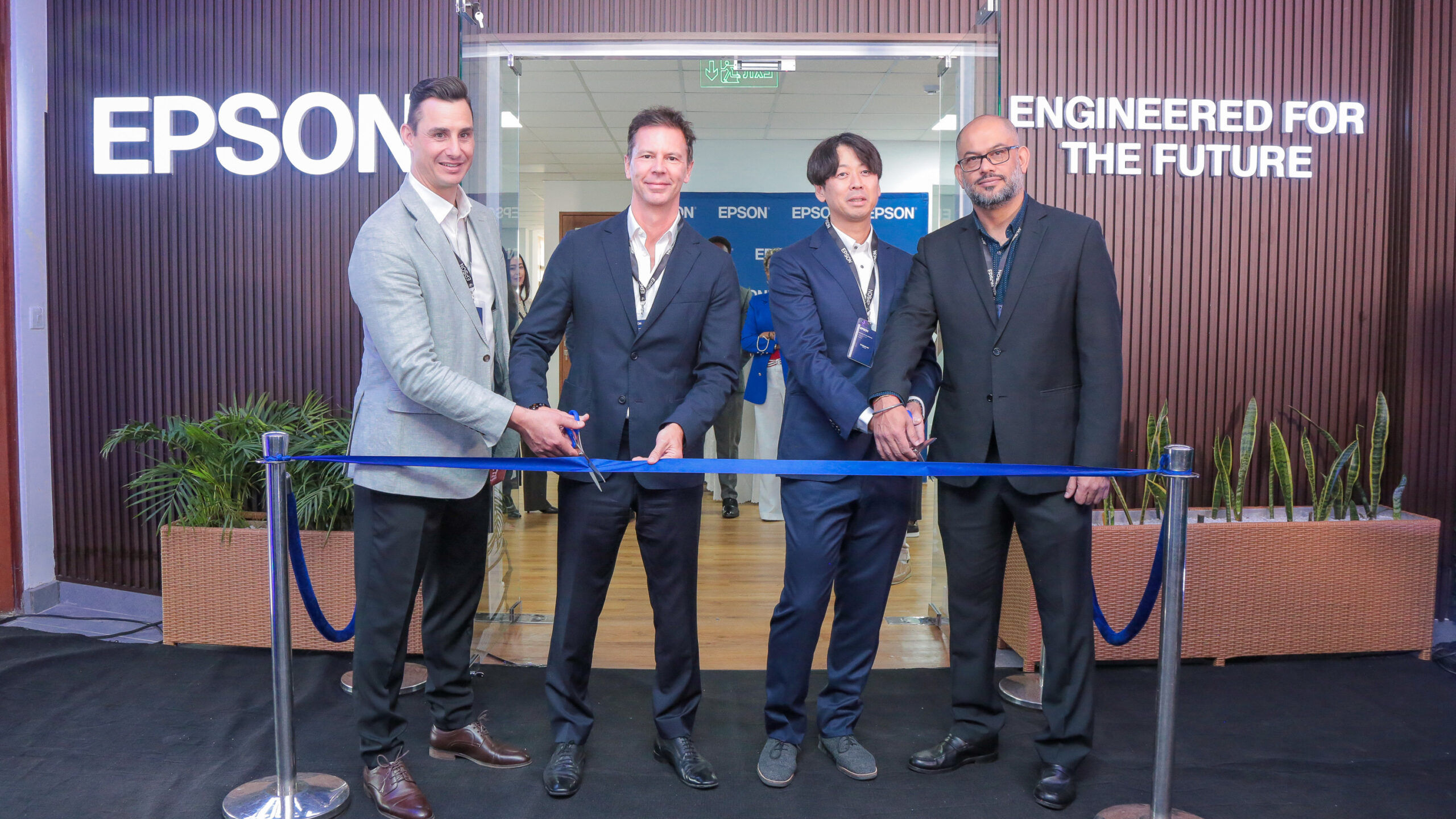
Epson has expanded its Nairobi office by 50 percent, putting KES 19.4 million (roughly USD 150,000) behind a bet that East Africa will keep buying printers and projectors faster than most other regions the company serves.
The move, announced September 1, folds Kenya into Epson’s Middle East, Turkey, Africa and Central & West Asia region, a bloc the company treats as a priority growth zone. It is not Epson’s first stake in the ground here. The Japanese firm opened its Nairobi base in 2020, five years after HP made the same move, part of a pattern where global technology brands use Nairobi as their entry point to East Africa before pushing into neighbouring markets.
Why Kenya, why now
Epson frames the expansion as a response to demand: businesses across emerging markets, the company says, want printing and visual technology backed by local support rather than distant service desks. A bigger office lets Epson put more of that support inside the country.
The new space includes a showroom where partners and customers can test Epson’s printing and projection hardware before buying, plus added room for staff training. Epson’s regional head for East and West Africa, Mukesh Bector, said the office gives the company somewhere partners can see the technology firsthand and work directly with the local team.
Khusoko has tracked a steady run of global tech and manufacturing firms scaling up their Kenyan presence over the past two years, drawn by Nairobi’s position as a distribution hub for East African markets. Epson’s move fits that pattern rather than breaking new ground.
The sustainability line, and what it costs
Epson is pairing the office investment with a broader energy push. The company bought 416 megawatt hours of renewable energy certificates between March 2025 and April 2026, covering ten sites across the region including its Kenya, Johannesburg, Cape Town, Dubai and Istanbul offices. That sits inside Epson’s global Environmental Vision 2050, which targets carbon negative operations and zero use of underground resources such as oil and metal ore by mid century.
Neil Colquhoun, Epson’s president for the region, tied the two threads together directly: the company’s engineering philosophy favours compact, efficient design, and that same logic now shapes where and how it expands. “As we continue to expand across the region, we’re bringing that same philosophy to every market we invest in, including here in Kenya,” he said.
Hardware behind the expansion
The office expansion lands alongside new product ranges Epson is bringing to Kenya this year. Its EcoTank ink tank printers claim up to 90 percent lower ink costs and up to three years of printing before needing a refill, built on print heads that use up to 96 percent less energy than standard thermal inkjet printers. Two new projectors, LifeStudio POP and LifeStudio Flex, target younger buyers and home entertainment rather than office use, the latter shipping with Bose audio.
Kenya’s printer market remains largely price sensitive and dominated by ink tank models for exactly the reasons Epson cites: import costs and the running expense of cartridges push both households and small businesses toward refillable systems.
What it signals
A 50 percent office expansion and a showroom are modest by the standards of foreign direct investment into Kenya, but they mark Epson shifting from a sales outpost toward a regional service and demonstration hub. If the company follows through on the training and partner enablement it has promised, the bigger measure of this investment will be how many resellers and repair technicians it builds up in Nairobi, not the size of the floor plate itself.
Fact check flag: the KES 19,417,500 figure converts to almost exactly USD 150,000 at current exchange rates.
