


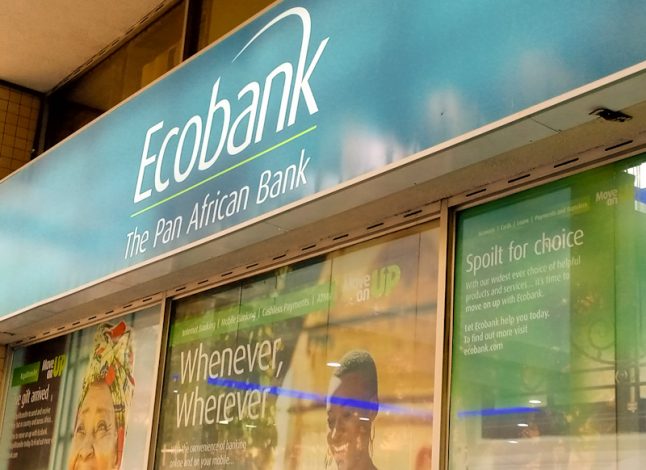
Ecobank Group posted US$423 million in profit before tax for the first half of 2026, up 6% from a year earlier, as Africa’s largest pan-African bank pushed through a stretch of geopolitical strain and rising inflation across its 33 markets.
Net revenue climbed 15% to US$1.3 billion, giving the group room to invest in technology and digital banking even as energy costs squeezed customers across the continent.
The results, released this week, show a bank leaning on diversification to absorb shocks. Corporate and investment banking grew alongside consumer and commercial banking, and non-interest income, fees, trading and transaction revenue rather than interest on loans, made up more than 41% of total revenue. That mix matters: it means Ecobank depends less on lending margins, which tend to compress when central banks hold rates high to fight inflation.
Return on average tangible equity held at 21.1%, a level most global banks would envy. Cost discipline also paid off. The cost to income ratio fell to a record low of 48.4%, meaning the bank now spends less than half of every revenue dollar just to run itself.
Separate half year filings reported by Punch Nigeria put net revenue at US$1.28 billion and profit attributable to shareholders up 2% to US$198 million, with tangible book value per share surging 24% year on year to 7.51 US cents.
Payments and Digital Banking Drive Growth
Payment revenue rose 10%, lifted by wholesale payment volumes, merchant acquiring and card services. Digital transaction value jumped 33%, a sign that customers across the continent are shifting more of their banking onto Ecobank’s apps and platforms rather than branches.
The bank credited its partnership with Google for helping speed up work on a cloud based, API first, mobile first and AI enabled technology architecture.
Regional Performance Varies Sharply
Growth was not even across Ecobank’s footprint. Central, Eastern and Southern Africa led the pack, while Francophone West Africa lagged behind the group average.
| Region | Net Revenue (H1 2026) | Year on Year Growth |
|---|---|---|
| Central, Eastern and Southern Africa (CESA) | US$470 million | 20% |
| Nigeria | Not disclosed | 23% |
| Anglophone West Africa (AWA) | US$372 million | 16% |
| Francophone West Africa (UEMOA) | US$382 million | 6% |
Nigeria posted the fastest growth of any single market, at 23%, even as the bank kept working to clean up loan quality there. That effort appears to be paying off: reporting from Punch Nigeria on the same results noted that group wide non-performing loans fell 21% year to date to US$945 million, pulling the NPL ratio down from 9.4% at the start of the year.
Analysts covering the broader Nigerian banking sector, including Chapel Hill Denham’s Nabila Mohammed speaking to CNBC Africa, described the half year season across lenders as mixed rather than uniformly strong, with earnings quality and sustainability varying from bank to bank.
Deposits Keep Flowing In
Customer trust showed up most clearly on the deposit side. Customer deposits rose by US$3.1 billion year on year to US$27 billion. Crucially, 85% of those deposits now sit in low cost current and savings accounts rather than expensive term deposits, which helps keep Ecobank’s funding costs down and its margins protected as rates stay elevated across the region.
A Landmark Bond for Africa’s Environment
In June 2026, the group issued a US$450 million Nature Bond on the London Stock Exchange, the first bond of its kind from a commercial bank to earn the International Capital Market Association’s Nature Bond designation. Demand ran far ahead of expectations: orders topped US$1.36 billion, nearly four times the original US$350 million target, which let Ecobank increase the deal size by US$100 million and cut its borrowing cost by 50 basis points. Moody’s awarded the bond its top sustainability score.
Proceeds will fund sustainable agriculture, natural capital projects and water infrastructure in 24 African markets, with the heaviest lending concentrated in biodiversity priority countries such as Côte d’Ivoire, Burkina Faso and Ghana. Roughly 81% of the eligible lending pool sits in countries where changes in agricultural land use drive most local biodiversity loss, so the bond is designed to put money where the environmental risk is greatest.
Recognition Across the Continent
The first half also brought a run of industry honours. Ecobank won Global Finance’s Best Bank in Africa and World’s Best Frontier Markets Bank awards, was named African Bank of the Year at the African Banker Awards, and picked up the Gender Leader Award at the Africa CEO Forum Awards.
What It Means Going Into the Second Half
CEO Jeremy Awori tied the results to the bank’s transformation strategy, pointing to investment in staff, systems and technology as the driver behind stronger sales and better customer outcomes despite inflation pressure tied to global political tensions.
Whether that momentum holds through year end will depend largely on Nigeria’s asset quality cleanup and on how long energy and food prices stay elevated across Ecobank’s markets. For now, growing deposits, falling bad loans and a fast growing payments business give the bank a solid base heading into the second half of 2026.
