



Guaranty Trust Bank Kenya is preparing for a change at the top. The Board of Directors has confirmed that Managing Director Jubril Adeniji will step down once his tenure expires, following his recall to Guaranty Trust Bank Limited in Nigeria, the parent company.
The announcement, made in an official statement, marks the end of a term that saw the bank sharpen its balance sheet and expand its footprint in a competitive market.
What The Board Said About Adeniji’s Tenure
The Board credited Adeniji with strengthening GTBank Kenya’s shareholding and governance structure during his time in charge. Under his leadership, the bank improved the quality of its earning assets, tightened internal controls, and carried out a strategic plan built around growing market share.
He also leaves behind a stronger leadership bench and workforce, positioning the bank for long term sustainability. The Board thanked him for his contribution and wished him success in his next role within the wider GTCO Group.
The Executive Behind The Transition
Adeniji describes himself as a seasoned financial services executive with more than 27 years of Pan African leadership experience, shaping strategy, building institutions, and driving sustainable growth across West and East Africa. Beyond his role at GTBank Kenya, he currently serves as Regional Executive for East Africa, overseeing multi country operations spanning Kenya, Rwanda, Uganda, and Tanzania.
He is best known within the group for turning both greenfield ventures and underperforming franchises into resilient, profitable institutions. His most cited achievement is building GTBank Tanzania from the ground up, securing the banking licence, embedding governance structures, recruiting a high performance team, and scaling the operation to double digit compound growth while keeping one of the lowest non performing loan ratios in that market.
His areas of expertise, as he describes them, span several disciplines central to running a regional bank:
- Trade finance and fund structuring, including deploying on lending facilities to support clients with cross border operations.
- Balance sheet growth and risk management, having overseen portfolios of up to $770 million while maintaining consistent profitability and credit discipline.
- Digital and financial innovation, having launched agency banking, digital onboarding, and fintech partnerships aimed at deepening financial inclusion.
- Board and governance, through active participation on Credit, Risk, Audit, HR and Compensation, and People and Governance committees.
- Talent development, with a stated commitment to mentoring leaders and building succession pipelines across the continent.
Adeniji says he remains deeply familiar with the markets he has worked in, Nigeria, Kenya, Rwanda, Uganda, and Tanzania, and points to a track record of working with regulators, governments, and multilateral institutions to deliver solutions that support trade and development. He frames his broader motivation as a commitment to strengthening Africa’s financial institutions and building platforms that support regional trade, resilience, and inclusive growth.
That background gives context to the Board’s praise for his work on governance, asset quality, and strategic execution during his time in Kenya, and signals the kind of experience GTCO will look to replicate when it names his successor.
A 90 Day Handover Period
Adeniji will not leave immediately. He is set to remain in his current role for the next 90 days so the bank can manage an orderly handover.
During this window, GTBank Kenya will finalize the transition process while pursuing regulatory approval from the Central Bank of Kenya for his successor. The bank has not yet named who will take over.
Why This Matters For Customers And Investors
The Board used the statement to reassure customers, employees, regulators, shareholders, and other stakeholders that operations will continue without disruption. It reaffirmed its commitment to delivering banking services and building long term value across the group.
Leadership changes at foreign owned banks in Kenya tend to draw scrutiny from regulators and the market, since continuity of strategy matters as much as the individual at the helm. The Board’s early disclosure and defined timeline appear designed to head off uncertainty before a successor is named.
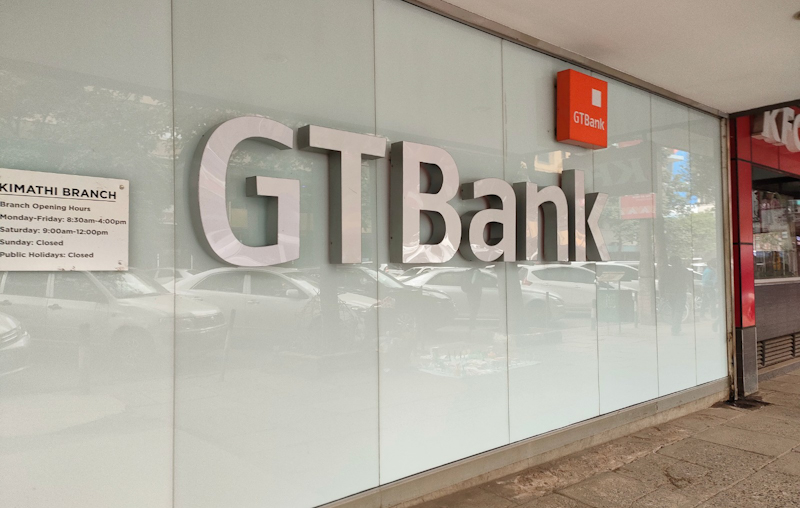
GTBank Kenya’s Performance Heading Into The Transition
Adeniji departs at a period of mixed fortunes for GTBank Kenya and its parent group. Kenya’s banking sector overall reported strong profit growth in 2025, even as non performing loans crept higher across the industry. But GTBank Kenya’s own results told a more complicated story.
Group wide, Guaranty Trust Holding Company posted a profit before tax of ₦1.23 trillion for the 2025 financial year, built on interest income growth of 23.2 percent and fee income growth of 25.9 percent year on year. That figure builds on momentum from 2024, when GTCO delivered a record profit of ₦1.27 trillion, driven in part by ₦517.5 billion in fair value gains that did not repeat in 2025. As a result, group profit after tax fell to ₦865.75 billion from ₦1.02 trillion the year before.
The subsidiaries told a sharper version of that trend. Analysis of the group’s half year 2025 financial statement found that five of GTCO’s ten African subsidiaries reported lower earnings compared to the same period in 2024, a reversal from the prior year when every subsidiary posted growth. GTBank Nigeria, GTBank Tanzania, GTBank Kenya, GTBank Uganda, and GTBank Rwanda together saw their combined after tax profit fall 56.5 percent, from roughly $531 million to $223.1 million, over that period. Analysts at Coronation Research pointed to rising operating expenses and an uptick in non performing loans as the main drags on the group’s African units heading into the rest of the year.
Even so, GTBank Kenya has kept a distinction few of its regional peers can claim. Central Bank of Kenya disclosures and annual reports show it remains the only Nigerian owned lender operating in Kenya to post a profit in each of the last five years. Rather than expand through costly new branches, the bank has leaned on corporate clients and a narrower set of retail products to keep overheads low. It has also begun converting post offices into agent banking outlets under its GTExpress program, with a second phase set to add 54 outlets and bring the network to 100, alongside trials of USSD based deposits and digital account onboarding aimed at reaching unbanked and underbanked customers.
| Metric | 2025 Figure | Context |
|---|---|---|
| GTCO Group profit before tax | ₦1.23 trillion | Up on core earnings growth |
| GTCO Group profit after tax | ₦865.75 billion | Down from ₦1.02 trillion in 2024 |
| Interest income growth (y-o-y) | 23.2% | Core earnings driver |
| Fee income growth (y-o-y) | 25.9% | Core earnings driver |
| Combined H1 profit, 5 African units including Kenya | $223.1 million | Down 56.5% from $531 million in H1 2024 |
| GTBank Kenya profitability streak | 5 consecutive years | Only Nigerian owned bank in Kenya to manage this |
| GTExpress agent outlets | Expanding to 100 | Up from 46, via post office partnership |
The successor Adeniji hands over to will inherit a bank that has stayed profitable while regional peers slipped, but one operating inside a group facing thinner margins, rising costs, and closer regulatory attention across its African footprint.
