



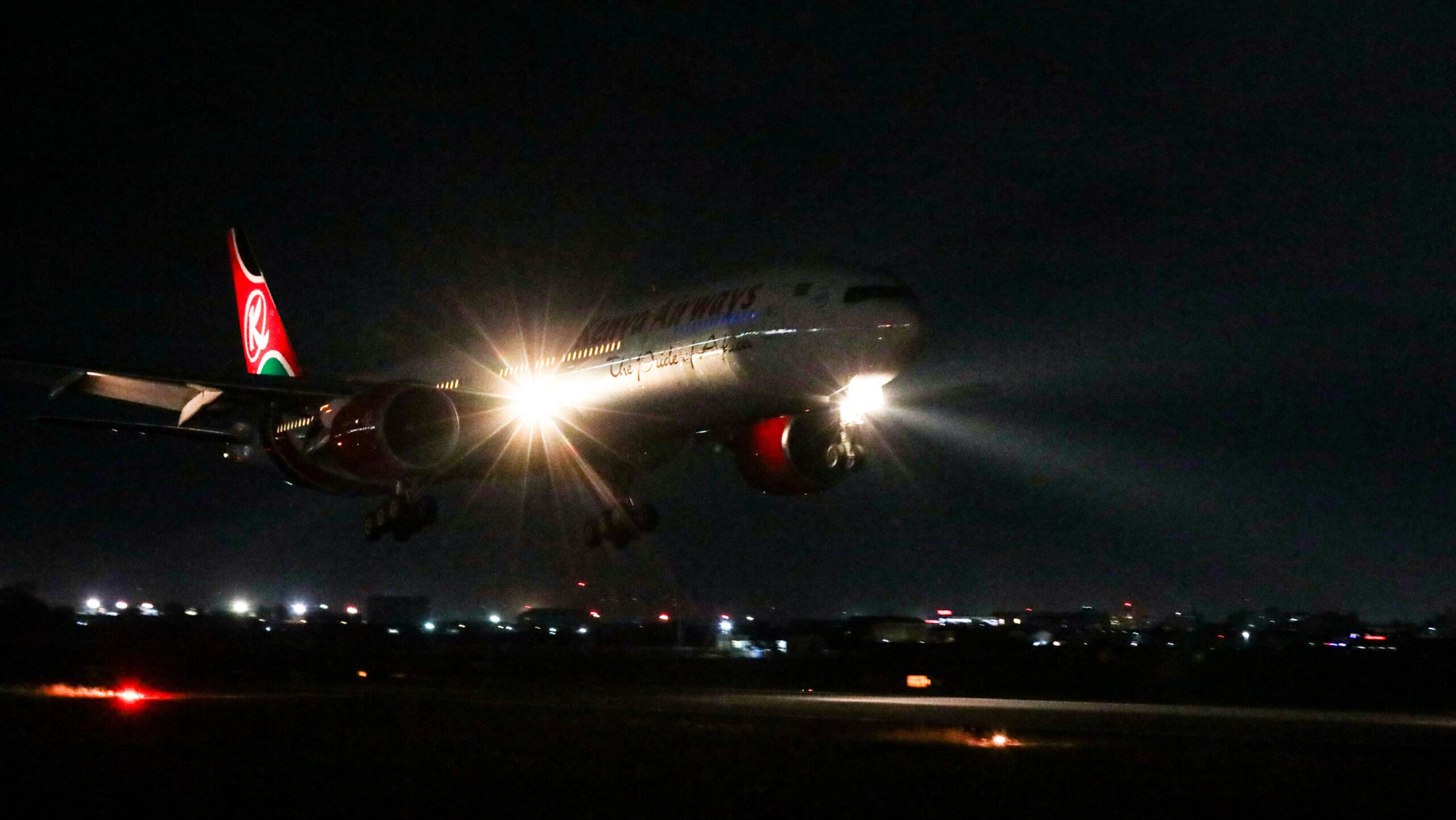
Kenya Airways has restored its Boeing 777-300ER to commercial service, deploying the 400 seat widebody on the Nairobi to London Heathrow route starting July 17, 2026. The aircraft nearly doubles the seat count of the Boeing 787-8 Dreamliner it partly replaces, and it marks the return of the largest passenger jet the airline has ever flown.
Today, we marked the inaugural B777-300ER flight to London, bringing together government leaders, industry partners, our customers, and the Kenya Airways family to celebrate a new chapter in our journey.
As the aircraft departed for London, it carried with it our commitment to… pic.twitter.com/as0e25H76r
— Official Kenya Airways (@KenyaAirways) July 17, 2026
The reintroduction follows almost a decade away from active duty. Kenya Airways acquired the aircraft in 2014 and leased it to Turkish Airlines in 2016 once the long term operating lease was signed. The jet, registered TC LKC, flew back from Istanbul to Nairobi on July 7, 2026, after the lease expired, closing a chapter that began during a period of fleet downsizing at the national carrier.
From Mombasa Test Runs to a Global Gateway
Before taking on transcontinental duty, the 777 spent a week finding its feet at home. Kenya Airways ran the aircraft on domestic hops between Nairobi and Mombasa from July 12 to 16, giving crews and ground teams a chance to relearn the equipment ahead of high volume international service. Only then did the airline hand it the keys to its flagship long haul route.
Kenya Airways has since expanded the plan further, moving the 777 onto five of the airline’s seven weekly Nairobi to London rotations instead of the four originally announced, a sign of how quickly demand on the corridor is running ahead of capacity.
Why the Extra Seats Matter
The 777-300ER seats roughly 400 passengers, compared with 234 on each of the airline’s nine Boeing 787-8 Dreamliners, so every rotation on the bigger jet adds a meaningful chunk of capacity to one of Kenya Airways’ busiest international services. The aircraft also carries dedicated freight space for about 22 tonnes of cargo alongside passenger baggage, giving the airline more room to move goods as well as people.
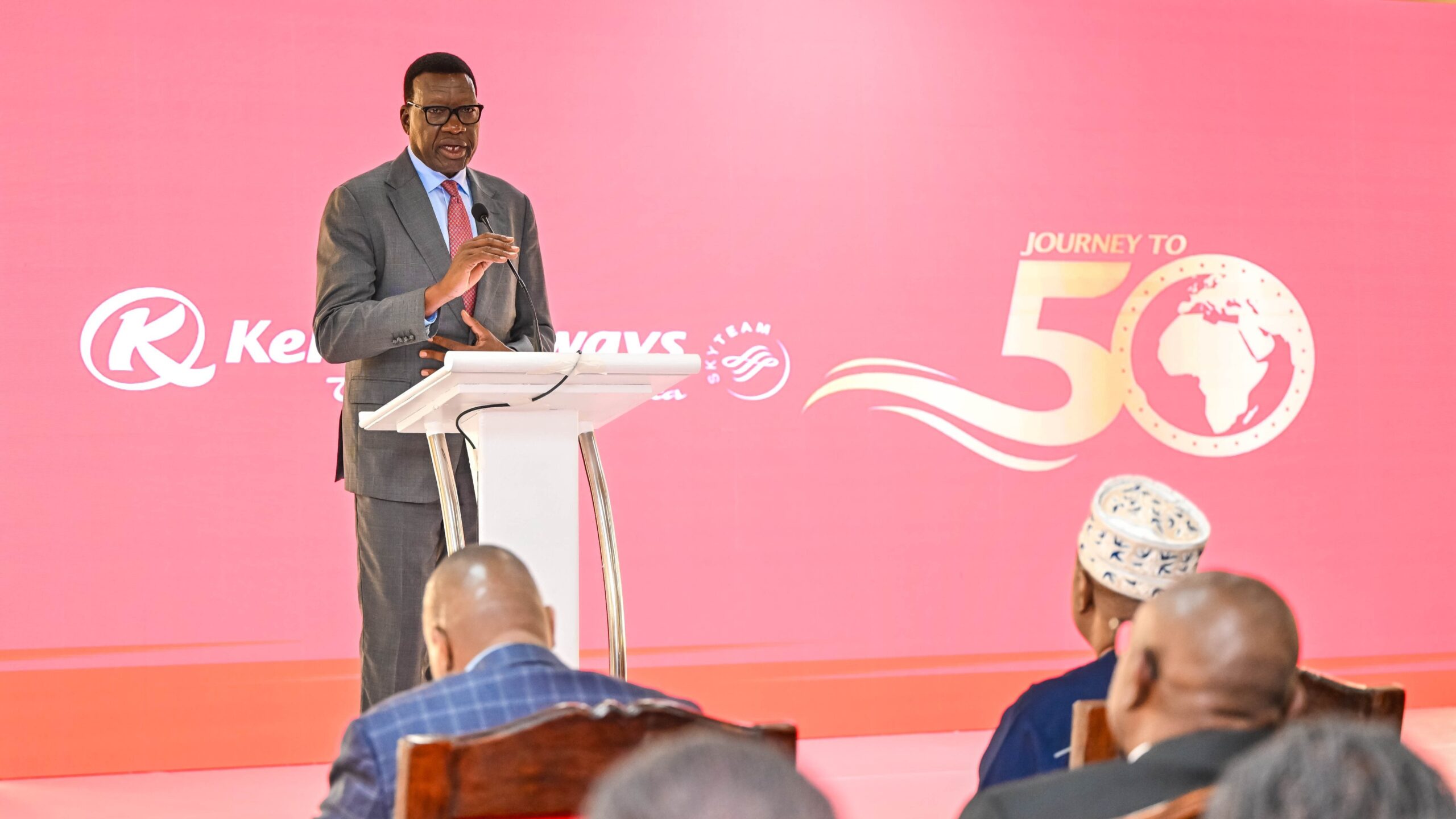
Cabinet Secretary for Roads and Transport Davis Chirchir framed the return as more than an operational upgrade. He said the aircraft strengthens long haul operations on the Nairobi to London Heathrow route, expands passenger and cargo capacity, and improves Kenya’s connections to global markets. He added that the extra cargo space gives exporters in horticulture, fresh produce, fisheries and manufacturing more dependable access to international buyers, which in turn supports jobs and business growth.
A Government Bet on Bigger Infrastructure
Chirchir tied the aircraft’s return to a broader push at Jomo Kenyatta International Airport. The government is upgrading airfield infrastructure, expanding terminals, modernising baggage and security systems, and adding aircraft parking, with the goal of lifting JKIA’s capacity from 7.5 million to about 22 million passengers a year. The aim, he said, is to cement Nairobi’s position as the preferred gateway to East and Central Africa.
He also pointed to ongoing reform at Kenya Airways itself, including efforts to build a stronger balance sheet, attract a strategic investor, and put policies in place that keep the airline commercially sustainable, competitive and profitable.
The Route Kenya Airways Cannot Afford to Lose
The Nairobi to London corridor sits at the centre of Kenya Airways’ network. From July 17 the widebody competes directly with British Airways and Ethiopian Airlines on one of the busiest air corridors linking Africa and Europe, and London remains a key source of tourism, business travel, education traffic and diaspora connections for East Africa. Heathrow’s position as a global hub means passengers connect onward across Europe, North America and beyond, which keeps the route strategically important well beyond the London market itself.
The jet itself is built for that kind of distance. It can fly up to 14,490 kilometres without refuelling, comfortably covering the roughly 6,800 kilometre run from Nairobi to London in eight to nine hours, with enough range left over for even longer routes such as Nairobi to New York.
This return also fits into a larger rebuilding story. Kenya Airways originally introduced the Boeing 777-300ER in 2013 and built a small fleet of three, before financial restructuring pushed the airline to sublease the widebodies out during a period of network downsizing. Bringing one home now, at a moment when JKIA is being expanded and the airline is courting new investment, signals a carrier betting on growth rather than retrenchment.
For Kenyan exporters and travellers alike, the numbers tell a simple story: more seats, more cargo room, and a stronger claim on Nairobi’s status as East Africa’s aviation hub.
