



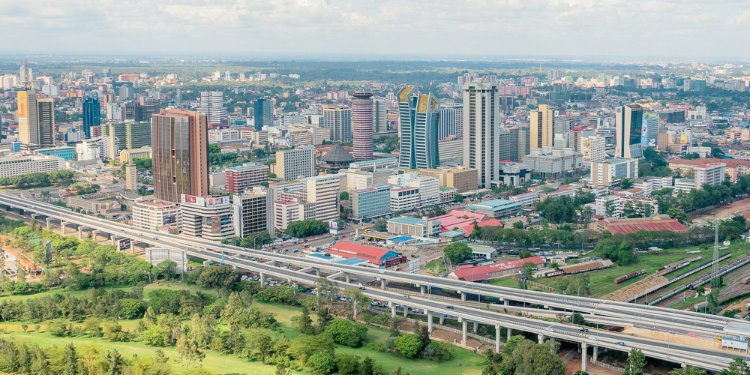
Kenya’s economy grew 5.3% in the first quarter of 2026, up from 4.9% in the same period last year, according to the Kenya National Bureau of Statistics (KNBS).
Every sector expanded, though the pace varied widely. Accommodation and Food Services led the pack at 14.7% growth, followed by Mining and Quarrying at 9.1% and Construction at 6.6%.
Where Each Sector Stood: Contribution and Growth
The table below from KNBS data, breaks down how much each sector contributes to GDP and how fast it grew.
| Sector | Contribution Q1’2025 | Contribution Q1’2026 | Growth Q1’2025 | Growth Q1’2026 |
|---|---|---|---|---|
| Agriculture and Forestry | 19.1% | 19.0% | 5.3% | 4.9% |
| Real Estate | 10.2% | 10.1% | 4.6% | 5.0% |
| Financial & Insurance | 9.0% | 9.2% | 5.3% | 6.3% |
| Transport and Storage | 9.0% | 8.8% | 3.6% | 3.6% |
| Wholesale and Retail Trade | 8.5% | 8.3% | 4.3% | 4.0% |
| Taxes on Products | 8.3% | 8.0% | 4.1% | 4.3% |
| Manufacturing | 7.7% | 7.7% | 2.8% | 4.4% |
| Public Administration | 6.0% | 6.2% | 9.5% | 5.7% |
| Construction | 5.2% | 5.3% | 4.5% | 6.6% |
| Education | 4.8% | 4.8% | 1.8% | 6.2% |
| Information and Communication | 3.4% | 3.4% | 5.5% | 5.0% |
| Professional Admin | 2.7% | 2.7% | 4.1% | 2.4% |
| Electricity and Water Supply | 2.3% | 2.3% | 4.1% | 4.3% |
| Health | 2.1% | 2.0% | 4.7% | 4.3% |
| Other Services | 2.0% | 1.9% | 2.4% | 2.1% |
| Accommodation & Food Services | 1.6% | 1.8% | 8.0% | 14.7% |
| Mining and Quarrying | 0.9% | 0.9% | 12.7% | 9.1% |
| FISIM | (2.8%) | (2.6%) | 0.6% | (4.1%) |
| GDP at Constant Prices | 100.0% | 100.0% | 4.9% | 5.3% |
Two sectors gained the most ground in their share of the economy: Financial & Insurance and Accommodation & Food Services, each adding roughly 0.1 percentage points to their contribution. Transport and Storage lost the most ground, slipping to 8.8% of GDP from 9.0%.
Agriculture Slows, Yet Remains Kenya’s Largest Sector
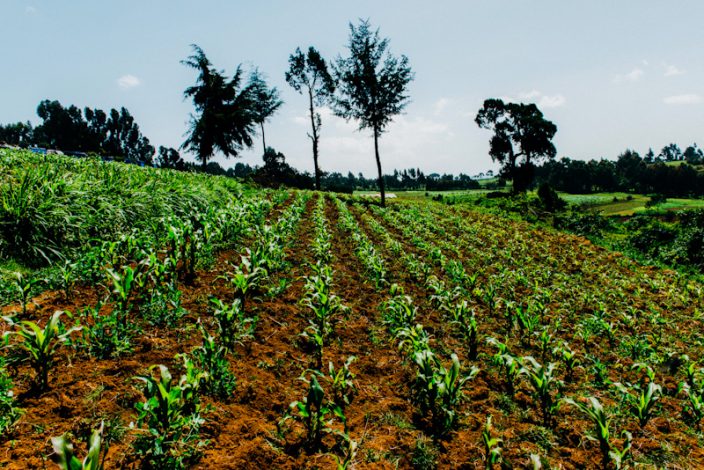
Agriculture and Forestry grew 4.9% in Q1 2026, down 0.4 percentage points from 5.3% a year earlier. It still accounts for 19.0% of GDP, unchanged from Q1 2025, making it the single largest sector in the economy.
Several indicators pointed upward. Tea production rose 3.1% to 141,100 metric tonnes, cane deliveries climbed 6.2% to 2.51 million metric tonnes, and milk deliveries to processors grew to 249.7 million litres from 244.4 million litres. Cut flower exports rose 4.3% to 35,768 metric tonnes, while vegetable exports edged up slightly.
Two crops dragged on the sector. Coffee production fell 6.2% to 15,848 metric tonnes, and fruit exports dropped sharply, from 68,809 metric tonnes to 47,509 metric tonnes.
Tourism Nearly Doubles Its Growth Rate
Accommodation and Food Services turned in the quarter’s strongest performance, expanding 14.7% compared with 8.0% in Q1 2025.
International arrivals through Jomo Kenyatta and Mombasa International Airports jumped 13.1% to 506,622 visitors, a sharp acceleration from the 0.5% growth recorded the year before. The sector’s contribution to GDP also edged up to 1.8% from 1.6%.
Cheaper Credit Lifts Financial Services
The Financial and Insurance sector grew 6.3%, up a full percentage point from 5.3% in Q1 2025, driven largely by higher credit uptake. Its share of GDP rose slightly to 9.2%.
Borrowing got noticeably cheaper. The Central Bank Rate fell to 8.75% in March 2026 from 10.75% a year earlier, after a downward revision in February.
Commercial banks passed some of that relief through: average lending rates dropped to 14.7% from 15.8%. The interbank rate eased to 8.7% from 10.7%, and the average yield on 91-day Treasury Bills fell to 7.5% from 8.9%.

Construction Benefits From a Credit Boost
Construction expanded 6.6%, up from 4.5% a year earlier, holding steady at 5.3% of GDP. Credit to the sector jumped 27.5% to KSh 200.6 billion from KSh 157.3 billion. Cement consumption rose 17.9% to 2.76 million metric tonnes, imported bitumen volumes climbed to 16,761 metric tonnes from 14,200 metric tonnes, and imported iron and steel grew 4.0% to 325,576 metric tonnes.
Transport Holds Steady While Rail Traffic Climbs
Transport and Storage matched its year earlier pace, growing 3.6%, even as its share of GDP slipped to 8.8% from 9.0%. Standard Gauge Railway passenger numbers rose 12.3% to 595 million, and SGR cargo volumes grew 12.7% to 2.05 million metric tonnes. Light diesel consumption, a proxy for road transport activity, increased 9.9%, while Mombasa Port throughput grew 3.7% to 10,997 metric tonnes.
Digital Sector Grows, but Mobile Money Use Falls
Information and Communication expanded 5.0%, a touch slower than the 5.5% recorded in Q1 2025. Domestic voice traffic rose 11.9% to 32.3 billion minutes, and international bandwidth usage surged 41.6% to 17,759 Gbps, reflecting Kenya’s deepening internet adoption.
Not every trend pointed up. Mobile money transactions fell 13.6% to 629.1 million, and SMS usage dipped 2.3% to 14.0 billion messages, both signs that consumer habits are shifting even as connectivity expands.
Electricity Output Rises on Geothermal and Hydro Gains
Electricity and Water Supply grew 4.3%, up from 4.1% in Q1 2025. Total electricity generation rose 7.4% to 3,446.4 million kWh, driven by a 21.1% jump in geothermal output and a modest rise in hydroelectric generation. Thermal, wind, and solar generation all declined over the same period, partly offsetting those gains.
Kenya’s Outlook Hinges on Inflation and Oil Prices
Cytonn projects Kenya’s economy will grow between 4.4% and 5.3% in 2026, a downward revision from earlier estimates. Global uncertainty, particularly the Middle East conflict and shifting trade policy, is clouding the picture. Between August 2024 and March 2026, the Central Bank cut its policy rate by a cumulative 425 basis points across ten straight meetings before pausing the easing cycle in April. It held the rate at 8.75% again in June, marking two consecutive meetings without a change.
Inflation eased slightly to 6.4% in June 2026 from 6.7% in May, the first decline since February, though it remains within the Central Bank’s target band of 2.5% to 7.5%. Domestic headwinds persist: a difficult business environment, rising taxation, and a high cost of living continue to squeeze consumer spending. Diplomatic efforts have lowered the risk of a severe disruption through the Strait of Hormuz, but Cytonn notes that supply chain pressures have become more structural than shock driven.
Cytonn expects growth to depend largely on how quickly inflation stabilizes and whether the shilling holds its strength. Elevated global oil prices tied to the ongoing conflict involving Iran are likely to keep production and transport costs high, sustaining pressure on food prices, while rising taxation could further squeeze household budgets.
Agriculture, still the economy’s largest engine, is expected to benefit from favorable rainfall through the rest of the year. Taken together, Kenya heads into the second half of 2026 with resilient fundamentals, but with geopolitical risk and fuel costs still capable of pulling growth toward the lower end of that 4.4% to 5.3% range.
East Africa’s Inflation Story Splits Between Calm and Concern
