



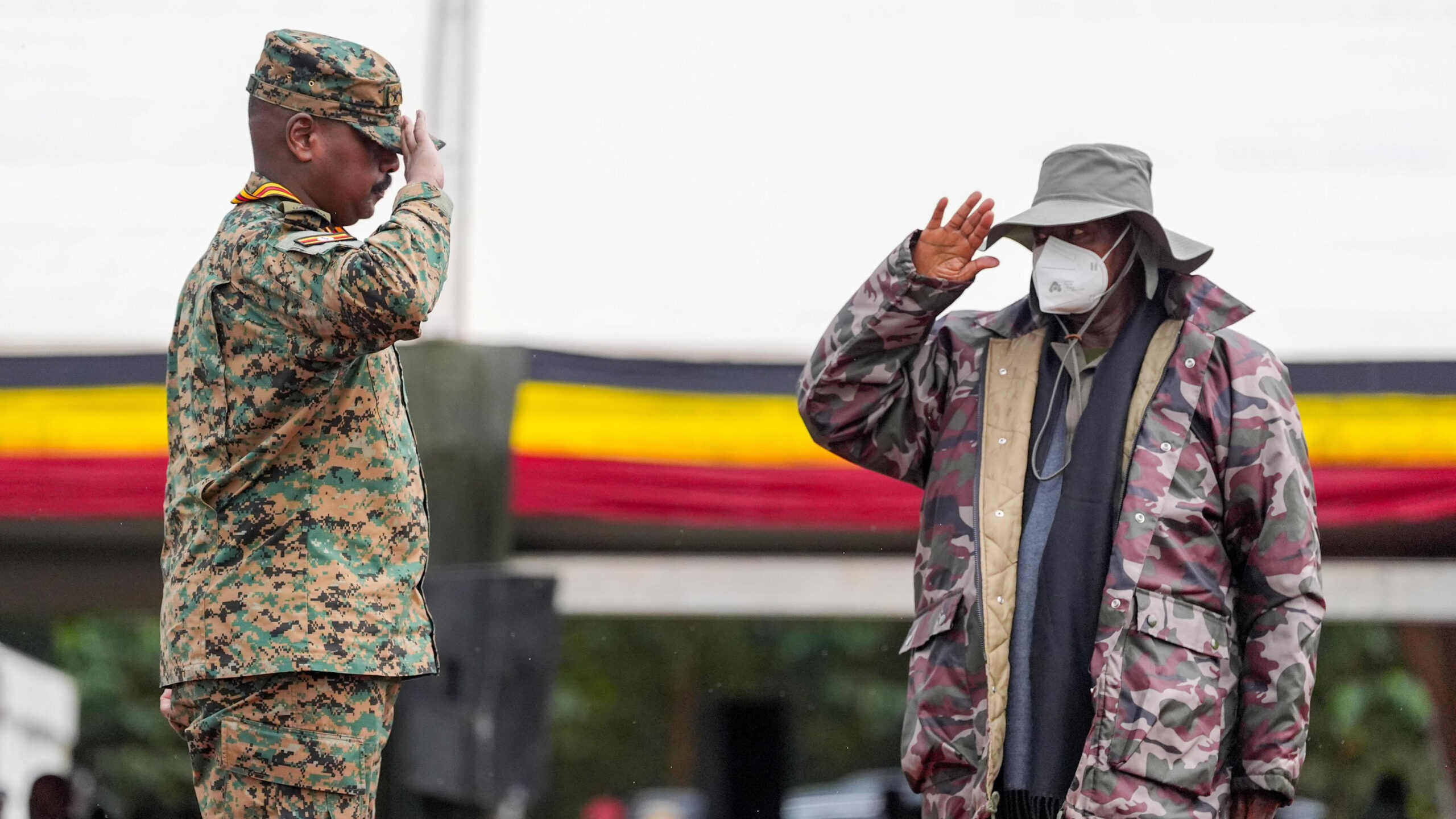
Soldiers surrounded Uganda’s largest independent newsroom before dawn on Sunday, cutting power to its studios and sealing every exit. By morning, the man who ordered it, Chief of Defence Forces Gen Muhoozi Kainerugaba, had moved from shutting down television stations to hunting an executive by name.
Soldiers Surround The Newsroom Overnight
Security personnel deployed shortly after midnight at the Nation Media Group Uganda offices in Namuwongo and at the Kampala Serena Hotel, where the broadcaster’s studios sit. Staff who tried to report for work found the gates blocked. By 5am, NTV Uganda and Spark TV had gone dark, replaced by a blank screen reading video unavailable. Dembe FM and KFM briefly dropped off air too. The Daily Monitor newspaper’s headquarters remained under armed guard through the morning, soldiers stationed at every entrance.
The siege followed hours of warnings posted directly by Kainerugaba on X. “NTV and Moniter are being shut down from today!” he wrote shortly after 1am, misspelling the paper’s name. He followed with a second post making the terms plain: “Both NTV and Moniter will not re-open without my permission.”
A General Declares Himself Press Regulator
Kainerugaba did not frame the shutdown as a security matter. He framed it as personal authority. “I have the power in Uganda to shut down ANY media house I want to,” he posted. “I have had this power since 2017. This power was given to me by my great father President Museveni.” He went further in a separate post, rejecting the basic premise of independent journalism: “In Uganda, I DO NOT believe in a free press! The press should be guided by cadres of the revolution.”
He closed the thread with a warning to every other outlet watching. “From now on ALL media in Uganda will follow the rules!”
The Search For One Executive
Hours later, Kainerugaba turned his attention to a single person. Susan Nsibirwa has run Nation Media Group’s Uganda operations since December 2023, the company’s first woman to hold the role. In a string of posts, Kainerugaba said he was searching for her by name. “Sue Nsibirwa…I’m looking for her,” he wrote, then followed with language closer to a manhunt than a legal process: “I hear there is a small girl called ‘Sue….’ We are looking for her. We will discipline her. She cannot cause chaos in our country.” He told followers that police patrols had been instructed to arrest her on sight.
No court, prosecutor, or police spokesperson has confirmed a formal warrant. The threat exists, for now, only in Kainerugaba’s own posts, which is itself the point critics make about how power operates in Uganda. Nation Media Group had not issued a statement on Nsibirwa’s whereabouts by the time of publication.
A Newsroom That Has Survived This Before
Sunday’s raid is not the first time the Daily Monitor has gone dark on government orders. Police sealed its offices for ten days in May 2013 after the paper published a letter alleging a succession plan to install Kainerugaba as his father’s heir, an episode that became known locally as the Muhoozi Project. NTV Uganda was forced off air in February 2007, barely two months after its launch, over coverage the government called negative. President Yoweri Museveni has at points called the Monitor an enemy newspaper.
The Committee to Protect Journalists condemned Sunday’s action, calling the use of state security forces to enforce a threat made publicly on social media a troubling escalation. Opposition leader Bobi Wine went further, accusing Kainerugaba of acting with his father’s full backing to silence the country’s last independent voices. He described the country as one now living under open military rule, where fear replaces law.
An Already Fragile Ownership Structure
The timing compounds an existing vulnerability. In March, the Aga Khan Fund for Economic Development sold its controlling stake in Nation Media Group to Taarifa Ltd, a company owned by Tanzanian businessman Rostam Aziz, ending more than two decades of ownership that analysts say had insulated the newsroom from direct political pressure. Aziz has said publicly he will protect editorial independence, but he arrives with extensive business ties and documented connections to Tanzania’s ruling party, a different profile from the philanthropic foundation he replaced. Uganda’s government also owes legacy media houses, including NMG, hundreds of millions of shillings in delayed advertising payments, a debt press freedom groups have flagged as financial leverage dressed up as a billing dispute.
Kainerugaba’s pursuit of Nsibirwa fits a pattern that has grown more frequent this year. He has used the same platform to threaten opposition lawmaker Joel Ssenyonyi, to order the detention of Director of Criminal Investigations Tom Magambo, and to claim personal responsibility for the abduction of lawyer Erias Lukwago from his home earlier this month. In each case, the threat arrived first as a tweet. In several, the tweet became an arrest.
Uganda heads toward a political transition with its most influential independent newsroom dark and a manhunt for its managing director playing out in real time on a single man’s timeline. Whether police produce an actual warrant, or whether the posts themselves are left to do the work of law, may say as much about the state of the country as the shutdown itself.
