



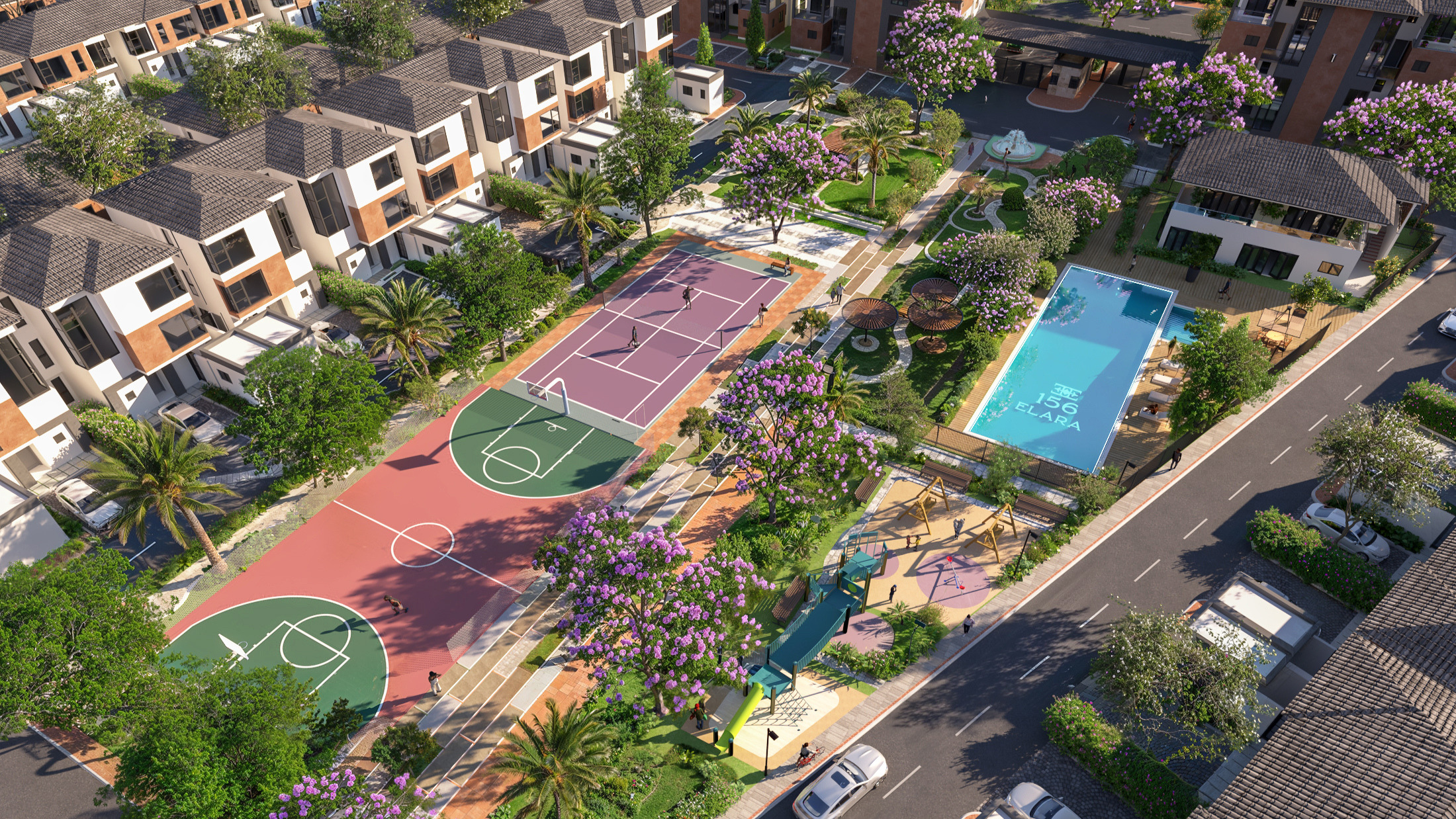
Kenya’s appetite for upscale, low-density housing just found a concrete answer. Mi Vida Homes has unveiled 156 Elara, a KES 5.6 billion (USD 42 million) development of 156 luxury townhouses inside Tatu City, signalling that premium real estate demand has moved well beyond Nairobi’s high-rise corridors.
The project marks a deliberate shift for Mi Vida, a developer previously known for affordable and mid-tier apartments. With 156 Elara, the company steps into Kenya’s premium segment at a moment when the market rewards exactly that kind of confidence.
Why Now and Why Tatu City
Sales of high-end properties across Kenya climbed 28% year on year through the first quarter of 2026, driven by affluent buyers who want space, security, and a break from the density of traditional urban centres. The Ruiru-Kiambu corridor, where Tatu City sits, recorded a 35% growth in its premium housing pipeline over the same period.
Three forces drive that growth: multinational relocations, the sustained rise of remote work, and a generation of homeowners making a conscious choice to live somewhere quieter and better organised than central Nairobi.
Tatu City provides the infrastructure to support that choice. The development runs on 99.7% power uptime, 24-hour potable water, 70 kilometres of internal roads, and 110 kilometres of underground high-speed fibre. These are not aspirational promises. They are operational realities for the more than 7,000 residents already living there.
What 156 Elara Offers Buyers
The development spans five acres and delivers two home formats. Three-bedroom duplexes start at KES 25.6 million. Four-bedroom triplexes reach KES 44.5 million. Both sit within Nairobi’s recognised premium market range of KES 150,000 to 250,000 per square metre for low-density units.
At the centre of the development sits Club Elara, a wellness hub with a heated pool, a gym, and landscaped green spaces. The design philosophy runs through every aspect of the project: residents should be able to live well without leaving the estate for the basics.
That philosophy extends to the wider Tatu City environment. Residents of 156 Elara will live 300 metres from the world’s only urban wildlife sanctuary. More than 100 kilometres of exercise trails, parks, and green spaces surround the development. Families gain proximity to Crawford International School and Nova Pioneer, two of Kenya’s most recognised institutions.
For everyday needs, Tatu City already hosts 110 businesses, including Naivas Supermarket, banks, Tamambo by Tamarind Group, and Cascade Kitchens. Shopping, dining, and daily errands stay within minutes of home.
Who Is Buying and What Returns Look Like
Mi Vida projects that owner-occupiers will account for 80% of buyers at 156 Elara. That figure reflects a broader shift in Kenya’s premium market, where people increasingly buy suburban homes to live in rather than to hold as investment assets.
Investors who do purchase units can expect annual rental yields of 7% to 9%, supported by Tatu City’s growing population, its amenity-rich environment, and the consistent inflow of multinational tenants relocating to Kenya.
Stephen Jennings, Founder and CEO of Rendeavour, the master developer behind Tatu City, put the growth trajectory plainly: the current resident population of 7,000 will triple over the next five years. The opening of Wellington College International Kenya in September 2028, which will accommodate 1,500 students, will further anchor Tatu City as a destination for families making long-term residential commitments.

What This Means for Mi Vida’s Strategy
Samuel Kariuki, Chief Executive Officer of Mi Vida Homes, described the launch as a natural progression rather than a departure. “Our entry into the premium segment with 156 Elara is a deliberate evolution driven by market maturity and growing demand for low-density, high-quality homes. This strategic expansion positions us to deliver across affordable, mid-market, and luxury tiers over the next five years,” he said.
156 Elara follows Keza Laika as Mi Vida’s second development in Kiambu County, confirming a clear geographic focus on satellite towns with credible infrastructure and room to grow. The developer now operates across three market tiers, affordable, mid-market, and premium, positioning itself to capture demand at every stage of the buyer journey.
The Bigger Housing Picture
156 Elara launches against a national housing deficit of 2 million units, a gap that concentrates pressure on every segment of the market. Kenya’s upper-middle class is projected to add 1.2 million households by 2030, creating sustained demand for well-built homes across all price points.
Projects like 156 Elara do not solve the deficit on their own. What they do is demonstrate that credible, well-funded developers are willing to build at scale in master-planned environments that work. For buyers weighing the decision to leave central Nairobi, that combination of track record, location, and infrastructure removes much of the risk that has historically made suburban living a compromise rather than a choice.
Mi Vida Homes is taking sales inquiries for 156 Elara now. For buyers who have been watching Tatu City’s growth and waiting for the right product, this development answers the question of what premium suburban living in Kenya actually looks like in 2026.
