



Women now head 19% of the world’s major financial institutions, a record high. Yet the same report that celebrates this milestone warns, bluntly, that without decisive policy action, true gender balance in global finance remains at least 22 years away.
That gap between progress and promise defines the OMFIF Gender Balance Index 2026, and nowhere does it cut deeper than across Africa.
The annual index, produced by the Official Monetary and Financial Institutions Forum, tracks female representation across 335 central banks, commercial banks, pension funds and sovereign funds, covering 6,820 individuals. The 2026 edition records an average score of 44, up from 42 in 2025, on a scale where 100 represents full parity. Half of all institutions improved their scores. The other half did not.
“Now more than ever,” writes Andrea Correa, OMFIF’s head of research, “gender balance must function not just as an aspirational benchmark, but as an operational necessity.”
The report argues that institutions which fail to reflect the economies they serve risk strategic misalignment. That framing matters for African policymakers: the continent’s financial systems are growing fast, but the leadership inside them still looks overwhelmingly male.
East Africa: Islands of Progress in a Difficult Landscape
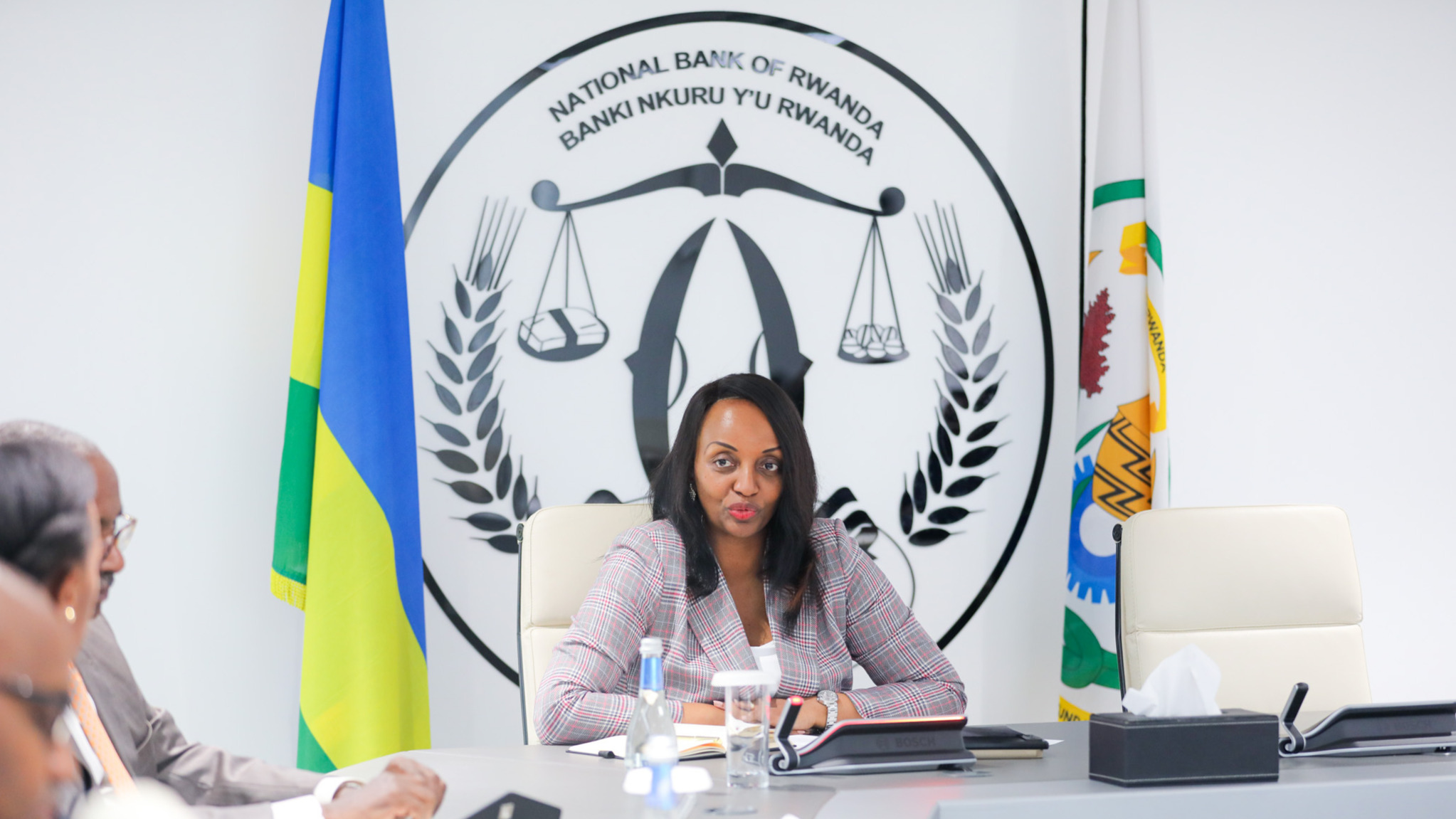
The picture across East Africa remains uneven. Rwanda’s National Bank holds 13th place globally among central banks with a GBI score of 89, its female governor maintaining a long-standing record of leadership. The bank’s governor position is held by a woman, though no female deputy governors appear in its senior ranks, with women making up 42% of all senior staff. That combination — visible leadership at the top, a thinner pipeline below — reflects a pattern the report identifies across the region.
Tanzania’s Bank of Tanzania climbed to joint 27th globally with a score of 80, a rise of 47 places from last year, driven by two female deputy governors and women holding 44% of senior positions. That improvement ranks among the most significant jumps in the entire central bank index. Uganda’s Bank of Uganda sits considerably lower, at 126th, with no female deputy governors and women representing just 28% of senior staff.
Kenya’s Central Bank scores 27, placing 130th globally — unchanged from 2025 — with no female governor or deputy governors and women accounting for 26% of senior staff. Ethiopia’s National Bank scores 22, with women holding 23% of senior positions. Sudan’s Bank of Sudan delivered one of the most striking upward moves in the index, jumping from 183rd to 74th with a score of 54, driven by the appointment of a female governor.
The Banque de la République du Burundi holds a joint 9th place globally, with a score of 91 — one of the strongest performances among African central banks — though it carries no female governor.
Africa’s Commercial Banks: A Bright Spot Dims
Sub-Saharan Africa recorded the highest average GBI score of any region for commercial banks: 59, up eight points from 2025. That result outperformed North America (51) and Europe. But the headline figure conceals a narrowing at the top.
Nigeria’s Guaranty Trust Bank scores 86 and ranks third globally among commercial banks, with a female chief executive — Miriam Olusanya — and women holding 43% of executive positions and 33% of board seats. South Africa’s Standard Bank scores 51, ranking 16th, with no female CEO but women comprising 25% of executive roles. Absa, also South Africa, dropped 14 points to a score of 41 and ranks 28th.
The report’s Glass Ceiling Ratio, a new metric introduced this year, lays bare the structural problem. It measures the degree to which women’s representation narrows at the apex of an institution relative to their presence in senior roles overall. Across commercial banks globally, the ratio stands at 0.41: women reach the top job at less than half the rate their presence in the pipeline would predict. The report links this directly to what economist Claudia Goldin calls “greedy jobs” — careers where pay and promotion reward long, inflexible hours disproportionately, and where care responsibilities still fall more heavily on women.
| Rank | 2025 | Institution | Country | Score | Change | Female gov. | Senior staff % |
|---|---|---|---|---|---|---|---|
| 9 | 9 | Banque de la République du Burundi | Burundi ★ |
91 |
— | Yes | 43% |
| 13 | 13 | National Bank of Rwanda | Rwanda ★ |
89 |
— | Yes | 42% |
| 21 | 22 | Banco de Cabo Verde | Cabo Verde |
84 |
▲ +4 | No | 57% |
| 27 | 79 | Bank of Mauritius | Mauritius |
80 |
▲ +33 | Yes | 69% |
| 27 | 101 | Bank of Tanzania | Tanzania ★ |
80 |
▲ +47 | No | 44% |
| 32 | 16 | Bank of Namibia | Namibia |
75 |
▼ -9 | No | 60% |
| 34 | 44 | South African Reserve Bank | South Africa |
74 |
▲ +5 | No | 50% |
| 43 | 48 | The Central Bank of Eswatini | Eswatini |
70 |
▲ +4 | No | 43% |
| 47 | 20 | Central Bank of São Tomé and Príncipe | São Tomé |
68 |
▼ -14 | No | 43% |
| 54 | 45 | Bank of Zambia | Zambia |
64 |
▼ -5 | No | 42% |
| 59 | 72 | Central Bank of Seychelles | Seychelles ★ |
62 |
▲ +9 | Yes | 29% |
| 70 | 81 | Banka e Kholo ea Lesotho | Lesotho |
56 |
▲ +12 | No | 40% |
| 74 | 183 | Bank of Sudan | Sudan ★ |
54 |
▲ +54 | Yes | 17% |
| 77 | 50 | Banco Nacional de Angola | Angola |
53 |
— | No | 36% |
| 80 | 68 | Banky Foiben’i Madagasikara | Madagascar |
51 |
— | No | 38% |
| 81 | 88 | Banque Centrale des Comores | Comoros |
50 |
▲ +9 | No | 33% |
| 93 | 119 | Reserve Bank of Zimbabwe | Zimbabwe |
47 |
▲ +18 | No | 35% |
| 95 | 78 | Central Bank of Nigeria | Nigeria |
45 |
▼ -3 | No | 32% |
| 96 | 80 | Reserve Bank of Malawi | Malawi |
45 |
▲ +1 | No | 37% |
| 98 | 105 | Bank of Botswana | Botswana |
43 |
▲ +8 | No | 36% |
| 102 | 74 | Banco de Moçambique | Mozambique |
38 |
▼ -11 | No | 29% |
| 123 | 84 | Banque Centrale du Congo | DR Congo |
29 |
▼ -14 | No | 26% |
| 126 | 132 | Bank of Uganda | Uganda ★ |
28 |
▲ +3 | No | 28% |
| 127 | 110 | Bank of Sierra Leone | Sierra Leone |
28 |
▼ -6 | No | 24% |
| 130 | 123 | Central Bank of Kenya | Kenya ★ |
27 |
— | No | 26% |
| 131 | 133 | Central Bank of Liberia | Liberia |
26 |
▲ +1 | No | 24% |
| 132 | 130 | Bank of Ghana | Ghana |
25 |
— | No | 24% |
| 136 | 136 | National Bank of Ethiopia | Ethiopia ★ |
22 |
— | No | 23% |
| 141 | 167 | Banque Centrale de Mauritanie | Mauritania |
18 |
▲ +13 | No | 15% |
| 146 | 161 | Central Bank of The Gambia | Gambia |
13 |
▲ +4 | No | 14% |
| 158 | 149 | Banque des États de l’Afrique Centrale | Central Africa |
7 |
▼ -6 | No | 9% |
| 166 | 134 | Bank of South Sudan | South Sudan |
5 |
▼ -18 | No | 13% |
| 167 | 106 | Banque Centrale de la Rép. de Guinée | Guinea |
5 |
▼ -31 | No | 11% |
| 172 | 172 | Central Bank of Somalia | Somalia |
3 |
▼ -1 | No | 8% |
| 177 | 158 | Banque Centrale des États de l’Afrique de l’Ouest | West Africa |
2 |
▼ -8 | No | 4% |
Source: OMFIF Gender Balance Index 2026. Scores out of 100. Rank = global rank within institution type. East African institutions highlighted in bold.
Sovereign Funds: One African Fund Breaks Into the Top Ten
The sovereign fund chapter delivers one of the report’s more encouraging African data points. South Africa’s Public Investment Corporation rose to seventh place globally with a score of 78 — the highest-ranked fund in sub-Saharan Africa. Women hold 50% of its executive committee positions and 40% of board seats.
Nigeria’s Sovereign Investment Authority scores 29. Zimbabwe’s Mutapa Investment Fund, despite a 41-point drop to a score of 44, still maintains a presence in the index. Ethiopia Investment Holdings scores 50, a rise of 36 points, with women comprising 33% of board seats.
The overall sovereign fund picture shows Europe overtaking North America as the strongest region for the first time, driven by Ireland, Norway and the European Investment Fund. Africa’s sub-Saharan average reached 41, up from 38 in 2025.
| Rank | 2025 | Institution | Country | Score | Change | Female CEO | Women exec % |
|---|---|---|---|---|---|---|---|
| 6 | 8 | The Sovereign Fund of Egypt | Egypt |
82 |
— | Yes | 50% |
| 7 | 13 | Public Investment Corporation | South Africa |
78 |
▲ +15 | No | 50% |
| 16 | 39 | Ethiopia Investment Holdings | Ethiopia ★ |
50 |
▲ +36 | No | N/A% |
| 20 | 4 | Zimbabwe Mutapa Investment Fund | Zimbabwe |
44 |
▼ -41 | No | 0% |
| 30 | 25 | Nigeria Sovereign Investment Authority | Nigeria |
29 |
▲ +8 | No | 33% |
Source: OMFIF Gender Balance Index 2026. Scores out of 100. Rank = global rank within institution type. East African institutions highlighted in bold.
The Promotion Problem: Policy Has Not Caught Up
The report’s most forceful section examines why women reach senior positions but repeatedly fail to convert that presence into the top job. Women hold 33% of senior roles across all institutions in the index — a threshold the report describes as the lower end of acceptable. Yet they hold just 19% of top positions. The Glass Ceiling Ratio across the entire index stands at 0.56.
“To truly advance gender balance in all levels of leadership,” the executive summary states, “well-designed policies, clear incentives and broad adoption are needed now.”
The report tests whether stronger national legal frameworks translate into better institutional scores. The cross-sectional evidence is clear: countries with more gender-equal laws tend to produce higher-scoring institutions. But time-series analysis reveals no measurable short-run effect. Policy reform alone does not shift boardrooms quickly, institutional change moves through individual appointments, cultural shifts and accumulated small decisions that no single law can command.
Tea Trumbic, manager of the World Bank’s Women, Business and the Law project, points to three persistent structural gaps: safety, entrepreneurship and childcare. Globally, women benefit from only one-third of the legal protections they need against domestic violence, sexual harassment and femicide. Affordable childcare remains absent in 44 economies. Without it, women exit the pipeline long before they approach senior management.
Equal pay legislation, the report finds, produces limited results on its own. Despite the UK’s equal pay laws, the gender wage gap in its finance and insurance sector sits at around 27% and, at current trends, will not close for another 30 years. Childcare policy, by contrast, addresses the mechanism that actually produces inequality: the disproportionate burden of care that limits women’s hours and slows their career progression.
The 2048 Problem
At the current rate of improvement — 2.5 GBI points per year — the index average would near 100 around 2048. The report does not treat that projection as a plan. It treats it as a warning.
“Without meaningful and widespread policy progress,” it concludes, “the constraints that prevent women from reaching the top job — the promotion problem — most likely mean that gender balance will never be achieved.”
Some institutions have remained stuck at or near zero for years. The West African Central Bank scores 2. The Banque des États de l’Afrique Centrale scores 7. The Bank of South Sudan scores 5. These are not statistical outliers to be averaged away. They represent systemic failure that linear progress cannot fix.
The index does not argue that numbers alone constitute equality. But it makes the case, with two decades of data, that representation at the top shapes decisions, reduces groupthink and makes institutions more resilient to the volatility now defining global finance. As the foreword puts it, “decision-making bodies that draw on a broader range of perspectives are better equipped to navigate complexity, anticipate emerging risks and respond to structural challenges.”
For East Africa specifically, where financial systems are expanding and central banks carry real weight in economic policymaking, the stakes extend well beyond corporate governance. Who leads these institutions shapes monetary policy, credit access, inflation management and the distributional effects of every major economic shock. The data show progress. They also show how much further there is to go.
