



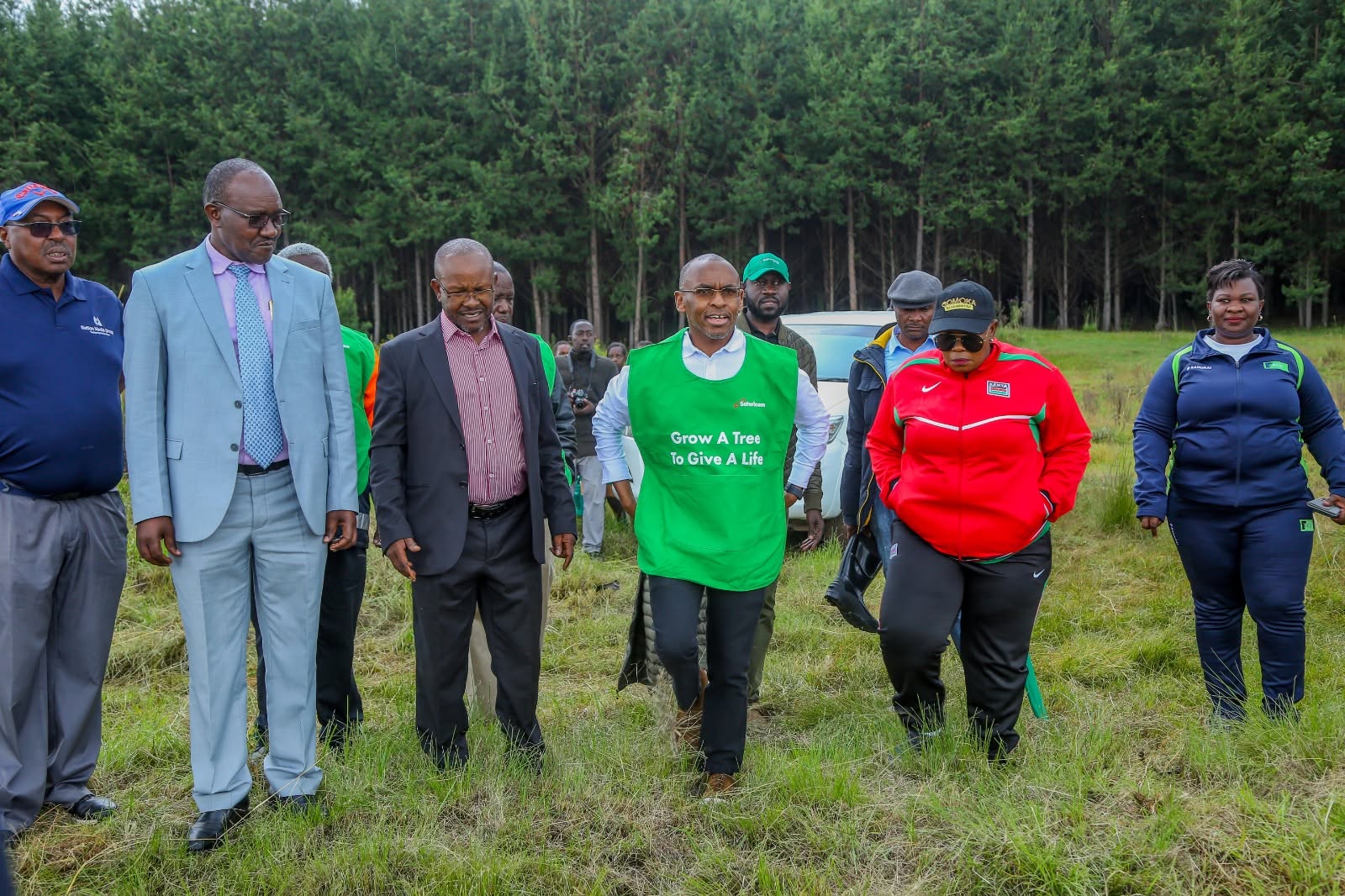
Safaricom has planted more than three million trees across 3,000 hectares and lifted e waste collection 91.5% to 365,245 kilograms in FY26.
The company put 681,284 trees in the ground against a target of one million, after weak rainfall delayed the season. The larger result sits underneath that number. The programme now covers more land, more community members and more measured outcomes than a year ago, and waste collection moved sharply the other way.
Three million trees and 3,000 hectares restored
The 2026 Sustainable Business Report shows the programme crossing a threshold. Cumulative planting rose from more than 2.3 million trees to more than three million.
Restored land grew from 2,300 hectares to more than 3,000. The company aims to reach five million indigenous trees and 5,000 hectares by 2030 with the Kenya Forest Service, a pledge Khusoko first recorded in 2019.
| Indicator | FY25 | FY26 |
|---|---|---|
| Trees planted in the year | 830,600 | 681,284 |
| Cumulative trees planted | 2.3 million plus | 3 million plus |
| Area restored | 2,300 hectares | 3,000 plus hectares |
| Community Forest Association members engaged | 4,416 | 6,085 |
| Livelihoods impacted | 22,080 | 30,425 |
About two million trees and 2,000 hectares remain. Spread across the four planting years from FY27 to FY30, that works out to roughly 500,000 trees a year.
Where the trees grow
The trees stand in forests, on campuses, at golf clubs and beside network towers.
Gazetted forests
The 2023 framework with the Kenya Forest Service named Kinale, South Marmanet, Kakamega, Kieni, Ontulili and Kimondi forests, plus mangrove forests in Lamu County, for reforestation and conservation.
Kakamega, Kenya’s only remaining tropical rainforest according to the 2026 report, received Phase II of an electrified conservation fence in FY26. The fence now runs 49.6 kilometres, about 42% of the 117 kilometre target, and shields an estimated 5,000 people from wildlife conflict.
At the report launch, Principal Secretary Dr. Eng. Festus Ng’eno asked for restoration in Kakamega, Kaptagat and the Mau Complex to deliver more than carbon storage.
Universities
A Biodiversity Restoration Project, funded with KES 15 million, reached 21 universities across Kenya. It planted 60,195 indigenous and fruit trees with 3,528 students and staff, toward a goal of 250,000.
Network sites
The same project greens land around base stations, working with the public and private hosts of those sites. At Moi University, avocado trees planted beside a Safaricom tower reached a reported 98% survival rate.
Wildlife habitat
In Ruma National Park, the Roan Antelope Recovery Programme continued habitat management after a phase that lifted the population from 14 to 28 animals.
Survival and carbon now count alongside planting
The company is changing what it counts as success. It will track hectares restored and tree survival next to trees planted, and it plans to measure biomass and carbon sequestration from FY27, when the first cohort matures.

Karen Basiye, Safaricom’s head of sustainability, frames the shift as, “Real success is not just about the trees,” adding that it also covers the jobs created and the partnerships built.
Ng’eno placed the work inside the national tree growing agenda, which targets 15 billion trees by 2032 and aims to raise national tree cover above 30 per cent. He pointed to the JazaMiti App, which his ministry developed with Safaricom so citizens and institutions can register and verify planted trees.
A carbon marketplace is under study
Safaricom is studying a way to connect tree projects to climate finance. The company is considering a digital marketplace modelled on the Nairobi Securities Exchange, where businesses and communities could sell emissions reduction credits to buyers, with M-Pesa carrying the payments. Basiye outlined the idea on 23 October.
The plan is at concept stage. The company also separates the idea from its own targets. Basiye said trees planted through community programmes, including water tower restoration, will not generate offsets for Safaricom, and that any trading income from those projects should go to the communities involved. She added that Safaricom does not plan to buy credits to offset its emissions in the near term.
The idea also fits the policy timetable. Kenya’s 2026 guide for strategic engagement in carbon markets names environmental integrity and community benefits as priorities, and a Safaricom platform would have to operate inside those rules. For a programme that now counts 6,085 Community Forest Association members and 30,425 livelihoods impacted, a route to payment for verified carbon could matter as much as the planting itself.
E waste collection climbs 91.5%
Collection of electronic waste reached 365,245 kilograms, up from 190,753.5 kilograms in FY25 and above the 290,438 kilograms of FY24. The report credits Warmtech Ltd for tracking and the WEEE Centre for management, with take back points at retail shops and offices.
| Waste stream (kg) | FY24 | FY25 | FY26 |
|---|---|---|---|
| E waste | 290,438 | 190,753.5 | 365,245 |
| Solid waste | 178,237 | 177,446 | 184,450 |
| Not recycled | 3,741 | 4,578 | 5,991.21 |
Safaricom recycled 100% of network waste, including 230 tonnes of decommissioned equipment, and 97% of solid waste against 99% the year before.
Weight left unrecycled rose to 5,991.21 kilograms, and the company says changes in waste composition and volume explain the dip. FY26 also added a take back scheme that lets customers return 2G devices through retail shops, and every Safaricom shop and facility now accepts e waste.
The collection drive runs until 13 November
Safaricom asked Kenyans with old phones, chargers, earphones and unused accessories to surrender them at its retail shops before 13 November 2026, in a notice issued on 6 November.
The drive covers phones, chargers, earphones, batteries and other small electronic items. Safaricom has said participants will not receive money for the items. The company says the exercise recovers useful materials and keeps waste out of landfills. Anyone unsure whether a given accessory qualifies should confirm with the shop first.
Compliance costs and savings
The Extended Producer Responsibility Regulations 2024 moved forward after a High Court suspension lifted in December 2025. Safaricom holds its EPR Producer Certificate and approval for a bulk packaging fee model expected to save about KES 30 million a year.
Registration of its EPR Scheme is approved, with final certification pending. The report puts annual compliance at about KES 300 million.
The Chairman wrote that the 2025 environmental assessment and audit regulations raised the cost of approving new sites. Safaricom filed recommendations with the National Environment Management Authority before the rules were final.
