


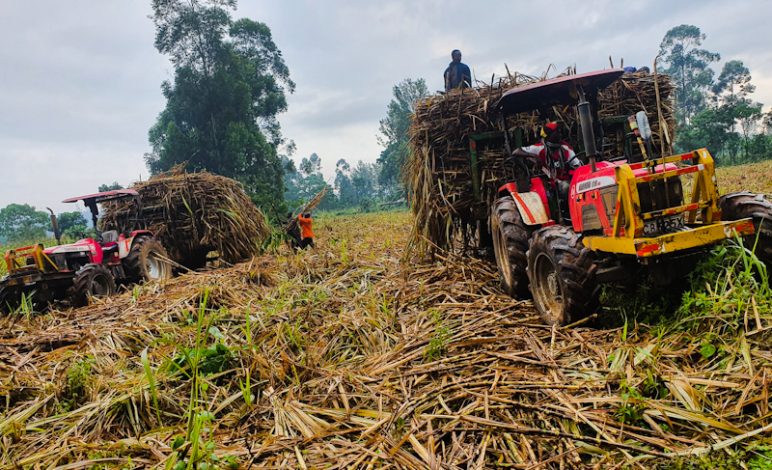
Kenya expects its factories to produce 900,000 tonnes of sugar this year. That compares with about 650,000 tonnes last year and puts output within 100,000 tonnes of the one million tonnes the country uses annually.
The Kenya Sugar Board (KSB) says output from January to September already reached 690,521 tonnes, up 56.7 per cent from 440,652 tonnes a year earlier. Prices have responded. The average retail price fell to Sh155 per kilogram in September from Sh171 a year earlier, which cuts the cost of two kilograms from Sh342 to Sh310. Households facing pressure on the cost of living feel that saving. Maize is the other pressure point, as Khusoko reported when the maize crop fell 51 per cent and imports headed for a record.
KSB Chief Executive Officer Jude Chesire sees the surplus coming within a year.
“Kenya by next year will start building surpluses for exports and requires such a platform to create new markets,” he said.
The target needs a slower final quarter
Reaching 900,000 tonnes requires 209,479 tonnes between October and December, or about 69,800 tonnes a month. Factories averaged about 76,700 tonnes a month through September.
Output reached 89,709 tonnes in June and a record 91,022 tonnes in July. The Board expects harvesting and milling to rise from October to November.
| Indicator | Jan to Sep 2026 | Jan to Sep 2025 | Change |
|---|---|---|---|
| Sugar production (tonnes) | 690,521 | 440,652 | Up 56.7% |
| Cane processed (million tonnes) | 7.76 | 4.97 | Up about 56% |
| Millers’ sales (tonnes) | 635,672 | 436,593 | Up 45.6% |
| Sugar imports (tonnes) | 251,690 | 364,486 | Down 31% |
| Molasses output (tonnes) | 307,617 | 189,809 | Up 62.1% |
| Sugar stocks, end September (tonnes) | 70,773 | 14,033 | Five times higher |
A low base explains part of the jump
Last year’s figures set a low bar. The Board’s January data put 2025 production at 613,000 tonnes, enough to cover 61 per cent of annual demand of 1.2 million tonnes. Output in 2024 reached a record 815,000 tonnes. A harvest of 900,000 tonnes would beat that record by about 10 per cent.
The gap between 2024 and 2025 followed a shortage of mature cane. The Board ordered a three month closure of milling in key western zones from July 14, 2025, over concerns that millers cut immature cane. Khusoko covered the shutdown order at the time.
Demand estimates also differ. Against the Board’s January figure of 1.2 million tonnes, 900,000 tonnes would cover 75 per cent of need. Against one million tonnes, it covers 90 per cent.
Imports fall, but refined sugar lags
Imports dropped about 31 per cent to 251,690 tonnes. Mill white and brown sugar imports fell about 71 per cent to 65,845 tonnes from 226,730 tonnes. Refined white sugar moved the other way, rising to 158,006 tonnes from 137,756 tonnes. Local factories still cannot supply every grade, so Kenya needs more refining capacity.
Stocks give the market a cushion. Cane deliveries to factories rose to 7.76 million tonnes, and stocks at the end of September stood at 70,773 tonnes.
Farmer payments will decide whether cane supply holds. KSB now gives millers seven days to pay farmers after delivery or face penalties, including interest, and is targeting weighbridge fraud.
Chesire takes Kenya’s case to the global sugar table
Chesire became the first Kenyan and first African to chair the International Sugar Organization (ISO) Council, for 2026. He broke a deadlock after three rounds of voting on September 22 failed to give any candidate the two thirds majority needed for Executive Director.
The Council agreed that Mauritius’ Devesh Devani will serve the first four year term, followed by Brazil’s Eduardo Leão de Sousa.
Kenya plans to use the seat to push for export markets, investment, ethanol and processing technology. Exports remain tiny, at 315.57 tonnes from January to September against 244.80 tonnes a year earlier.
Molasses opens an ethanol route
Molasses output rose 62.1 per cent to 307,617 tonnes, and stocks reached 65,384 tonnes from 12,735 tonnes.
Chesire said talks on biofuels and ethanol are building, and that Kenya has started benchmarking against established producers, with Brazil the main reference. The volumes exist. Investment and buyers do not yet.
