


West Kenya Sugar Company Ltd, which trades as Kabras Sugar, proposes a Ksh4.2 billion ($32.3 million) Nandi sugar mill that would give cane farmers in the county a market for their crop.
The plant would stand in Chesumei Sub County and crush 1,500 tonnes of cane a day, a measure known as TCD. The company says it can expand the plant to 3,000 TCD.
The project sits at the study stage. The company commissioned an environmental and social impact assessment in July 2026, and the summary gives no construction start date.
The Nandi sugar mill would add cane processing capacity in the North Rift belt
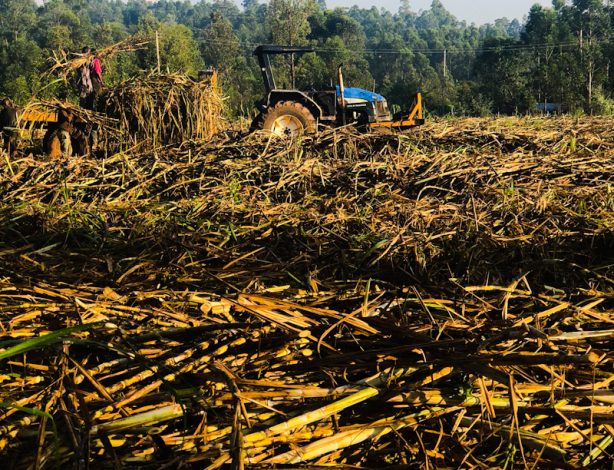
The company says the plant would expand cane processing in the North Rift sugar belt, create a market outlet for farmers in Nandi County and its environs, and generate direct and indirect jobs. The impact assessment summary says Chesumei Sub County has natural conditions suited to more cane production.
West Kenya Sugar works with local growers to develop cane across more than 30,000 acres, which would supply the mill.
An environmental study started in July 2026
West Kenya Sugar commissioned Gomake Consultancy Company Limited to prepare an environmental and social impact assessment (EIA) project report. The study responds to the Environmental Management and Co-ordination Act of 2015 and the Environmental Impact Assessment and Audit Regulations 2003.
The company issued consultation notices to immediate neighbours and clients, and consulted key lead agencies.
Sugar output recovers while consumption outpaces production
The Kenya National Bureau of Statistics (KNBS) reported that sugar production rose nearly 22% to 348,143 tonnes from January to May 2026. Cane deliveries to factories rose 25.1% to 3.9 million tonnes over the same period.
The US Department of Agriculture’s Nairobi office forecast in April 2026 that output would reach 850,000 tonnes in the marketing year that began in May 2026, up 40.5% from 605,000 tonnes. It put consumption at 1.175 million tonnes and imports at 370,000 tonnes.
About 320,000 small scale growers, mostly on plots under one hectare, produce 93% of Kenya’s cane, the department said.
Import duty and mill leases shape the case for local processing
The Finance Act 2026 raised excise duty on imported sugar to Ksh40 ($0.31) per kilogram from Ksh7.5 ($0.05) on 1 July 2026. Excise duty is a tax charged on specific goods. The change followed the reopening of the market to suppliers from the Common Market for Eastern and Southern Africa (COMESA) in November 2025.
The Sugar Act 2024 reinstated the Kenya Sugar Board and opened state owned mills to private operators on 30 year leases. In May 2025, West Kenya Sugar secured a lease for Nzoia Sugar, covering its mill and a 3,600 hectare estate.
The lease carries an investment commitment of Ksh5.76 billion ($44.3 million) and a one time payment of Ksh208.3 million ($1.6 million). West Kenya Sugar must also pay the government Ksh4,000 ($30.8) per tonne of sugar and Ksh3,000 ($23.1) per tonne of molasses, the syrup left after sugar extraction.
What it means for cane farmers in Nandi
Farmers in Nandi County would gain a buyer for cane if the mill proceeds. The Cane Pricing Committee, which includes government officials, millers and growers, has held the cane purchase price at Ksh5,500 ($42.30) per tonne since May 2025, the US department said.
The department also said millers are expected to shift to paying by sucrose content. The documents do not state what the Nandi mill would pay or when it would start buying cane.
Rai Group adds the Nandi plan to its sugar assets
Jaswant Singh Rai chairs Rai Group, a privately held conglomerate headquartered in Eldoret. His father, the late Tarlochan Singh Rai, founded it in 1970. Its interests span sugar, timber, paper, cement, edible oils, horticulture and real estate, with investments in Uganda, Tanzania and Malawi.
West Kenya Sugar, founded in 1971 and based in Kakamega, processes more than 5,000 tonnes of cane a day and employs more than 1,000 people. It has invested more than Ksh1 billion ($7.7 million) in cane development. The group’s sugar assets also include the Naitiri and Olepito facilities.
The next fact to watch is the outcome of the environmental and social impact assessment commissioned in July 2026. The summary gives no date for its completion or for the start of construction.
