



Safaricom directed KES 6.1 billion of its procurement to special interest group suppliers in FY26, up from KES 5.9 billion.
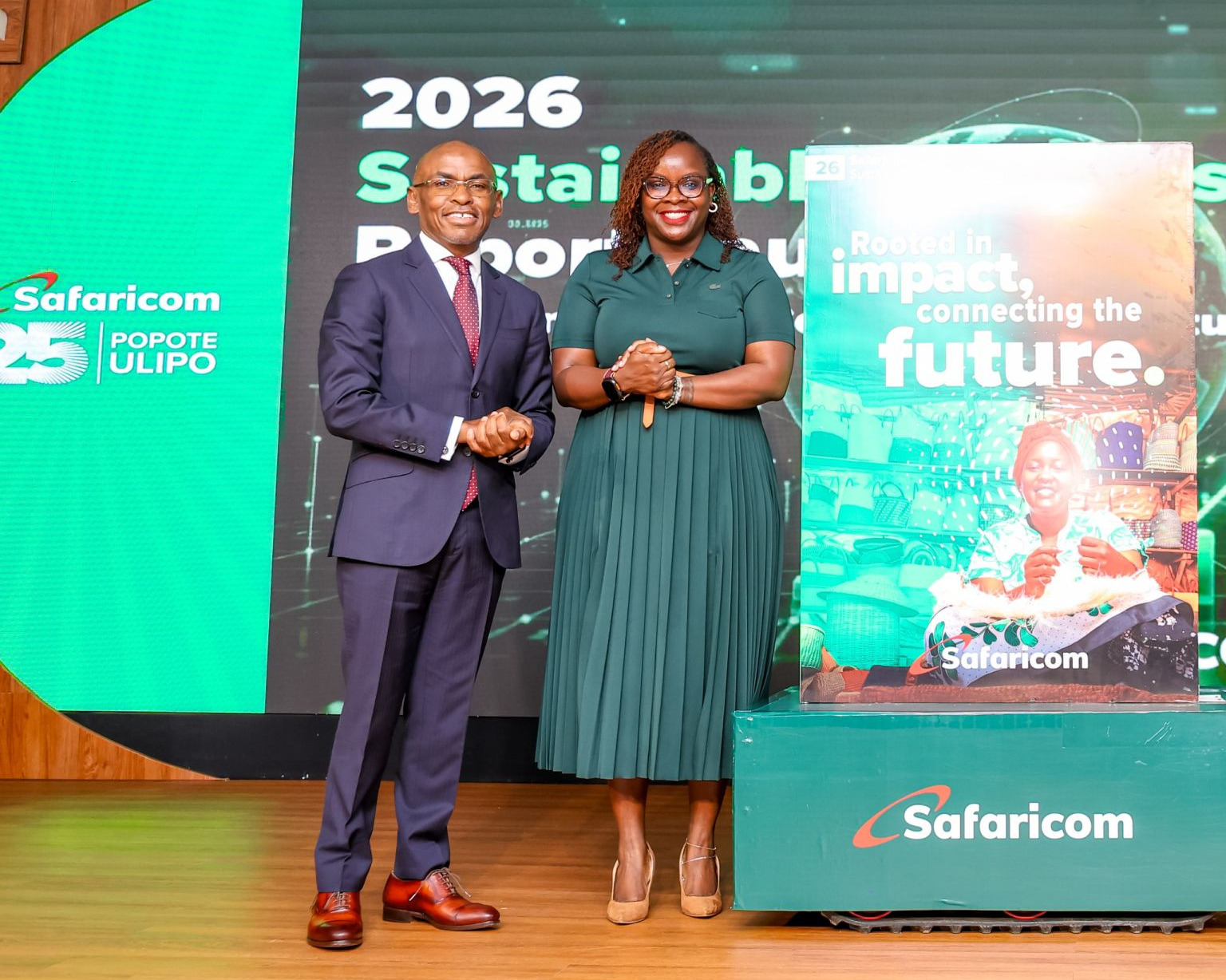
Its value to Kenyan society reached KES 1.247 trillion and supported 1,405,887 job years in the year to 31 March 2026, according to the 2026 Sustainable Business Report. Special interest groups are businesses owned by women, young people and persons with disabilities.
Safaricom created KES 1.247 trillion in value for Kenyan society in FY26
Group CEO Dr Peter Ndegwa opened the 27 October launch with the value figure. Alexforbes, the firm Safaricom appointed to run the valuation, produced it. Khusoko reported the value is 71.5% above the KES 727 billion recorded five years ago.
| Measure | FY25 | FY26 | Change |
|---|---|---|---|
| Value created for Kenyan society | KES 1.133 trillion | KES 1.247 trillion | +10% |
| Net economic value | KES 632.0 billion | KES 654.0 billion | +3.5% |
| Job years supported | 1,334,798 | 1,405,887 | +71,089 (5.3%) |
| Direct and indirect jobs | Not stated | 310,489 | n/a |
| Value to profit ratio | 16 times | 13 times | Method changed |
Source: Safaricom 2026 Sustainable Business Report, Kenyan operations, year to 31 March 2026.
What is a job year?
A job year is one full time job held for one year. The figure includes induced jobs, which arise when suppliers and their staff spend their earnings. It measures modelled employment, not Safaricom payroll. The 310,489 direct and indirect jobs sit closer to a payroll count.
Special interest group suppliers received KES 6.1 billion
More suppliers now work with Safaricom. Local suppliers rose from 600 to 776. Safaricom also placed qualifying local suppliers on payment within 60 days, which improves their cash flow. It redesigned its Supplier Onboarding Portal with AI checks on documents, which cuts the paperwork for small firms. The Kenya Institute of Supplies Management gave Safaricom its SCM Diversity and Inclusivity Award.
| Supplier measure | FY25 | FY26 |
|---|---|---|
| Spend with special interest group suppliers | KES 5.9 billion | KES 6.1 billion |
| Share of procurement spend | 6% | 5% |
| Ambition | 15% | 15% |
| Local suppliers | 600 | 776 |
| Local sourcing share of spend | 72.9% | 67% |
| Women owned businesses in tenders | 75 | 72 |
| Suppliers with disabilities in tenders | 7 | 5 |
Source: Safaricom 2026 Sustainable Business Report.
The share fell because total procurement grew faster than special group spend. The 5% share implies total spend near KES 120 billion. Reaching 15% on that base means about KES 18 billion, three times today’s level. The report cites limited special group suppliers in some strategic categories and capability gaps on larger contracts.
Safaricom answers with early engagement, capacity building, subcontracting through original equipment manufacturers and feedback to unsuccessful bidders.
Public procurement sets a 30% benchmark for the same groups
Kenyan law requires public bodies to reserve at least 30% of procurement for enterprises owned by women, youth and persons with disabilities. The programme is called Access to Government Procurement Opportunities, or AGPO. Safaricom’s 15% ambition sits at half that rate in the private sector.
| Benchmark | Figure |
|---|---|
| Safaricom share, FY26 | 5% |
| Safaricom ambition | 15% |
| Public sector reservation under AGPO | 30% |
| AGPO tenders awarded, 2024/25 | KES 56.8 billion |
| Women’s share of AGPO awards, 2024/25 | 58.3% |
| Reserved AGPO funds disbursed, 2024/25 | 39% of KES 145.27 billion |
Treasury and PPRA data show women received 58.3% of KES 56.8 billion in AGPO tenders in 2024/25, while 39% of reserved funds reached bidders. Women owned firms win contracts when buyers open them. Private buyers can add to that demand.
The value to profit ratio fell to 13 times because the method changed
The report says profit grew faster than the impacts the valuation captured. It adds that the fall does not mean lower value for society. Alexforbes replaced the True Value method with an approach drawing on the Value Balancing Alliance and the International Foundation for Valuing Impacts. It models effects through a Social Accounting Matrix for Kenya. The scope excludes Ethiopia. Khusoko covered the briefing on the new impact method.
The Alexforbes Paragon SDG Impact Assessment graded Safaricom B+ overall on its nine priority goals. It awarded A+ on SDG 9 (industry and infrastructure), SDG 10 (reduced inequalities) and SDG 17 (partnerships).
The foundations invested KES 10.2 billion across all 47 counties
The Safaricom and M-PESA Foundations reached 4.4 million people in FY26. Citizens of the Future aims over five years to build or refurbish 500 schools, award 10,000 scholarships and train 56,000 teachers in digital skills.
Women and persons with disabilities hold more roles inside Safaricom
| Inside Safaricom | Result |
|---|---|
| Women in workforce, FY26 | 49.6% |
| Women in leadership, FY26 | 33.3% |
| Women in senior management, four year trend | 40.1%, 42.4%, 45.0%, 43.9% (target 45%) |
| Employees with disabilities, four year trend | 3.1%, 3.26%, 3.6%, 3.9% (target 3.9%) |
Source: Safaricom 2026 Sustainable Business Report.
Representation of persons with disabilities rose in each of four years and met target. Women in senior management dipped 1.1 points, from 45.0% to 43.9%.
What to watch in the FY27 report
Ndegwa summed up the approach at the launch: “purpose before profit and reputation before revenue.” The FY27 report will show three things:
- whether the ratio holds at 13 times
- whether the 5% supplier share recovers toward 15%
- whether the count of women owned and disability owned bidders rises from 72 and 5
Safaricom has not yet published spend by procurement category. That data would show where the 15% ambition can grow fastest.
