


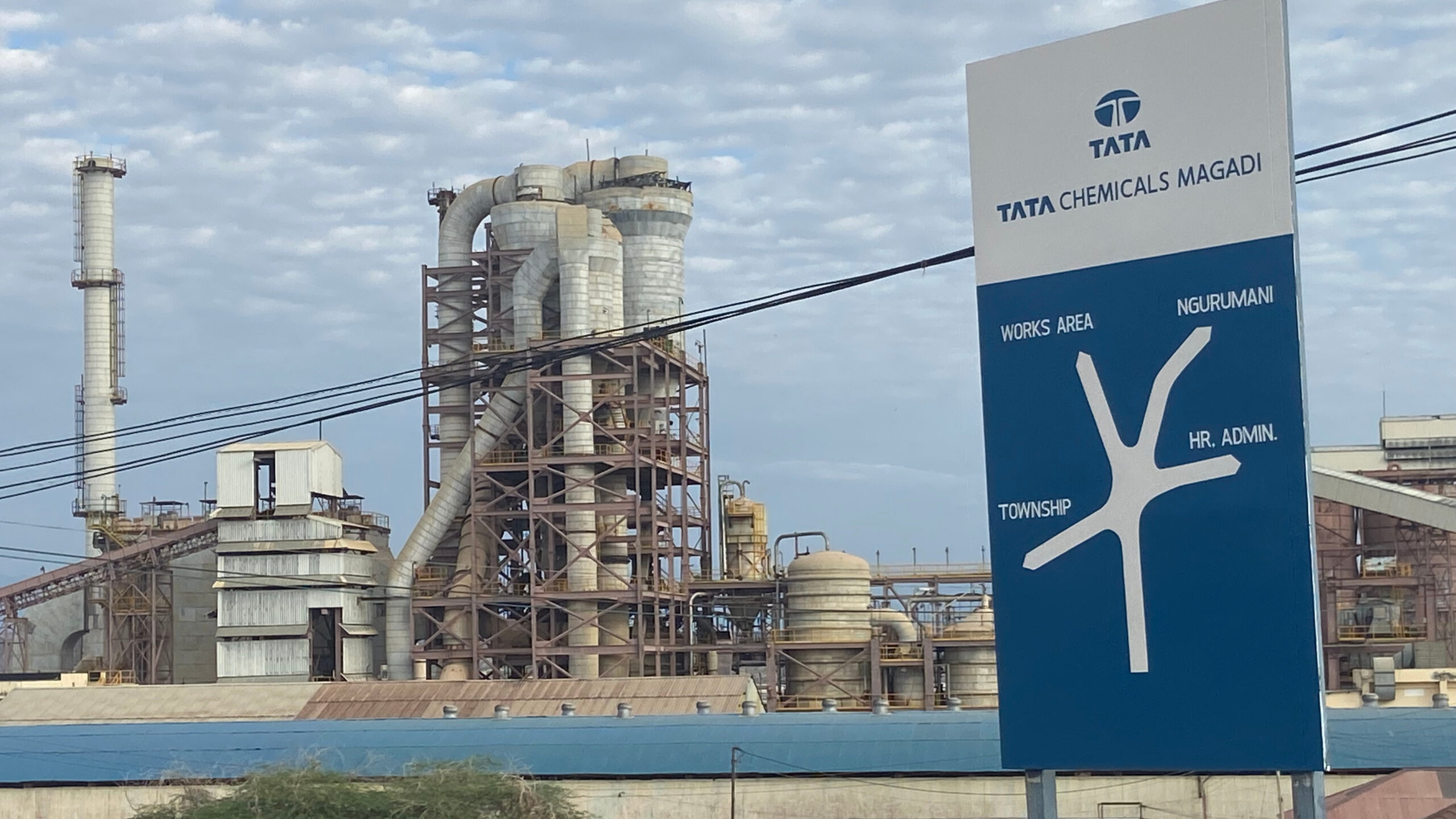
President William Ruto has ordered India’s Tata Chemicals to end its operations at Lake Magadi, telling residents of Kajiado County that the company has given them nothing in return for decades of mineral extraction.
The order lands in the middle of an unresolved legal fight over billions of shillings in county land rates and royalties, and revives questions about a colonial-era mining lease that a Kenyan government extended to 2053 just over two decades ago.
Speaking during a tour of southern Kenya on Thursday, Ruto said his government would replace Tata with two new companies. The announcement follows weeks of tension between the multinational and Kenyan authorities over land rates, local investment and compliance with mining regulations.
Ruto Cites A Century Without Local Investment
Ruto framed the decision as a correction of a lopsided arrangement that spanned generations without delivering visible benefits to the county.
“That TATA company had that contract for 100 years. They have not built anything in Kajiado, they have not built any factory in Kajiado,” Ruto said.
He went further, questioning why a resource extracted from Kenyan soil had for so long left the country in raw form.
“We have said we will bring a new company and they should put a big glass company here in Kajiado. And another company to make chemicals here in Kajiado. Are we slaves to other people?” he asked.
Tata Chemicals could not immediately be reached for comment on the President’s remarks.

What Ruto Wants From The Replacement Investor
Ruto set out conditions for the firms that will take over operations at Magadi. Both must build processing plants inside Kajiado rather than export raw soda ash, reversing what he described as decades of resource extraction that left little behind.
| Requirement | Detail |
|---|---|
| Glass processing plant | Must be built and operated in Kajiado |
| Chemical processing plant | Must be built and operated in Kajiado |
| Local employment | Positioned as central to the new licence terms |
| Value addition | Raw soda ash processed locally rather than exported |
How We Got Here: A Lease Kenya Never Broke
The dispute Ruto stepped into on Thursday did not begin with him, and it did not begin with Tata. The extraction arrangement at Magadi traces back to the colonial seizure of Maasai land in the early 1900s. Two Rhodesian prospectors, Thomas Deacon and John Walsh, recognised the industrial potential of the soda deposits, and the East Africa Syndicate acquired what was then only a prospecting licence over thousands of acres.
That licence hardened into an extraction concession through two colonial-era agreements — one in 1904 and another in 1911. The 1904 agreement pushed Maasai communities away from the railway and land earmarked for European settlement; they were consulted informally, if at all, and lost millions of acres. The lease of April 12, 1911 is the document that still shapes the terms of the dispute today: it granted the company “full and uninterrupted right to dig, win and carry away” all soda ash and other minerals within the concession.
A later lease granted in the 1920s was due to expire in 2023. But in 2004, President Mwai Kibaki’s government extended it by another 50 years — to 2053 — in an agreement Maasai leaders say was negotiated without adequate consultation. In other words: the “century of extraction” Ruto describes was not simply inherited from colonial rule. A Kenyan government renewed it, on largely unchanged terms, just over twenty years ago.
Ownership of the concession has also changed hands more recently than the “100 years” framing suggests. Tata Chemicals only acquired control of the Magadi operation in 2005, when it bought Brunner Mond, the British multinational that owned it before then. Ownership shifted from British to Indian capital, but the underlying economic arrangement — raw extraction, minimal local processing — remained largely the same.
The Sh17.4 Billion Question Still Before The Courts
Underneath Thursday’s announcement sits an active, unresolved legal dispute. Kajiado County has demanded roughly Sh17.4 billion in disputed land rates and royalties from Tata, arguing the company’s payments should go to the county rather than the national government under the Mining Act and constitutional provisions on public land and revenue collection.
The Court of Appeal quashed that demand in October 2025. Kajiado took the matter to the Supreme Court, which on June 19, 2026 gave the county room to lodge a fresh appeal, but left the core questions about county taxation powers, public finance and Article 209 of the Constitution unresolved. That case, not Thursday’s presidential order, is where the legal merits of the dispute actually sit, and it remains pending.
Kajiado County shut Tata’s depot in January 2024 over the unpaid arrears, a move the company disputed in court. In July, Mining Cabinet Secretary Hassan Joho ordered Tata Chemicals Magadi to suspend operations, citing unresolved royalties, weak local procurement, insufficient hiring of Kenyans and gaps in export reporting and environmental compliance.
The Stakes, And The Cost So Far
Tata Chemicals Magadi is Africa’s largest soda ash producer and among Kenya’s biggest single exporters, contributing close to six percent of the country’s exports and generating nearly 100 million dollars in foreign exchange each year, according to reporting by the Daily Nation. The closure has already cost jobs. The Democracy for Citizens Party says more than 500 direct employees and thousands of support workers were left without work when operations stopped.
Opposition politicians allied to the party have accused the government of using the land dispute as cover for a scramble over lithium and oil deposits believed to sit beneath Magadi, claims Ruto’s administration has not addressed directly.
Checking Ruto’s Claim Against Tata’s Own Record
Ruto’s central charge is that Tata “has done nothing” for Kajiado. Tata’s own sustainability disclosures describe a different picture, though one that falls short of the manufacturing investment Ruto is demanding.
The company says it subsidises Magadi Hospital, which serves more than 30,000 people in the area with outpatient clinics, 55 inpatient beds and mobile outreach to communities more than ten kilometres away. It says it employs three quarters of workers at its soda ash plant locally and all casual staff at its salt plant from the surrounding community, and that 40 percent of stalls in the township market are set aside for local traders.
Tata Chemicals Magadi was also named overall winner at the 2025 Energy Management Awards run by the Kenya Association of Manufacturers, and commissioned what it called an industry-first electric calciner plant in July.
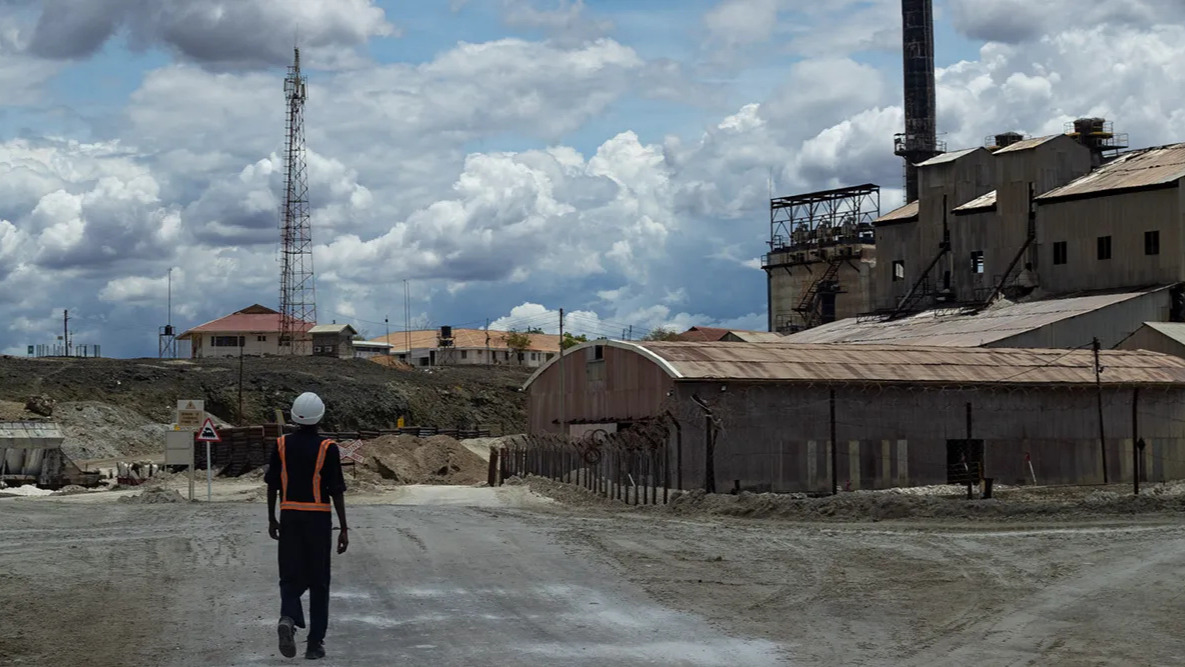
None of that amounts to the glass or chemical manufacturing plants Ruto says Kajiado was owed. But on the ground, the gap between institutional disclosures and daily life is stark. Journalist John Kamau, writing in the Sunday Nation in July 2026 after visiting Magadi, described residents in settlements around the lake lining up with plastic drums beside the road, waiting for water from government bowsers — in a town built entirely around a mineral extraction economy that has never delivered piped water to the communities surrounding it. Magadi remains, in his words, a resource-rich place inhabited by poor people: it has a railway, but one built purely to carry soda ash to Mombasa; a hospital, but no university; workers’ quarters, but no significant commercial district, manufacturing belt or industrial training college.
| Ruto’s claim | Tata’s stated position |
|---|---|
| Built nothing in Kajiado for 100 years | Funds Magadi Hospital, serving 30,000 people |
| No local employment | Says 75 percent of soda ash plant staff are local hires |
| No economic opportunity created | Cites market stalls, tourism and small business support programmes |
| No industrial development | No glass or chemical processing plant confirmed in Kajiado |
Not A Uniquely Kenyan Problem
The pattern Ruto is describing at Magadi echoes across the continent. Ghana has gold but exports most of it in raw form. Zambia exports copper with little local manufacturing capacity built around it. Guinea exports bauxite and buys back finished aluminium products. Nigeria exports crude oil while spending decades importing refined petroleum. The Democratic Republic of Congo supplies cobalt for the world’s electric vehicles while communities near its mines remain among the poorest on earth. Magadi fits that continental pattern: a concession that has produced export earnings for over a century without the local industrial base Ruto is now demanding.
Part Of A Wider Push Against Foreign Dominance
The Tata order is not an isolated move. A day earlier, Ruto had directed a crackdown on foreign hawkers operating small-scale trading businesses in Kenya, telling MSME traders at State House that a Bill before Parliament would restrict certain trading activities to Kenyans.
He said administrative action against foreign traders would begin the following week, separate from the legislation. “Hatujajenga investor confidence ndo hawkers wakuje Kenya. Ile tumejenga ni for investors, si traders and hawkers,” he said, arguing that Kenya’s investment climate was built to attract capital and jobs, not small traders competing with locals.
Taken together, the two announcements point to a government leaning harder into economic nationalism weeks apart, drawing a line between investors it wants to keep and both foreign trading activity and long-standing multinationals it accuses of extracting value without reinvesting locally.
What Happens Next
Ruto did not name the incoming companies or set a timeline for their entry. Tata has not responded publicly to the closure order, and the Sh17.4 billion legal dispute that triggered the original suspension remains before the courts, unresolved by Thursday’s presidential order.
Whether the new investors can be secured and licensed quickly, whether Tata contests the closure through Kenyan courts as it has done with the county government before, and whether the Supreme Court eventually settles the underlying constitutional questions about county revenue powers, will determine how long the standoff over Lake Magadi’s resources continues.
