


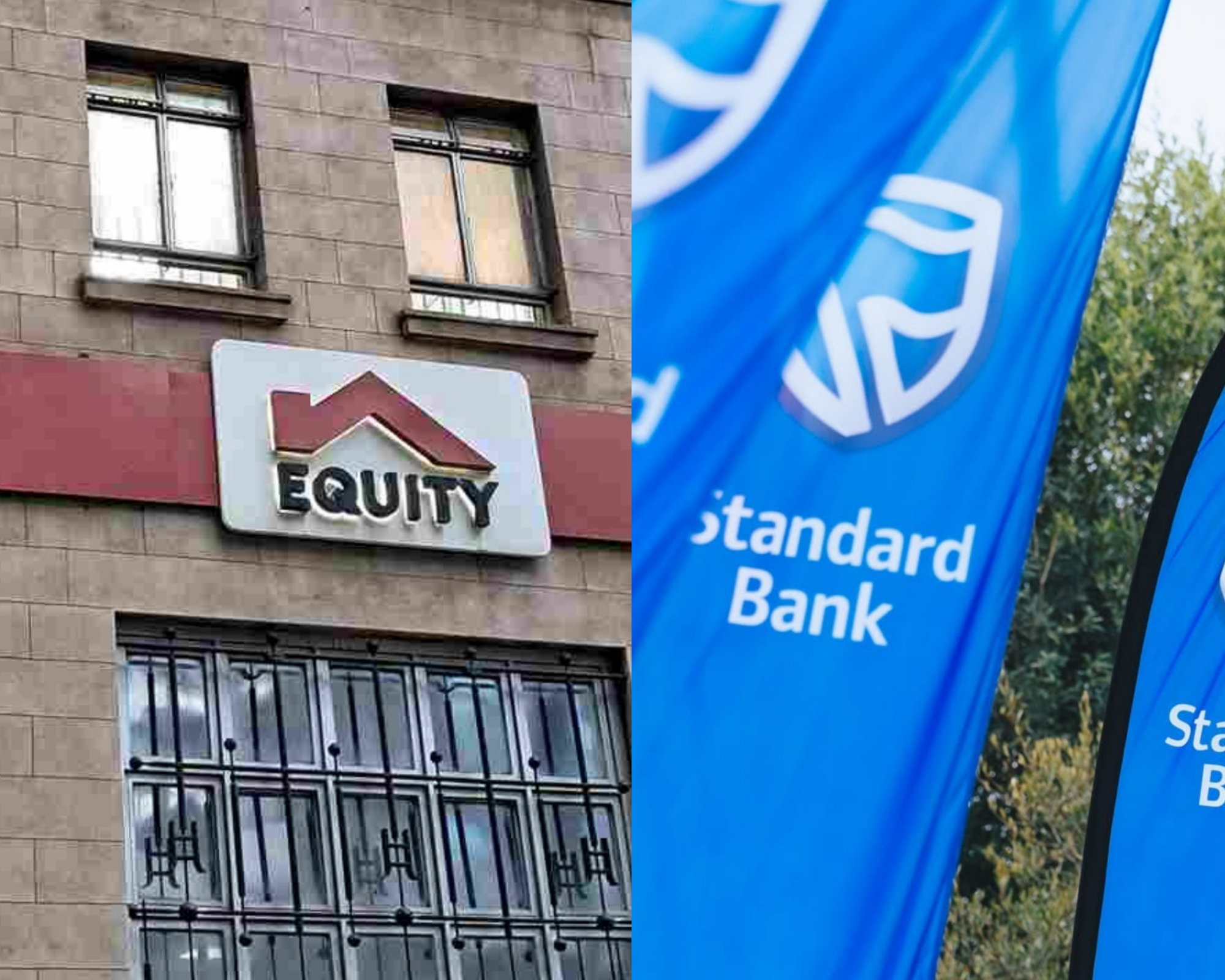
Two of Africa’s largest banking groups spent time making the same argument from different podiums: East Africa has entered a growth cycle that will define the next two decades, and the banks that move fastest will capture it.
Equity Group Holdings Managing Director and CEO Dr James Mwangi laid out his case in a sit-down interview after releasing half year results. Standard Bank Group Chief Executive Sim Tshabalala made a similar pitch during a three-day trip to Kenya. Both conversations point to a region that global capital is starting to notice, and both bankers say the money is not the constraint. Execution is.
Equity posts a stronger half than first reported
Equity Group’s half year 2026 results showed a 32 percent rise in profit after tax to KSh45.5 billion for the six months to June, up from KSh34.6 billion a year earlier, according to the results the group released on 19 August. It is a sharp acceleration from the same period a year ago, when Khusoko’s coverage of Equity’s H1 2025 results showed profit after tax up a comparatively modest 16.9 percent to KSh34.6 billion. Profit before tax this half climbed 39 percent to KSh57.8 billion. The balance sheet grew 20 percent to KSh2.16 trillion, driven by a 21 percent rise in customer deposits to KSh1.59 trillion and 19 percent loan book growth to KSh981 billion.
Mwangi frames the balance sheet less as a trophy and more as a tool. Roughly 64 percent of it sits in cash, which he says gives the group room to move quickly when credit demand picks up. That demand is picking up: Equity’s loan book grew in double digits for the first time in close to eight years, a shift Mwangi reads as proof that the region’s credit cycle is finally turning.

Bank in substance, not just structure
Equity now earns more outside Kenya than inside it on several measures. Regional subsidiaries contributed 42 percent of banking profitability and 47 percent of banking revenue in the first half, while holding 51 percent of group deposits, 54 percent of loans and 52 percent of banking assets.
Equity BCDC in the Democratic Republic of Congo grew profit after tax 30 percent to KSh11.8 billion. Tanzania posted the fastest growth in the group, and Rwanda added 12 percent. The insurance arm kept pace too: gross written premiums rose 24 percent to KSh6.4 billion, building on the 115 percent premium surge.
Non-funded income, the fees and trade finance revenue that do not depend on interest rates, rose 36 percent to KSh55.6 billion and now makes up 44.5 percent of total income, up from 40.8 percent a year earlier. Mwangi credits this to a deliberate push to finance cross-border trade through guarantees and letters of credit rather than loans alone, a strategy tied to operationalising the African Continental Free Trade Area within the ten-country bloc Equity serves: Kenya, Uganda, Tanzania, Rwanda, South Sudan, DRC, Ethiopia, Mozambique and Zambia. That bloc, Mwangi points out, holds more than 450 million people, a market larger than the United States by population and worth close to 60 percent of India’s.
Equity’s numbers also stand out against a mixed Kenyan banking season. Family Bank’s H1 2026 profit rose 62 percentfollowing its June listing on the Nairobi Securities Exchange, and insurer Old Mutual swung to a KSh882 million half year profit after a near breakeven 2025. Not every listed financial firm shared the momentum: CIC Insurance’s profit rose 70 percent but underwriting margins weakened over the same period, a reminder that the sector’s recovery is not uniform.
Asked whether Equity shares are undervalued given the growth rate, Mwangi noted the stock trades below book value despite a 40 percent year on year profit growth trend, a 4.5 percent return on assets and a 35 percent return on equity, while regional peer KCB trades near seven times book. He called it a matter of time before the market catches up and advised shareholders against selling into the gap.
Standard Bank arrives with a different pitch: infrastructure and capital
Where Equity’s story is about deposits and trade finance, Standard Bank Group’s is about mobilising capital for infrastructure. Tshabalala, who leads Africa’s largest bank by assets with a $250 billion balance sheet and a $20 billion capital base across 21 countries, used his Kenya visit to argue that the continent does not lack money. It lacks bankable projects and the pension fund, banking and regulatory reforms needed to channel existing capital toward them.
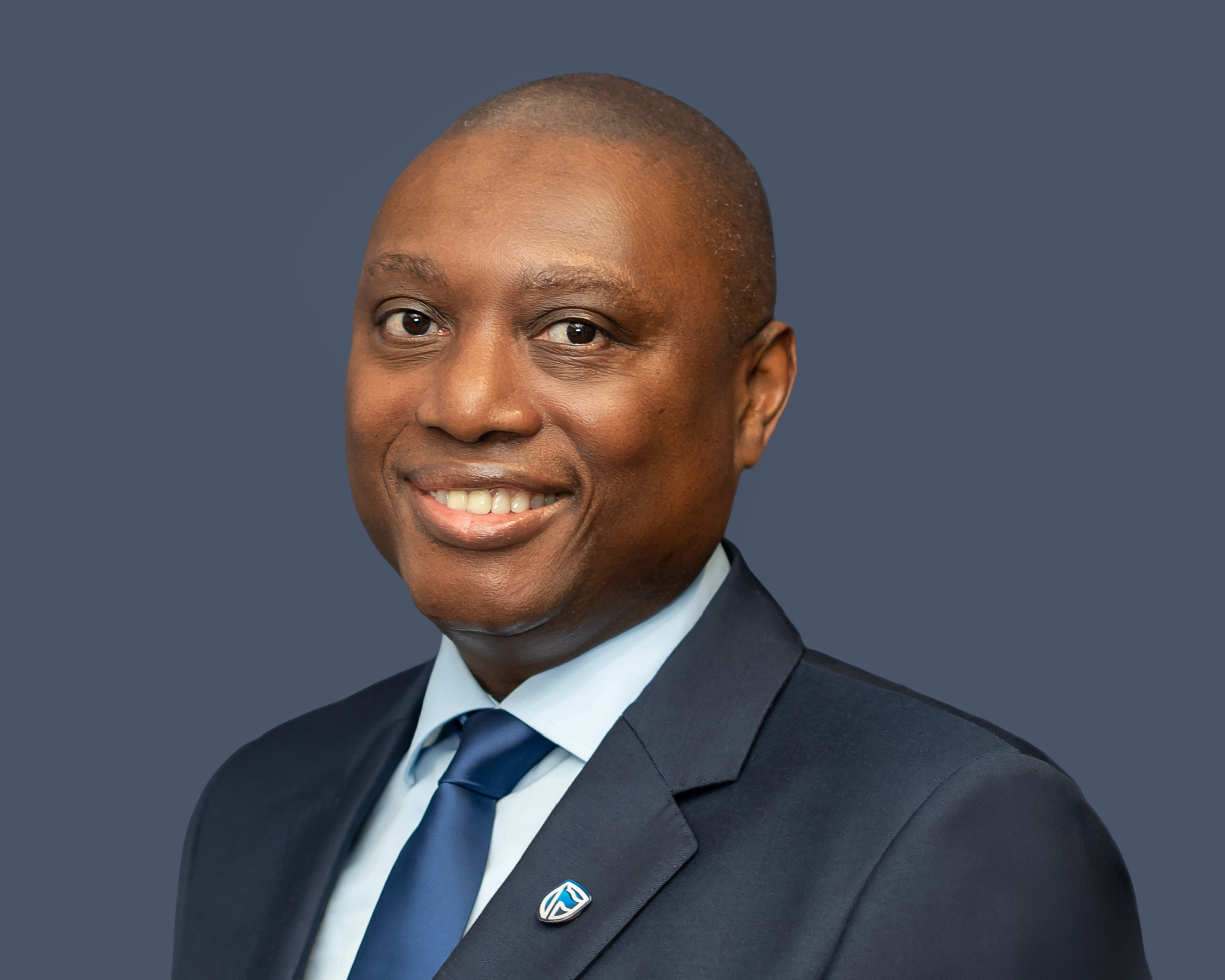
“Nine out of ten projects or ideas fail before money gets out the door,” Tshabalala said, pointing to weak project planning as the more common bottleneck than a shortage of investors.
His prescription has four parts: fiscal transparency from finance ministries, deeper pension fund participation in capital markets, a rewrite of Basel capital rules that he says force banks to hold more reserve capital than African project risk actually justifies, and a sustained campaign to correct what he calls an exaggerated perception of African risk among global investors.
He cited Marrakesh in December 2023 as a case study: after Kenya’s finance ministry and central bank gave international investors a clear briefing on fiscal plans, the country’s bonds rallied 23 percent in price over the following period.
Standard Bank has been building out its East Africa leadership as it leans into the region. The group appointed Dr Joshua Oigara as Regional Chief Executive for East Africa in August 2025, a move Khusoko reported as part of a broader succession plan ahead of Tshabalala and CFO Arno Daehnke’s expected retirement by 2027.
Tshabalala also named geothermal power, data centre capacity and light manufacturing displaced from other regions as the specific opportunities he sees for Kenya and East Africa over the next decade.
Case both banks are pricing in
Mwangi and Tshabalala are reading from the same macro script, and independent forecasts back the broad direction even where individual country numbers differ by source.
| Country | Mwangi’s H1 2026 figure (Equity results) | Independent 2026 forecast |
|---|---|---|
| Kenya | 4.5% to 5% | 4.5% to 5% (Treasury/CBK range) |
| Uganda | 6.4% | 7.0% to 7.5% (NCBA, AfDB) |
| Tanzania | 5.9% | 6.3% (NCBA) |
| Rwanda | 6.8% | 7.2% (NCBA) |
| DR Congo | 5.6% | mid single digits, mining-driven |
| South Sudan | 20% | among the world’s fastest, oil-dependent |
Regional bodies broadly agree East Africa is outpacing the rest of the continent. An African Development Bank report projects the region’s GDP growth accelerating from 4.4 percent in 2024 to 5.3 percent in 2025 and 6.1 percent in 2026, making it the fastest growing region on the continent. Khusoko’s own December 2025 East Africa growth outlook found similar momentum building across Uganda, Tanzania and Rwanda, tempered by real risks: Rwanda’s public debt is forecast to climb above its own 74 percent of GDP threshold, and Uganda’s oil export timeline could slip into 2027.
Both banks are positioning around the same underlying bet: that a ten to twenty country East African market, increasingly integrated under the African Continental Free Trade Area, will generate enough trade, infrastructure and consumer demand to sustain double-digit growth in banking revenue for years. Equity is betting on being the balance sheet inside that market.
Standard Bank is betting on being the capital markets bridge that connects it to global investors. Neither bet is guaranteed. Debt levels are rising across several of the region’s economies, project execution remains the sector’s weakest link by Tshabalala’s own account, and Equity’s own numbers show a bank whose risk profile now looks less like the Kenyan lender its shareholders bought a decade ago and more like a diversified regional group with exposure to some of the continent’s more volatile markets.
