



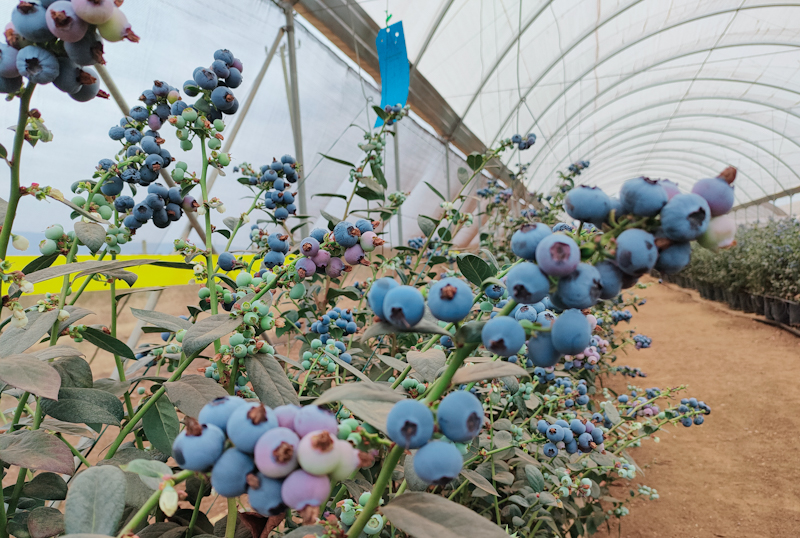
Kakuzi Plc, the Nairobi and London listed agribusiness firm, has broken ground on a 30 acre greenhouse complex in Murang’a County, formally moving blueberries from a trial crop into a third commercial superfood line alongside avocado and macadamia.
The company said the development follows successful crop trials and variety selection work, and comes as the blueberry division’s half year numbers turned positive for the first time.
Trials Clear The Way For Commercial Rollout
Kakuzi Managing Director Chris Flowers said the variety selection stage of the blueberry pilot returned strong enough results to justify the investment, with trials showing steady yields and, for the first time, clear commercial viability.
“Kakuzi has been actively working to diversify its revenue streams, and our blueberry operations are part of this foundation,” Flowers said. “Our blueberry production has increased in line with expectations. This venture is now profitable and has recorded a half year profit of Ksh 13 million, recovering from the Ksh 17 million loss posted for the same period last year.”
Production Up Fivefold
By June 2026, blueberry output on the pilot orchards had climbed to 42,000 kg, up from 8,400 kg over the same period the year before, a fivefold increase the company attributed to better plant selection and tighter growing conditions under tunnel cultivation.
Flowers said the company expects the momentum to hold through the rest of the year. “We anticipate that production will meet our annual field and business revenue projections. The market demand both domestically and in our key international markets remains strong, with prices exceeding expectations,” he said.
A Decade In The Making
Kakuzi first planted 10 hectares of blueberries under polytunnels in 2019, using pot based cultivation to get around the crop’s usual need for cooler climates. According to earlier reporting, the company’s ten year development plan set a target of expanding that footprint to 200 hectares, with early export orders already coming in from Nigeria and Egypt.
By 2023, Kakuzi had folded blueberries into a broader corporate rebrand that introduced private label macadamia nuts, flour and oil, and flagged a large scale blueberry venture with a price tag of roughly Ksh 4 billion. A year later, shareholders backed a fresh round of diversification spending, including Ksh 100 million earmarked for agricultural technology and new commercial produce such as blueberries. The greenhouse groundbreaking now underway is the next visible step in that plan.
Part Of A Wider Diversification Drive
The blueberry expansion follows a pattern already seen in Kakuzi’s other divisions. Khusoko’s coverage of the company’s half year 2024 results showed avocado and macadamia earnings climbing on stronger export demand, and the blueberry unit is now following a similar path from pilot to profit. At its 98th annual general meeting in May 2026, the company outlined plans to widen avocado exports beyond Europe into China, India and North America, a strategy it is echoing on a smaller scale with blueberries.
Kakuzi is also developing value added avocado products, including frozen pulp and avocado oil, aimed at export markets, as it looks to capture more margin by processing fruit before it ships rather than relying solely on fresh exports.
Kakuzi Plc is a listed Kenyan superfoods producer trading on both the Nairobi Securities Exchange and the London Stock Exchange. It cultivates, processes and markets avocados, blueberries, macadamia, tea, livestock and commercial forestry, and is majority owned by UK based Camellia Plc.
The blueberry greenhouse project adds to development plans already under way in avocado and macadamia, part of a longer running effort by the company to build a more weather resilient agricultural portfolio and reduce its reliance on any single crop or export market.
