


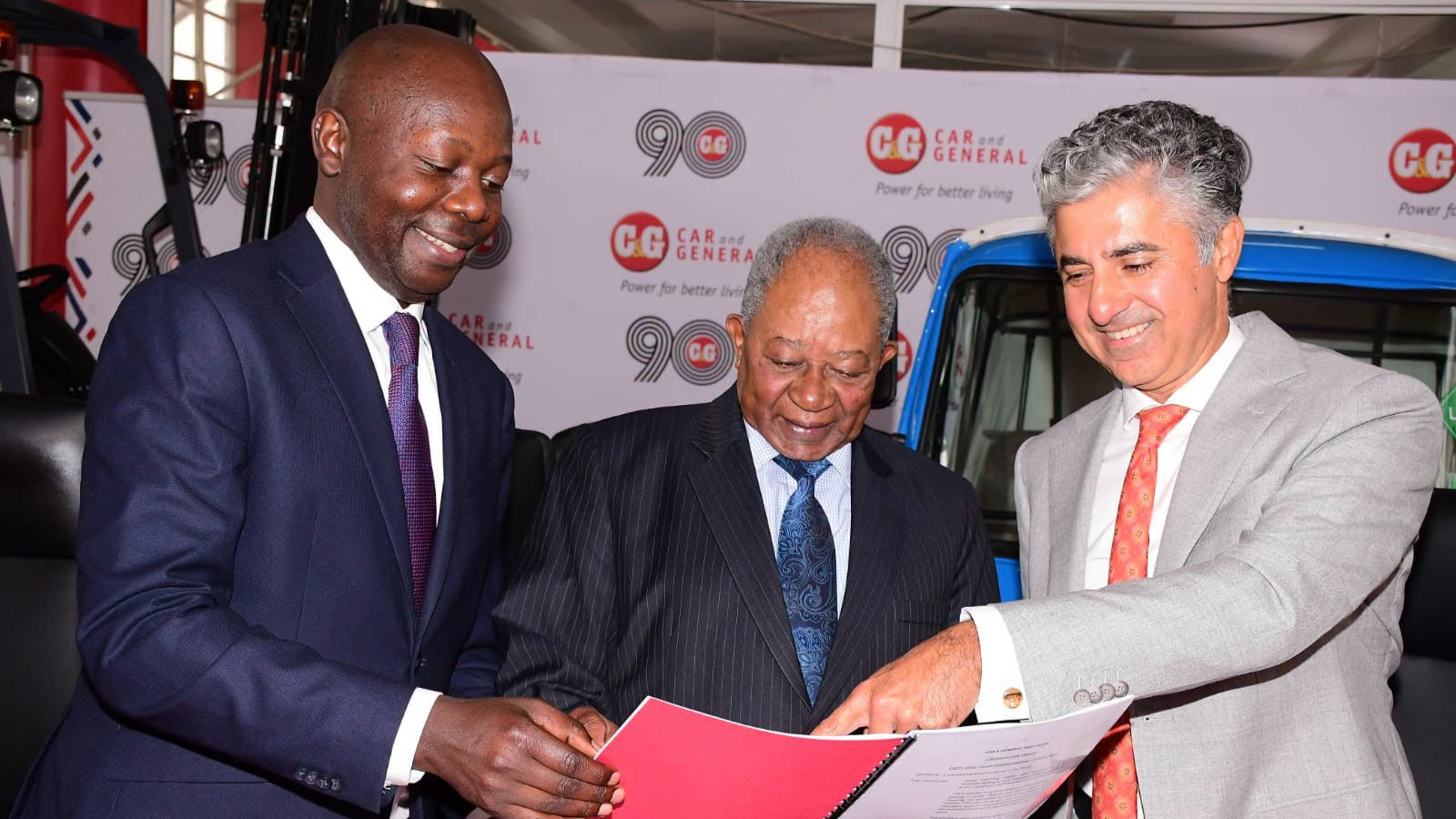
Car & General (Kenya) PLC more than quadrupled its bottom line in the first half of 2026, as strong vehicle and equipment sales across East Africa combined with a surge in earnings from its fintech associate Watu to deliver the company’s strongest six month performance in years.
The Nairobi Securities Exchange listed firm reported profit after tax of KES 2.60 billion for the six months ended 30 June 2026, up 308.8% from KES 637.1 million in the same period last year. Turnover climbed 30% to KES 15.6 billion, driven by sales growth of 40% in Kenya, 35% in Uganda and 22% in Tanzania.
Earnings per share rose to KES 32.26 from KES 7.93, and the board declared an interim dividend of KES 1.00 per share, payable around 10 September 2026 to shareholders on the register by 3 September.
Revenue growth outpaces cost increases
Gross profit grew 39.5% to KES 2.96 billion, lifting the gross margin to 18.9% from 17.7% a year earlier. Operating expenses rose at a slower pace, up 24.6% to KES 1.65 billion, allowing profitability to expand faster than the top line.
Finance costs fell 21.7% to KES 573.7 million, easing pressure from debt servicing even as borrowings grew. Earnings before interest, tax, depreciation and amortisation more than doubled to KES 3.56 billion, up 131.8% from KES 1.54 billion.
| Metric (KES) | H1 2026 | H1 2025 | Change |
|---|---|---|---|
| Revenue | 15.64B | 12.03B | +30.0% |
| Gross profit | 2.96B | 2.12B | +39.5% |
| Operating expenses | 1.65B | 1.32B | +24.6% |
| Share of associate profit | 2.04B | 422.7M | +382.3% |
| Finance costs | 573.7M | 732.8M | −21.7% |
| EBITDA | 3.56B | 1.54B | +131.8% |
| Profit before tax | 2.88B | 753.8M | +281.5% |
| Profit after tax | 2.60B | 637.1M | +308.8% |
| EPS (KES) | 32.26 | 7.93 | +306.8% |
| Total equity | 10.49B | 6.26B | +67.7% |
Watu stake drives associate income higher
The single largest contributor to the profit jump came from Car & General’s share of profit in its associate Watu, which climbed 382.3% to KES 2.04 billion from KES 422.7 million. Watu, a mobile phone and asset financing platform, now operates in Kenya, Uganda, Tanzania, the Democratic Republic of Congo, Nigeria, South Africa and Sierra Leone, and has recently opened operations in Rwanda.
Chairman Nicholas Ng’ang’a said the group is seeing broad based growth. “We are seeing growth across all product lines throughout the region,” he noted in commentary accompanying the results.
Kenya’s motorcycle segment stood out. Monthly unit sales averaged 12,000 in 2026, up from 7,000 per month in 2025, a shift management linked partly to exchange rate stability that has given the group more control over margins.
Tanzania poultry business stabilizes after a rough patch
Car & General’s poultry operation in Tanzania has moved past a difficult stretch and is now progressing steadily. Production of day old chicks and demand for them have held stable, which explains why sales growth there stayed modest at 3.5% for the period. Management expects output to increase further in the second half of the year. Two wheeler and three wheeler sales in Tanzania also posted modest gains, and the outlook for the market remains positive.
Investment property portfolio under active review
Nairobi Mega on Uhuru Highway kept steady footfall through the half, a trend the company expects to hold for the rest of the year. In Shanzu, the group holds 22.5 acres of land, having sold 1.5 acres so far in 2026, and plans a partial reduction of this holding by year end. Management pointed to the Mombasa to Malindi highway, due for completion in 2027, as a factor that should raise the value of the site over time.
Boda Plus turns a corner on exports
The group’s helmet manufacturing unit, Boda Plus, returned to profit and continued to build momentum. The subsidiary now exports to Uganda, Tanzania, DRC, Rwanda and Burundi, while a partial recovery in domestic demand has supported improved performance in Kenya.
Electric and gas vehicles signal a longer term shift
Car & General is investing in electric two wheelers and three wheelers, alongside liquefied petroleum gas three wheelers in Kenya and compressed natural gas three wheelers in Tanzania. Early customer response has been positive, and the company says its financing arm puts it in a position to support the shift toward cleaner transport, though it flagged that charging and gas supply infrastructure needs faster development to unlock full demand. The group says it now serves more than 5 million customers across its product and service lines.
TVS Motor Enters Africa Through Kenya With iQube Electric Scooter
Balance sheet strengthens as equity nearly doubles
Total equity rose 67.7% to KES 10.49 billion from KES 6.26 billion, while cash and cash equivalents at period end jumped 254.1% to KES 674.5 million. Operating cash flow grew 118.5% to KES 1.97 billion, giving the group more room to fund the capital projects it flagged around property and vehicle segments.
Total assets less current liabilities rose to KES 13.88 billion from a restated KES 9.27 billion in the comparative period, with non-current assets up sharply on higher property, plant and equipment and other non-current assets.
Share price context needs independent verification
Data compiled separately places CGEN among the top performing counters on the NSE in 2026, with the stock said to have started the year near KES 51.75 and climbed sharply since. However, public market data sources checked for this article show conflicting closing prices and dates for CGEN through July and August, and none matched the specific 12 August closing figure supplied for this piece. Editors should confirm the exact closing price, prior close and year to date and four week percentage gains against the official NSE daily price list before this section runs, along with the trading volume and deal count figures for the 14 May to 12 August window.
Outlook stays cautiously upbeat
Management expects inflation, foreign exchange conditions and liquidity across East Africa to remain steady for the rest of the year despite global uncertainty. The board says it will push growth across every product line and business unit to gain market share, while continuing to optimise the balance sheet across the group.
