



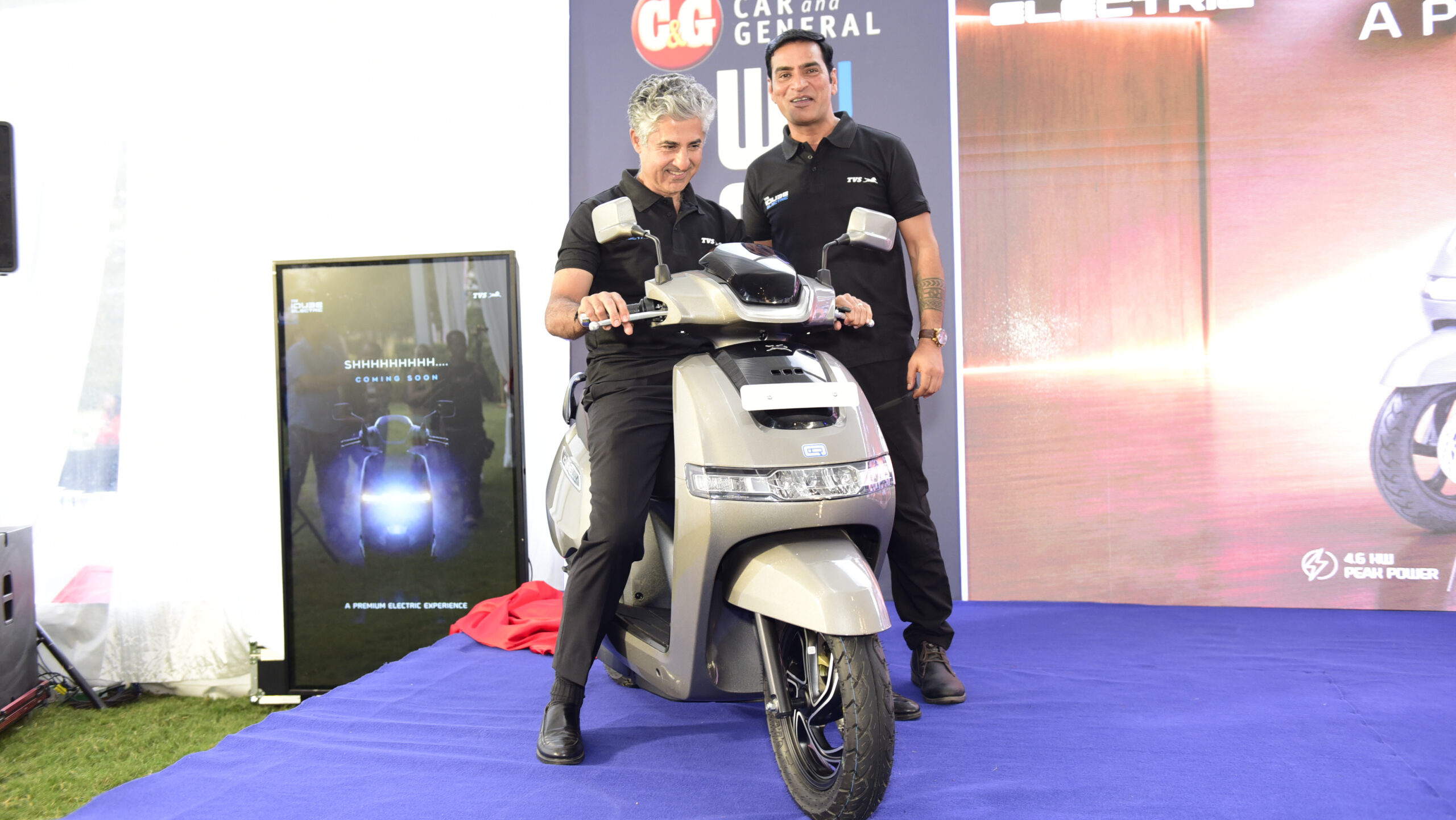
TVS Motor Company has launched the iQube electric scooter in Kenya, its first market entry in Africa. Car & General, TVS Motor’s distribution partner in the country, will handle sales and after sales support through its dealership network.
The launch comes as Kenyan riders look for alternatives to rising fuel costs. Car & General has operated in Kenya for more than two decades and will lean on that network to sell and service the scooter.
Why Kenya, why now
TVS frames the entry as part of a push to grow its electric portfolio outside India. Peyman Kargar, President of International Business at TVS Motor Company, said the launch expands the company’s electric mobility offering into international markets and marks a step in its global growth plan.
Car & General Chief Executive Vijay Gidoomal cited market data behind the decision. He projects Africa’s two wheeler market to grow at a compound annual growth rate of 7 to 10 percent through 2030, while the electric segment grows faster, at 15 to 25 percent CAGR through 2030 to 2031. EV penetration remains low today, which Gidoomal frames as room for future growth rather than a barrier.
Madhu Prakash Singh, Vice President of International Business at TVS Motor Company, tied the launch to fuel costs directly. He said the iQube gives commuters a running cost that is a fraction of a petrol scooter’s, as fuel prices continue to rise.
Two variants, one warranty
Car & General will stock the iQube in two configurations.
| Specification | iQube 3.5 | iQube 2.2 |
|---|---|---|
| Peak power | 4.6 kW | 4.6 kW |
| Battery | Two lithium ion packs, 3.5 kWh | One lithium ion pack, 2.2 kWh |
| Real world range | 115 km | 75 km |
| Top speed | 82 km/h | 75 km/h |
| 0 to 40 km/h | 4.2 seconds | 4.2 seconds |
| Peak torque | 140 Nm | 140 Nm |
| Charging time, 0 to 80 percent | 2 hours 55 minutes (950W portable charger) | 2 hours (950W portable charger) |
| Under seat storage | 32 litres | 30 litres |
| Safety | BMS controlled protection, IP67 waterproofing | BMS controlled protection, IP67 waterproofing |
Both models charge from a standard household outlet using a portable charger, connect to the SmartXonnect app for navigation and ride data, and include reverse parking assist. Each unit carries a two year or 30,000 kilometre warranty, whichever comes first.
TVS estimates riders can save close to KSh 47,000 a year against a 125cc petrol scooter through lower fuel and maintenance costs. The company also states its global iQube fleet has logged more than 17.8 billion kilometres among over one million riders, avoiding roughly 623,595 tonnes of carbon dioxide, a figure it equates to planting 25 million trees. These totals come from TVS and have not been independently verified.
Car & General’s numbers back the timing
The launch follows a turnaround in Car & General’s results. The firm posted net profit of KSh 2.4 billion for the year ended December 2025, up from KSh 526 million the year before. It credited the growth to its consumer segment, led by two wheeler sales in Kenya, along with improved performance in Tanzania. Turnover for the year rose 21 percent to KSh 25 billion, while EBITDA rose 153 percent to KSh 3.8 billion.
Uganda and Tanzania together accounted for more than 56 percent of total sales. The half year results told a similar story: profit after tax rose to KSh 637 million for the six months ended June 2025, up from KSh 62 million a year earlier, with revenue up 9.6 percent to KSh 12.03 billion.
| Car & General financial performance | FY2025 (year ended Dec 2025) | H1 2025 (six months to June 2025) |
|---|---|---|
| Net profit / profit after tax | KSh 2.4 billion | KSh 637 million |
| Turnover / revenue | KSh 25 billion | KSh 12.03 billion |
| EBITDA | KSh 3.8 billion | KSh 1.54 billion |
| Regional contribution | Uganda and Tanzania over 56 percent of sales | Kenya and associate Watu Credit drove growth |
That balance sheet gives Car & General room to fund EV charging awareness and technician training for a product category still new to most Kenyan buyers.
Competition and what comes next
TVS is entering a market where Kenyan startups Roam and BasiGo, plus a range of Chinese imports, already sell electric two wheelers to the same urban commuter. TVS brings manufacturing in India and Indonesia, operations in roughly 90 countries, and a petrol engine supply chain it can redirect toward electric models.
TVS has not disclosed pricing for the Kenya market. That figure, along with how fast Car & General can build servicing and battery support outside major towns, will determine how the iQube performs against rivals already established in the segment.
Yadea Launches KIFA Electric Motorcycle to Electrify Kenyan Boda Boda
