


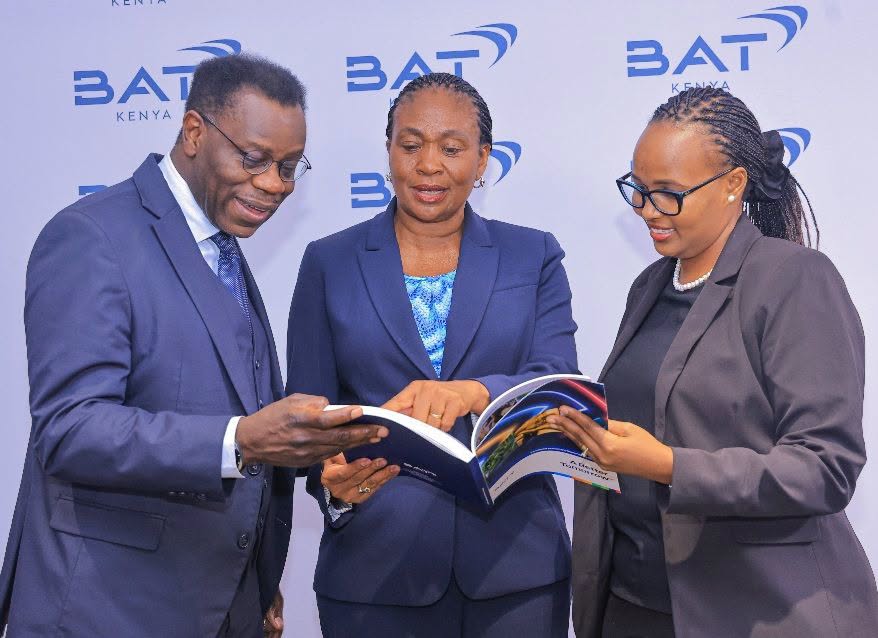
Shareholders of British American Tobacco Kenya have approved a final dividend of KSh60 per share for the year ended 31 December 2025.
Combined with an earlier interim payment, the total payout climbs to KSh70 per share, a 40 percent jump from the KSh50 paid out the year before and the highest in the company’s history.
The dividend lands against a backdrop that should have dented it. Illicit, tax evaded cigarettes now make up 45 percent of Kenya’s domestic cigarette market, up from 37 percent in 2024. That eight percentage point surge cost the government an estimated KSh12 billion in lost tax revenue over the year, according to the company’s own estimates, and pulled BAT Kenya’s net revenue down 10 percent to KSh23.2 billion.
Yet profit climbed anyway. Profit before tax rose 18 percent to KSh7.7 billion, up from KSh6.5 billion in 2024. The company credits tighter cost control, a 15 percent cut in total operating costs, and a swing in finance income from an exchange loss of KSh0.8 billion the previous year to a gain of KSh0.2 billion this year, driven by a steadier shilling. Export sales, which make up roughly half of total revenue, held firm. And in the second half of the year, BAT Kenya brought its VELO oral nicotine pouches back to Kenyan shelves after securing regulatory approval, opening a new revenue line.
“2025 was a remarkable year for BAT Kenya,” said Managing Director Crispin Achola. “Despite a challenging operating environment in which the illicit trade in tobacco continues to grow, we continue to engage with relevant stakeholders and government agencies in support of efforts to strengthen appropriate enforcement action and drive a more stable and compliant operating environment.”
A Business Squeezed by What It Cannot Sell
The company says enforcement gaps and porous borders let smuggled and tax evaded cigarettes flood the market faster than legitimate manufacturers can compete on price. The effect compounds: government coffers lose tax income, legal employers lose market share, and consumers lose any quality assurance that comes with a regulated product.
BAT Kenya says it has stepped up coordination with government agencies, sharing market intelligence and pushing for tougher enforcement. The company has also weighed in on the Senate Tobacco Control (Amendment) Bill, 2024, arguing for what it calls evidence based regulation, developed through consultation, rather than measures that could inadvertently widen the illicit market further.
| Metric | 2025 | 2024 | Change |
|---|---|---|---|
| Total dividend per share | KSh70 | KSh50 | +40% |
| Profit before tax | KSh7.7bn | KSh6.5bn | +18% |
| Net revenue | KSh23.2bn | KSh25.8bn | -10% |
| Illicit cigarette market share | 45% | 37% | +8 pts |
| Estimated government tax loss | KSh12bn/year | — | — |
Money Reaching the Farm
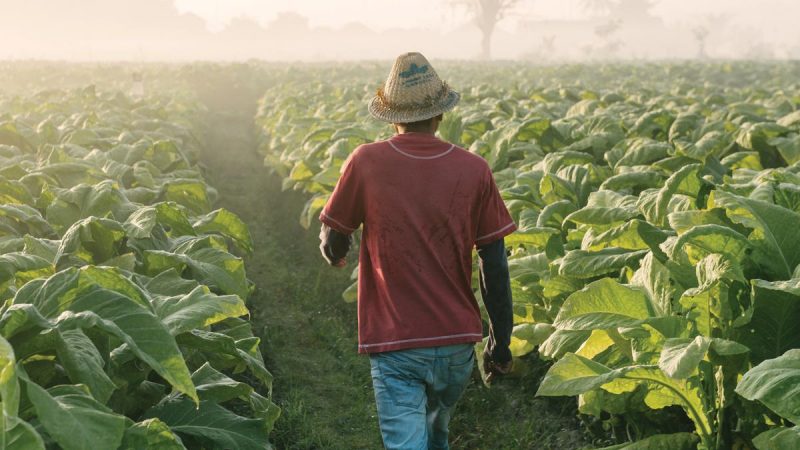
BAT Kenya’s tobacco growing network saw a real income bump. The company paid KSh1.4 billion to contracted farmers for leaf purchases in 2025, up from KSh1.1 billion in 2024. More than 80,000 people, workers, farmers, and their dependents across the value chain, rely on that income either directly or indirectly.
Crop diversification has become close to universal among BAT Kenya’s contracted farmers. Every single farmer in the programme, 100 percent, now grows food or income crops alongside tobacco, up from 98 percent last year. Isaac Mwiti Magiri, a contracted farmer in Meru who has worked with BAT Kenya for eight years, is one example. He has expanded into maize, avocado, and mangoes on half his eight acre farm, earning roughly KSh110,000 per maize harvest and another KSh30,000 from mangoes, income streams that take pressure off tobacco alone and help keep his children in school.
The company’s Rural Women Development Programme, known as RuWDep, trained 334 participants in 2025, made up of 76 female farmers and 258 spouses of male farmers. The programme covers financial literacy, business management, and income diversification, building skills that extend well beyond the growing season.
Cutting Waste, Recycling Water
BAT Kenya’s total waste generated fell to 1,105.6 tonnes in 2025 from 1,151.8 tonnes the year before. Of that waste, 99 percent was recycled and the remainder incinerated, with none sent to landfill, a target the company has now held for three straight years.
The company recycled 42.2 percent of its total water consumption in 2025, comfortably ahead of its own 30 percent target and a sharp rise from 36.6 percent in 2024. Combined with a 55 percent cut in Scope 1 and 2 greenhouse gas emissions against a 2020 baseline, the figures point to a company tightening its operational footprint while production continues.
What Comes Next
BAT Kenya frames its strategy around what it calls building a smokeless world, shorthand for shifting smokers toward reduced risk products like nicotine pouches rather than relying solely on cigarette sales. The VELO relaunch is the clearest expression of that bet so far, and management expects it to contribute more meaningfully to revenue through 2026.
Combating illicit trade remains, in its own words, a top priority, not because the threat is new but because it has grown faster than enforcement has kept pace. Whether government agencies can close that gap will likely shape BAT Kenya’s next set of results as much as anything happening inside the business itself.
For shareholders collecting a record dividend this year, the message is one of resilience under pressure. For the government watching KSh12 billion in tax revenue slip away annually, and for the legitimate businesses competing against smuggled product, the urgency is harder to ignore.
