


Apple has built a $4 trillion company while its biggest rivals poured hundreds of billions of dollars into artificial intelligence.
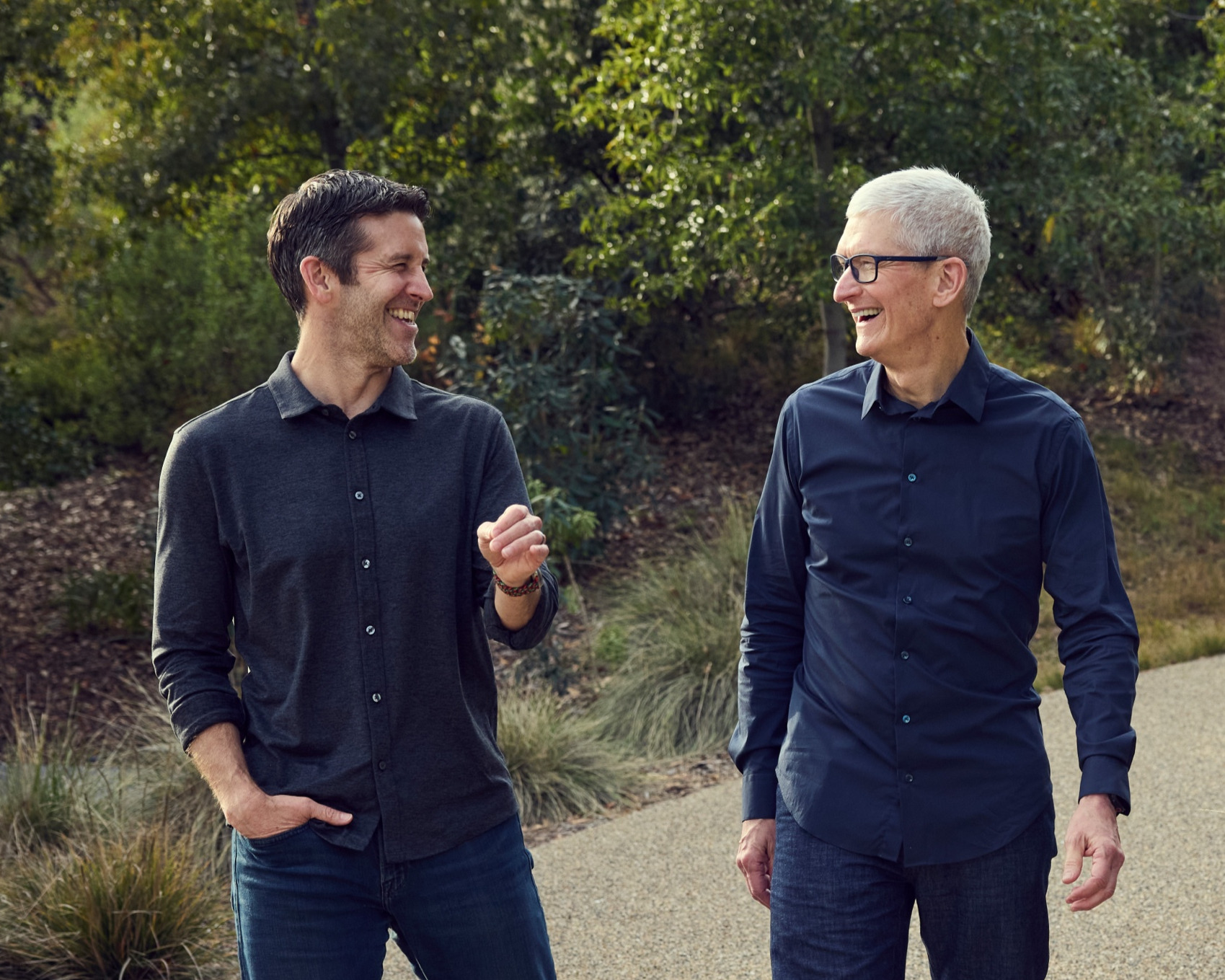
That calculation is about to face its sharpest test yet. On 1 September, Tim Cook hands the CEO role to John Ternus, Apple’s head of hardware engineering, closing a 15-year chapter and opening one that will demand a far clearer answer on AI than Apple has offered so far.
The End of the Cook Era
Cook took over from Steve Jobs in 2011, weeks before Jobs died from pancreatic cancer. What followed was one of the most successful runs in corporate history. Under Cook, Apple’s annual profit grew fourfold, its global footprint expanded dramatically, and in 2018 it became the first public company to reach a $1 trillion valuation. It now sits at $4 trillion.
Yet the same era drew persistent criticism. Apple’s product line stayed largely static. The Apple Vision Pro, its most ambitious hardware launch under Cook, failed to connect with buyers. Analysts repeatedly questioned whether the company had lost its appetite for genuine invention.
Cook described his tenure as “the greatest privilege of my life.” He will move to executive chairman and continue to engage with policymakers globally, while working alongside Ternus through the summer transition period.
Ternus: The Product Engineer Who Must Now Chart Strategy
Ternus, 50, spent 25 years inside Apple before reaching the top. He worked across every major product generation the company released, multiple generations of iPhone and iPad, the launch of AirPods, and the transition of Mac processors from Intel to Apple’s own silicon. Cook called him “a visionary” with “the mind of an engineer, the soul of an innovator.” Ternus referred to Cook as his mentor.
“John Ternus has the mind of an engineer, the soul of an innovator, and the heart to lead with integrity and with honor. He is a visionary whose contributions to Apple over 25 years are already too numerous to count, and he is without question the right person to lead Apple into the future,” Cook said in the release. “I could not be more confident in his abilities and his character, and I look forward to working closely with him on this transition and in my new role as executive chairman.”
His appointment signals that Apple intends to compete on hardware differentiation rather than software platforms or cloud services.
In January, Bloomberg reported that Apple was accelerating development of three wearables built around Siri: smart glasses, a pendant and camera-equipped AirPods.
Ken Segall, who served as Steve Jobs’ creative director for more than a decade, drew the contrast plainly. “I don’t think Tim ever really shook the operations guy vibe,” he told the BBC. “Steve the visionary, Tim the operations guy who took over.”
Apple’s AI Position: Borrowed Technology and Unresolved Questions
The strategic gap Ternus inherits is most visible in AI. While Microsoft, Google, Amazon and Meta collectively commit hundreds of billions of dollars annually to new data centres and AI chips, Apple has largely avoided that capital expenditure. It does not run a foundational AI model of its own. Instead, it relies on Google’s Gemini to power core AI features, including a long-delayed Siri upgrade, and it integrated OpenAI’s ChatGPT into Apple Intelligence when the platform launched in 2024.
Apple Intelligence includes image generators, text rewriting tools, push notification summaries and the ChatGPT integration. Consumer reception has been mixed, though iPhone sales remain strong. In the most recent quarter, iPhone revenue surged 23% from a year earlier to $85.3 billion on the back of iPhone 17 demand. Cook described it as “simply staggering.”
The gap between Apple’s hardware strength and its AI ambition shows up in the app rankings too. ChatGPT and Anthropic’s Claude rank first and second among free iOS apps. Gemini sits fourth. Apple’s own AI products do not feature. When users upgrade to paid tiers of those services, Apple takes a share of the revenue, a reminder that the company profits from competitors filling the gap it has left open.

The Hardware Bet That Defines the Ternus Thesis
Apple’s long-term wager rests on a specific view of how AI develops. The company believes that within a few years, the most demanding AI workloads will run on chips inside the device rather than in data centres. Apple has been building AI-capable silicon into its devices since 2017, which gives it a foundation most competitors cannot easily replicate.
What Investors Will Be Watching
Apple reports its fiscal second-quarter results next week. Cook will present those numbers as CEO. But the questions directed at Ternus will already be shaping the conversation — on AI investment, on the services business where Apple takes cuts from subscriptions to iCloud, AppleCare and Apple TV+, and on whether the company will deepen its own AI capabilities or continue partnering with the companies that have outpaced it.
For now, that story remains unwritten. Ternus takes over a company that knows how to build hardware better than almost anyone on earth. Whether he can extend that into an era defined by software intelligence, and do it fast enough to satisfy a market that has watched Google, Microsoft and Meta race ahead, will determine whether Apple’s next chapter matches the one Cook closes.
