



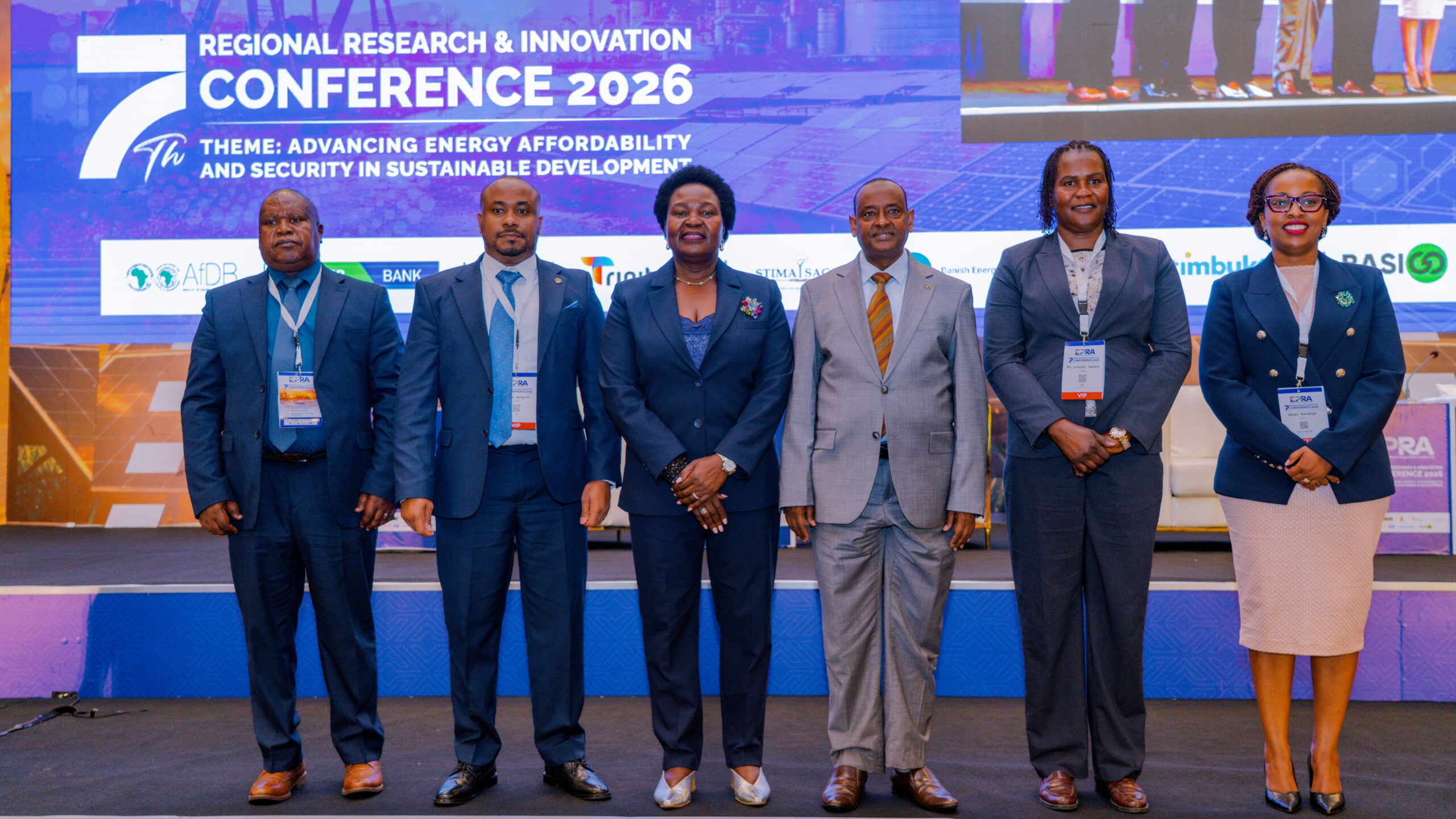
Africa’s energy challenges demand collective solutions according to the 7th Annual EPRA Research and Innovation Conference, held in Nairobi on 21 April 2026, where energy regulators, policymakers, researchers and industry leaders gathered to chart a path toward affordable, secure and resilient energy systems across the continent.
Research as the Foundation for Resilient Energy Systems
Themed Advancing Energy Affordability and Security in Sustainable Development, the conference opened with a call from Dr. Eng. Joseph Oketch, Acting Director General of the Energy and Petroleum Regulatory Authority (EPRA), for Africa to anchor its energy future in systems built to withstand disruption.
“The challenges we are facing now are a good opportunity to collaborate across sectors and the region to collectively address vulnerabilities in our energy supply chains while building systems that are flexible, integrated, and informed by credible research,” Dr. Oketch said.
He described research as the tool that enables regulators and governments to anticipate disruptions, design safeguards, and sequence the energy transition without creating new risks in the process.
Kenya’s Energy Gains and the Gaps That Remain
Kenya’s electricity sector delivered measurable progress over the past year. Demand grew by more than 8%, with peak demand reaching 2,439 MW — a reflection of sustained economic growth and rising expectations from households and industry. Nearly 79% of electricity supplied to the national grid now comes from renewable sources, placing Kenya among the global leaders in clean energy.
Electric mobility has emerged as the fastest-growing subsector. Electric vehicle registrations surged more than 2,700% from 1,378 units in 2022 to 39,324 by the end of 2025. Autogas consumption grew 14.6% to 251,425 metric tonnes by December 2025. Solar photovoltaic uptake, particularly in captive power, signals a shift toward a more decentralised, consumer-driven energy landscape.
Cabinet Secretary for Energy and Petroleum, James Opiyo Wandayi, noted that electricity access has crossed 80% of the Kenyan population, up from approximately 32% in 2013 — a transformation driven by the Last Mile Connectivity Project, mini-grids and off-grid solutions that have brought power to remote and underserved communities.
To support clean cooking, the government has waived VAT, Import Declaration Fees and the Railway Development Levy on LPG. It has also invested in bulk LPG infrastructure, with plans to expand national storage and filling capacity from 6,000 to 20,000 tonnes through a Common User Import Facility at the Kenya Petroleum Refineries Limited.
Yet challenges persist. Tariffs remain sensitive to global fuel prices, exchange rate movements and inflation. Geopolitical events — including recent disruptions to the Strait of Hormuz that pushed global oil prices above $120 per barrel — demonstrated how quickly external shocks translate into higher pump prices and fiscal strain for import-dependent economies like Kenya.
The Case for Regional Integration
Dr. Oketch urged East African countries to move beyond national thinking and invest in integrated regional energy systems. Eastern Africa is already edging toward a fully integrated electricity market, with cross-border electricity sales becoming more viable as interconnections deepen.
Realising that potential requires coordinated action across three areas, as outlined at the conference:
| Priority Area | What It Requires |
|---|---|
| Regulatory alignment | Harmonised frameworks and coordinated market structures |
| Market efficiency | Stronger electricity interconnections and transparent pricing mechanisms |
| Investment attraction | Aligned policy incentives that protect affordability while drawing capital |
“Africa’s markets are interconnected, our challenges are shared, and our solutions must be collective,” Dr. Oketch said, adding that integrated regional power systems reduce vulnerability to supply shocks while driving down the cost of electricity for consumers across the continent.
EPRA pointed to the M300 Initiative — which targets electricity access for 300 million people in Sub-Saharan Africa — as proof of what coordinated continental action can achieve.
Where Research Must Lead
Dr. Oketch outlined three areas where research holds the most immediate potential to shape outcomes.
The first is tariff design. Researchers must develop deeper insights into subsidy structures and financing models that protect vulnerable consumers without undermining the long-term viability of the sector.
The second is energy security. For countries dependent on imported petroleum, geopolitical disruptions translate directly into economic pressure. Research into strategic fuel reserves, supply diversification, regional storage infrastructure and predictive risk modelling can help build systems that absorb shocks rather than simply react to them.
The third is emerging technology. Electric mobility, green hydrogen, battery storage and smart grids are no longer future concepts. Their adoption requires locally grounded research that accounts for Kenya’s specific economic and social conditions.
A Conference That Keeps Growing
Now in its seventh year, the EPRA Research and Innovation Conference has expanded its scope alongside the sector it serves. This edition introduced a youth hackathon, building on the women in energy segment launched in 2026. The conference draws researchers, policymakers, private sector actors and development partners into a shared space where evidence meets implementation.
CS Wandayi framed the stakes plainly. “The decisions we make today will define the resilience, affordability and sustainability of our energy systems for generations to come.”
EPRA has committed to remaining a data-driven regulator, publishing its Biannual Energy and Petroleum Statistics Report as a public tool for transparency and sector planning. But data, Dr. Oketch reminded delegates, only delivers value when it moves from publication into action. “I urge you to go beyond publication by engaging with industry, testing your ideas and driving implementation.”
