




“I Ran Away at 18 to Chase an Acting Career and Won a Kalasha With My First Film” — Rose K. Njoroge
Her parents told her she was throwing her life away. They said art was a game for children. Rose K. Njoroge did not listen.
From Kabuku village in Limuru to the front lines of Kenyan cinema, she has spent fifteen years building a career that moved between stages, film sets, and screenwriting desks — sometimes by choice, sometimes by necessity. In this conversation, she talks about the night she left home, what a Kalasha award actually does for your career, and her return to acting in Showmax’s gender-flip comedy Adam to Eve.
A village girl who wanted to sing
Rose grew up in Kabuku, a small settlement near St. Paul’s University in Limuru. She did not plan to act. Music came first.
That changed at Sunday school. Her PCEA church cast her as a false prophetess in an inter-church drama competition. She had never performed in front of a crowd before, but she walked away with the best lead actress prize. Something shifted.
“I don’t know what they saw in me,” she says. “But I guess the teachers were right.”
By the time she sat her Form Four exams, she knew she wanted film. Her parents knew otherwise. Art did not pay, they told her. She was eighteen and needed to get serious. They enrolled her in software engineering.
She lasted a year.
“Someone else chose it for me,” she says. “And since they were not allowing a secondary opinion, I packed my bags in the middle of the night and ran to Nairobi by myself.”
She had heard about auditions at the Kenya National Theatre. Her plan was simple: go, get picked, and return to Limuru within a year driving her own car.
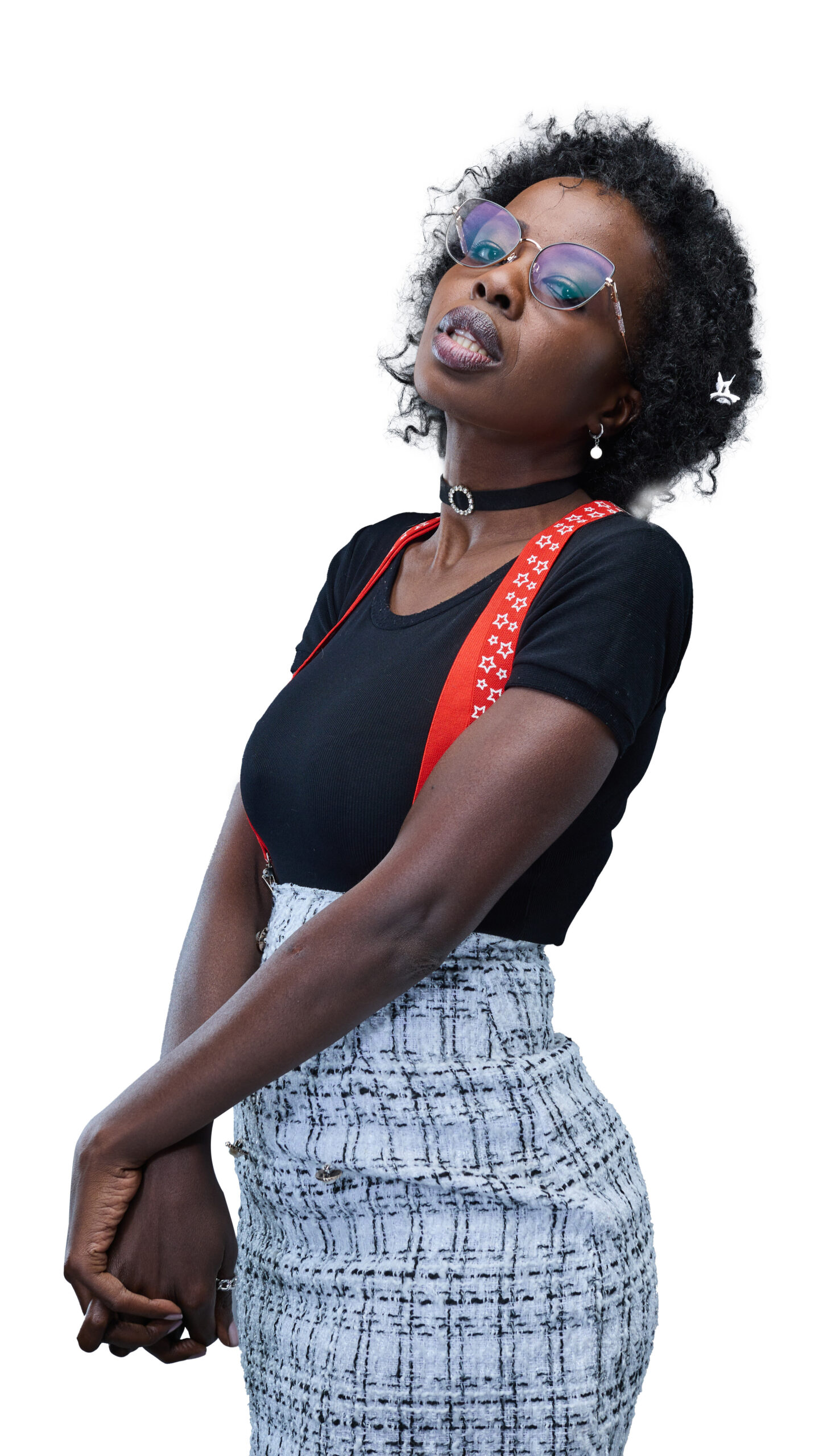
Five years of silence
It took five years before the industry gave her anything worth talking about.
She started where most Kenyan actors start — set book productions and travelling theatre. Two years on the road taught her that life was not sustainable. She shifted her focus to film.
When she finally landed an audition for the feature Strength of a Woman, she made a calculated decision. Instead of competing for the lead, she went for Ann, a minor role. Her logic was simple: less competition, better odds.
Director Gilbert Lukalia asked her one question: what was her strength as an actress?
She told him she could cry on cue. He asked her to prove it. She was so nervous that she burst into tears before she could compose herself. The room fell silent. Someone asked if she was alright.
She got a call days later. The role was not Ann. It was Julie, the lead.
Strength of a Woman went on to win her Best Lead Actress in a Feature Film at the 2014 Kalasha Awards.
The award that closed doors
Winning did not open the industry. It narrowed it.
“Producers started thinking I was an A-list star they could not afford,” she says. “I have an award sitting at home to show I am a good actress. But no one was hiring me because they thought I was too far up.”
It took three years to land her next role, in a short film. The Kalasha stayed on the shelf.
Facebook, a Canadian director, and a second act
Rose had always written. In school, she scored full marks on compositions. In high school, she started novels she never finished. As an adult with time and no film work, she turned to Facebook.
She posted short stories. People shared them. A following grew.
Then a message arrived from Canadian filmmaker Neil Schell. He had read her work and wanted her to write season two of his TV series Monica, starring Brenda Wairimu and Raymond Ofula. She had never written professionally. She said yes.
Around the same time, she wrote, produced, and starred in The Statistic, a short film about post-election violence that drew coverage from the BBC.
From 2017 to 2022, she did not act. She wrote.
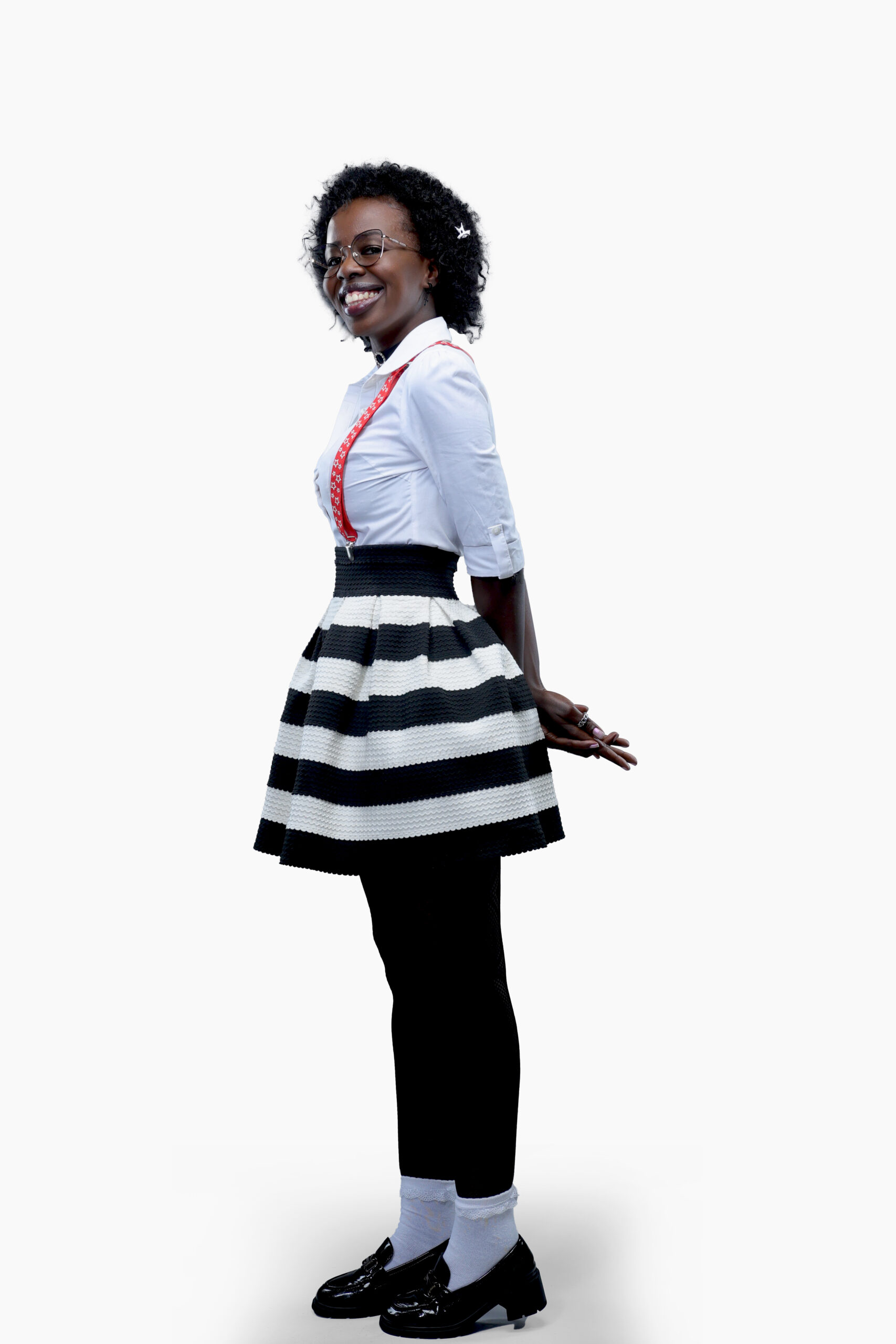
Writing herself back onto screen
Her work on Monica brought calls for more scripts. Then in 2022, director duo Lizz Njagah and Alex Konstantaras brought her in to write Village Vendetta. Later that year, they called again from Greece. They had a concept for a TV show, no script yet, and wanted her to write the pilot to test it.
She wrote it. Two years passed. Then the call came: the show was moving forward.
Adam to Eve is a gender-flip comedy on Showmax. Rose wrote it. She also plays Tasha, girlfriend to Makori, played by Blessing Lung’aho. The role was not written with herself in mind, which, she says, made all the difference.
“I wrote Tasha with no bias,” she says. “When they told me the role was mine, I did not hesitate.”
Tasha is quiet, bookish, someone who pushes through discomfort rather than retreating from it. Rose says the character found a relationship that suited her precisely because of that quality.
“Blessing played a beautiful Makori. That made the relationship feel real. I feel like I did her justice.”
What she would tell the girl who ran
Asked what she would say to her eighteen-year-old self, Rose does not hesitate. She would tell her to keep that fire, not to soften it.
“Everyone around me said it was the foolishness of youth. As much as the journey has been hard, it has totally been worthwhile.”
The one thing she would change: she waited too long for the phone to ring.
“People forget you. In this industry, if I do not see you for six months, you are gone from my mind. Instead of waiting for that call, I would have reached out more. I would have made myself impossible to forget.”
