



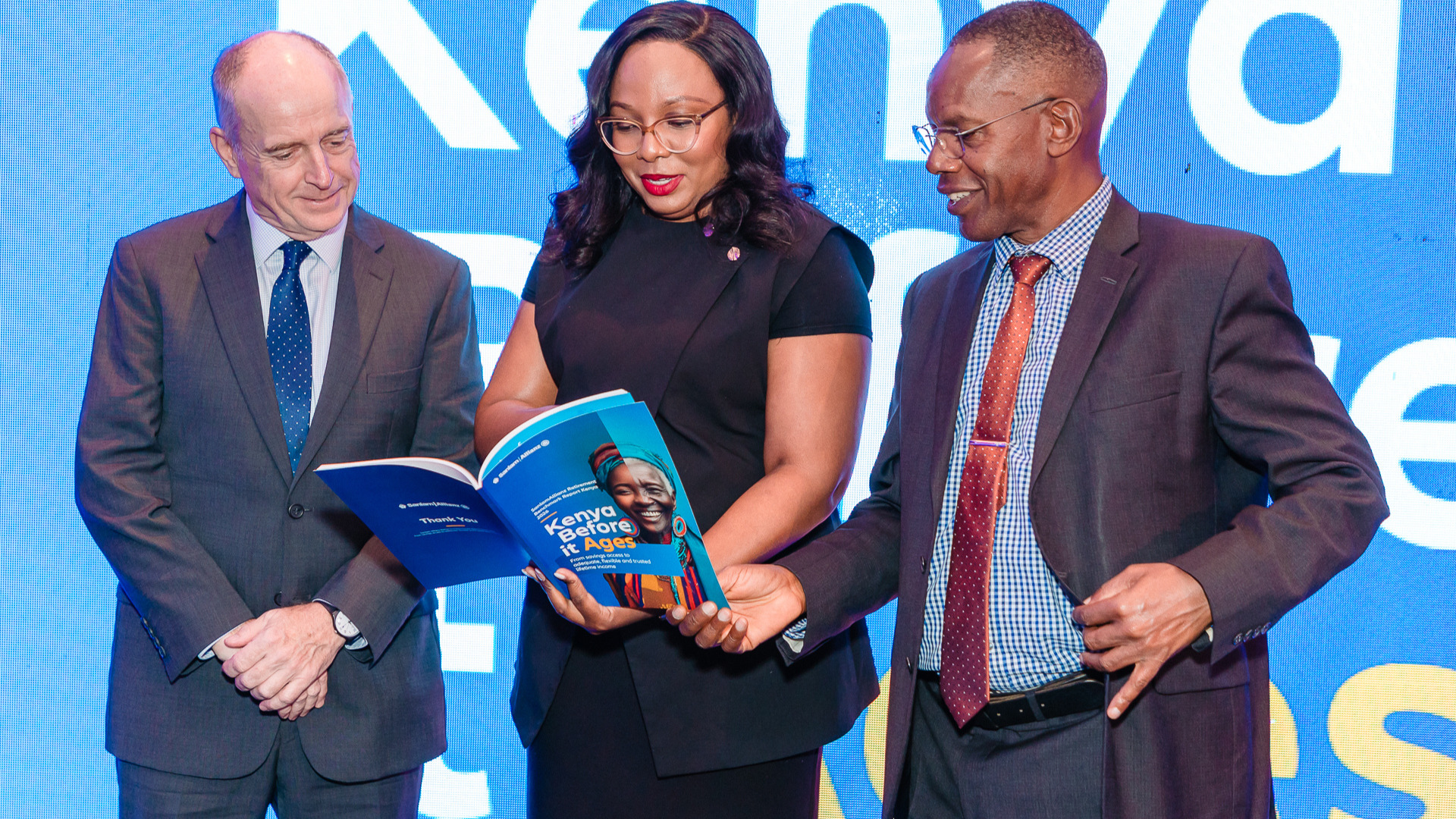
Seven in 10 Kenyans say they are not on track for a comfortable retirement. That is the main finding of the SanlamAllianz Retirement Benchmark Report Kenya 2026, launched on October 12 at the Radisson Blue Hotel in Upper Hill, Nairobi.
The survey covered 300 people. Only 29% said they are on track, 44% expect a lower standard of living, 21% think they will not have enough, and 6% are unsure.
The report says the sample is mostly urban, educated and middle income, so the results are not a national estimate. They do show a pattern. People want to save, and 75% said they would put away more if they could. Daily costs stop them. This article covers where the money goes, what the industry is doing, and six steps to take this month.
Key findings at a glance
- 71% of 300 respondents are not on track for a comfortable retirement. 29% are.
- 75% would save more for retirement if they could.
- Household and family costs are the top barrier to saving, at 44%. 62% say supporting dependants cuts their retirement saving.
- 39% could cover basic costs for two months or less if income stopped.
- Among 90 respondents who left a job or closed a business holding retirement savings, 53% withdrew some or all of it.
- Only 29% know roughly what monthly income they will need in retirement. 51% prefer a guaranteed monthly income for life.
Why saving for retirement in Kenya feels hard
The report asked what prevents people from saving more for retirement. Respondents could pick up to two answers.
| Barrier | Share |
|---|---|
| Household and family costs | 44% |
| Income too low or irregular | 37% |
| Debt repayments | 24% |
| Business, property, land or farming | 19% |
| Fees or charges | 10% |
| Understanding or trust | 4% |
Fees and understanding rank near the bottom. The report reads the result as a cash flow problem before it is a knowledge problem. It adds that 62% of respondents say supporting dependants cuts their retirement saving, and 39% could cover basic costs for two months or less if their income stopped.
Jack Marwa, Head of Corporate Benefits at Sanlam Allianz Life Insurance Kenya, said income matters but does not decide the outcome. “In retirement planning, starting is the fundamental thing,” he said. “Starting small, because small savings over time through compounding could accumulate to a very huge retirement pot.”
Compounding means the returns on your savings earn returns of their own. The report notes that a KSh1,000 contribution at age 25 has 35 years to grow. The same contribution at 45 has 15. That is a difference of more than 20 years of growth.

Where Kenyans already save: NSSF, chamas and SACCOs
Kenyans save, but mostly not for retirement. The report asked where respondents say they are preparing.
| Where respondents are preparing | Share |
|---|---|
| NSSF | 56% |
| SACCO, chama or self help group | 32% |
| Employer retirement scheme | 26% |
| Business, property, land or farming | 19% |
| Personal pension or retirement plan | 14% |
Respondents could pick two answers, so the shares do not add to 100%. In the launch presentation, Marwa said a third of respondents save mainly to get access to credit, and about 20% save for short term cash needs. Fewer than 20% save for retirement.
The habit is already there. Scholastica Kiboro, Head of Partnerships, Growth and Marketing at Sanlam Allianz Life Insurance Kenya, wrote in the report: “Ask a Kenyan woman whether she saves, and she will probably tell you about her chama or her SACCO before she mentions a bank.” The report found that 78% of eligible respondents would let a small share of income, sales or a SACCO or chama payout move automatically into retirement savings.
What Kenya’s pension industry offers savers
Patrick Tumbo, Group Chief Executive of Sanlam Allianz Holdings Kenya, used the question session to describe what already exists for Kenyans who want to save for retirement. He started with history. The National Social Security Fund, set up in the mid 1960s, paid savings out as a lump sum. Public servants now have the Public Service Superannuation Fund. In the private sector, many employers run schemes that members join automatically once they are confirmed as “permanent and pensionable”. Tumbo said those savings are close to compulsory, which is why they have grown.
Workers outside formal jobs are harder to reach, and he said the industry has built products for them. Umbrella schemes and individual pension plans accept deposits from people without a monthly salary, so a trader or farmer can pay in when cash comes in.
Tumbo said the weak point is information, not product. “People are engaged in economic activities, but not all people who are engaged in economic activities that generate funds are actually planning for their retirement,” he said.
He singled out workers who leave a job to start a business. They often stop saving, he said, because they assume the pension they built as an employee is enough. “They think you already save for retirement when you are working, but everybody ages, and everybody needs income when they are less energetic in their high years,” he said. For that group he pointed to Akiba Plus, which lets a member move savings from several employers into one scheme and track them in one place.
On education, Tumbo said regulators and fund managers share the work. He named the Retirement Benefits Authority and the Insurance Regulatory Authority, and said fund managers now report investment results every month. He added that technology lets people save from a mobile money wallet, and that rules on how and when members can reach their money have started to rebuild trust. “What is really the disconnect is the knowledge curve,” he said.
Jonathan Stichbury, Managing Director and Chief Executive of Sanlam Allianz Investments, described a shift in where Kenyans put their money. Savers once measured security in land. “Land doesn’t necessarily provide you an income; it’s an asset, and it’s an illiquid asset,” he said. He said unit trusts, which the Capital Markets Authority regulates, now hold assets of about KSh1 trillion, up from almost nothing a decade ago. They pay a return and let savers reach their money quickly.
Tumbo did not say the industry would do the saving for people. “It’s not the industry that will force us,” he said. The industry supplies the vehicles and explains them. The saver starts.
Sanlam Kenya Plc formally rebranded to Sanlam Allianz Holdings Kenya PLC in October 2025, Khusoko reported, after the joint venture between Sanlam and Allianz.

Pension withdrawal when you leave a job in Kenya
The report focuses on 90 respondents who had left a job or closed a business that held retirement savings. It says these figures are indicative. Among them, 53% withdrew some or all of the money. Of those who withdrew, 65% said they understood the effect on retirement, and 53% later said they regretted the decision. The most common use was to start or support a business or farm (33%), followed by daily living costs (17%).

, Chief Executive of Sanlam Allianz Life Insurance Kenya, said the pull comes from need. Savers in the survey want money locked away, she said, “but 53% are saying I did access my money because of immediate pressures.” She proposed three fixes.
- Get advice before you sign a withdrawal form. See the long term loss beside the short term gain, and ask what the other options are.
- Layer your savings. Use insurance for emergencies and short term products such as unit trusts for near term goals, so pension is not your only fallback.
- Watch the two pot proposal. The Retirement Benefits Authority has floated splitting savings into a short term account and a retirement account. How each scheme could use the short term pot is still open. Karasha said the industry has to decide whether it “will support or will it take us back”.
Under current rules, workers who leave a job can withdraw up to 50% of their benefits. The balance stays in the scheme, moves to another plan, or waits until retirement.
Retirement income in Kenya: why the monthly figure matters more than the balance
Only 29% of respondents know roughly what monthly income they will need in retirement. The report found that 51% prefer a guaranteed monthly income for life, but 45% had never heard of income drawdown and 38% had never heard of a guaranteed annuity.
Healthcare is part of the sum. The report found 53% of respondents have no funded plan for healthcare after retirement. It compares treatment costs with a monthly pension of KSh21,900, the 2026 equivalent of the under KSh20,000 that 54.9% of pensioners received in 2024.
| Treatment | Cost in months of a KSh21,900 pension |
|---|---|
| Public stage III cancer treatment | 9 |
| Public stroke admission | 11 |
| Public dialysis (low annual estimate) | 36 |
| Private stage III cancer treatment | 45 |
| Private stroke admission | 99 |
The report says costs vary by provider.
Six steps to start saving for retirement in Kenya
This is general information and not financial advice. A licensed adviser can test any plan against your circumstances.
- Start small. Marwa’s advice is to begin with what you can and let time work. The report proposes contribution ladders that start from KSh100, so ask providers for their minimum.
- Find your number. Use the SanlamAllianz calculator. It asks for your age, planned retirement age, monthly income, current retirement savings and monthly contribution. At the launch, Isaac Mwangi, Head of Innovation and Intelligence at Sanlam Allianz Life Insurance Kenya, said reaching 60% of your target income covers a basic lifestyle and 100% is the goal.
- Check your balance. Only 48% of respondents knew their balance and had checked it in the past year. Look at your NSSF and employer scheme statements.
- Redirect a habit you already have. If you pay into a chama or SACCO, ask whether a small share of the payout can go to a pension plan. If you earn through mobile money, ask a provider how to save from your wallet.
- Plan before you change jobs. Ask your scheme about transfer before you ask about withdrawal. Akiba Plus is one option Tumbo named for combining savings from several employers.
- Build a separate emergency fund. The report says savers with other sources of cash are more likely to leave pension money invested. Insurance and unit trusts, as Karasha described, can cover the layers.
Start saving for retirement this month
Tumbo closed the launch with a question: “What can we do today to ensure more Kenyans can retire with confidence tomorrow?” The report gives the personal version. Pick one step from the list above and do it this month. Open the calculator, check one statement, or start one small deposit.
SanlamAllianz will publish the report every year, so the 2027 edition will show whether the 71% moves.

Frequently asked questions about saving for retirement in Kenya
Are Kenyans ready for retirement?
Most are not. In the SanlamAllianz Retirement Benchmark Report Kenya 2026, 71% of 300 respondents said they are not on track for a comfortable retirement, and 29% said they are. The report says the sample is mostly urban, educated and middle income, so the result is not a national estimate.
Can you withdraw your pension before retirement in Kenya?
Under current rules, workers who leave a job can withdraw up to 50% of their benefits. The balance stays in the scheme, moves to another plan, or waits until retirement. The Retirement Benefits Authority has proposed a two pot system that would split savings into a short term account and a retirement account.
How can I start saving for retirement in Kenya with little money?
Jack Marwa of Sanlam Allianz Life Insurance Kenya advises starting small, because small savings compound over time. The report proposes contribution ladders that start from KSh100, so ask providers for their minimum. Patrick Tumbo said umbrella schemes and individual pension plans accept deposits from people without a monthly salary.
What is Akiba Plus?
Akiba Plus is a SanlamAllianz product that lets a member move savings from several employers into one scheme and track them in one place, according to Patrick Tumbo. See akibaplus.co.ke.
What is the difference between an annuity and income drawdown?
An annuity swaps your accumulated savings for a guaranteed regular income, such as monthly payments for life. Income drawdown keeps your savings invested after retirement and lets you withdraw as you choose within Retirement Benefits Act limits, so income varies with investment performance. Khusoko explains both.
How much retirement income do I need?
Only 29% of respondents know roughly what monthly income they will need. The SanlamAllianz calculator shows how much of your income your savings could replace. Isaac Mwangi said reaching 60% of your target income covers a basic lifestyle and 100% is the goal.
