


The United States has approved a two year extension of the African Growth and Opportunity Act (AGOA), preserving duty free access to the American market for 32 eligible African countries through December 31, 2028.
Congress passed the extension as part of a Continuing Resolution funding the federal government. The House approved the measure this week by a vote of 370 to 48, following Senate passage on August 8 by a margin of 90 to six. The bill now heads to President Donald Trump for his signature.
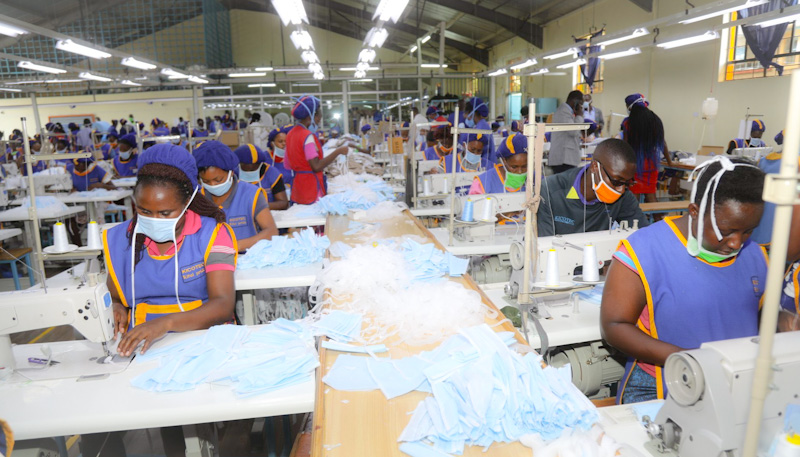
AGOA has anchored trade between the United States and sub-Saharan Africa since 2000. It grants qualifying countries duty free access for more than 1,800 product categories, from textiles and apparel to coffee, cut flowers and manufactured goods. For Kenya, the programme underpins an apparel sector that employs tens of thousands of workers, most of them women.
Why This Extension Matters
AGOA’s path to renewal has been anything but smooth. The programme lapsed on September 30, 2025, after Congress failed to reauthorize it before its original expiry date. Lawmakers restored it retroactively in February 2026, but only for a single year, running through the end of 2026. That short runway left exporters and investors across the continent guessing about what would come next.
This latest move replaces that uncertainty with a firmer runway. Extending the programme through 2028 gives manufacturers, buyers and governments two full years to plan orders, investment and hiring without watching a clock that resets every few months.
Representative Terri Sewell of Alabama, who pushed to include the AGOA language in the funding bill, called the programme one of the most effective tools for building economic ties between American and African businesses while supporting jobs on both sides of the Atlantic.
World Trade Organization Director-General Ngozi Okonjo-Iweala welcomed the extension on X, writing:
“Hope this will help stimulate mutually beneficial and greater Africa-USA trade! Thanks to Congress, the Administration, and the numerous individuals and organizations that worked hard to make this happen. Credit also to the African Union and African leaders for patience and persistence on this issue.”
Economist Charlie Robertson of FIM Partners flagged an unusual twist behind the two year deal, noting that Washington has typically renewed AGOA one year at a time.
“Good news that AGOA has been extended until the end of 2028,” he wrote. “Africa’s industrialisation needs all the help it can get. China has given duty free access to Africa. Maybe that has prompted this unusual move by the US. Normally there’s only a one-year rolling extension.”
What Changed, and When
| Date | Development |
|---|---|
| September 30, 2025 | AGOA expires after Congress misses reauthorization deadline |
| February 3, 2026 | Congress passes retroactive one year extension through December 31, 2026 |
| January 12, 2026 | House passes a separate three year extension bill (H.R. 6500), sent to Senate |
| August 8, 2026 | Senate approves a two year extension, 90 to six, as part of government funding package |
| September 1 to 2, 2026 | House passes the Senate’s two year version, 370 to 48 |
| Pending | Bill awaits President Trump’s signature to become law |
The Kenyan Angle
Kenya ranks among AGOA’s largest beneficiaries. Apparel and textiles make up the bulk of its exports to the United States, alongside coffee, tea and horticultural products. Trade officials in Nairobi have repeatedly flagged the stakes involved. When the House passed its three year version in January, Investment, Trade and Industry Cabinet Secretary Lee Kinyanjui said the extension eased pressure on more than 80,000 Kenyans working directly in apparel and textile firms, with roughly 250,000 more supported indirectly through Export Processing Zones.
Kenya’s private sector had pushed for an even longer runway. The Kenya Private Sector Alliance called last year for a 16 year renewal, warning that anything shorter risked destabilizing jobs and investment. Business news outlet Khusoko has tracked that uncertainty closely, reporting in February that the earlier one year extension brought relief to exporters while signaling tougher trade terms ahead, as Washington pushes AGOA beneficiaries to open more of their own markets to US goods.
AGOA Versus China’s Zero Tariff Offer
Robertson’s point lands against a backdrop of intensifying competition for Africa’s trade allegiance. On May 1, 2026, China expanded zero tariff treatment to cover all 53 African countries with which it holds diplomatic relations, exempting Eswatini alone over its ties with Taiwan. The move builds on a step China took in December 2024, when it scrapped tariffs on every product line for Africa’s 33 least developed countries.
The two offers differ in scope, durability and the conditions attached. AGOA covers roughly 1,800 product lines and applies only to countries Washington judges to meet standards on governance, human rights and market reforms, standards the US president can use to suspend a country at any time. China’s policy carries no such eligibility test and, unlike AGOA’s product list, extends to all tariff lines.
| Feature | AGOA (United States) | Zero Tariff Policy (China) |
|---|---|---|
| Countries covered | 32 sub-Saharan African nations | 53 African nations with diplomatic ties to Beijing |
| Product scope | About 1,800 eligible product lines | All tariff lines, effectively all products |
| Eligibility conditions | Governance, human rights and market reform benchmarks, reviewed annually | None; no reciprocity required |
| Duration | Two years, through December 31, 2028 | Rolled out from December 2024, expanded May 2026; framed as part of longer term China-Africa Economic Partnership talks |
| Renewal pattern | Historically renewed in short, often one year increments | Announced as a broader, standing policy shift |
Analysts see China’s move as part of a wider contest for influence on the continent, positioning Beijing as the more predictable trading partner at a moment when Washington’s preference programme has lapsed once already and been renewed only in short bursts. Whether the fresh two year AGOA extension marks a genuine shift toward longer term US commitment, or simply a longer version of the same rolling renewal pattern, is likely to shape how African governments weigh the two offers over the next two years.
Conditions Attached
The extension does not come free of strings. US Trade Representative Jamieson Greer has said the modernized programme must demand more from trading partners and deliver more market access for American businesses, farmers and ranchers. Lawmakers have also flagged South Africa’s eligibility for continued review, with some in Congress pressing to tighten requirements around governance and market access as part of any longer term renewal.
Industry groups, including the American Apparel and Footwear Association, have welcomed the extension while pressing Congress to use the two year window to negotiate a longer, fifteen year renewal that would give exporters and investors real long term certainty.

What Comes Next
The bill’s signature by President Trump will make the two year extension law, locking in duty free access through the end of 2028. That gives African governments, including Kenya, a defined window to pursue additional trade goals, from expanding the list of eligible products to negotiating standalone bilateral agreements that could outlast AGOA itself. President William Ruto has already raised the prospect of broadening trade ties beyond textiles into pharmaceuticals, ICT and digital services during talks with US officials in Washington.
For now, exporters across 32 African countries have the assurance they have been asking for since last September: two more years of tariff free access to the world’s largest consumer market.
