



Kenya’s commercial banks nudged their average lending rate up to 14.39 percent in July 2026, a small rise from 14.37 percent in June, according to data released by the Central Bank of Kenya.
Deposit rates moved further in the other direction, climbing to 6.93 percent from 6.84 percent over the same month.
The uptick breaks four straight months of falling lending costs. Rates had dropped steadily from 14.70 percent in March to 14.49 percent in May and 14.37 percent in June, before ticking back up in July. Even with the small reversal, borrowers are still paying less than they were at the start of the year, and savers are earning more on deposits than they were in March, when the average deposit rate stood at 6.86 percent.
For readers who want to put idle cash to work, it helps to know where deposit rates already sit above the sector average. Khusoko has covered banks moving in this direction, including Absa Bank Kenya raising its digital savings rate to 10 percent and Standard Chartered removing its admin fee on SC Shilingi money market fund accounts, both of which change what a saver keeps at the end of the year.
Where To Find The Cheapest Loans
Three foreign owned banks continue to offer the cheapest credit in the market. Citibank N.A Kenya held the lowest lending rate in July at 10.59 percent, followed by Standard Chartered Bank Kenya at 11.55 percent and Stanbic Bank Kenya at 11.97 percent. Habib Bank A.G Zurich and HFC Limited rounded out the five cheapest lenders, at 12.68 percent and 13.04 percent respectively.
The rate listed for each bank is an average, so the amount offered to an individual borrower can still land higher or lower depending on income, credit history and the type of loan. Readers weighing digital or mobile loans against a bank facility can compare the terms against products such as M Shwari and the government backed Hustler Fund, both covered by Khusoko, before deciding where to borrow.
Where Loans Cost The Most
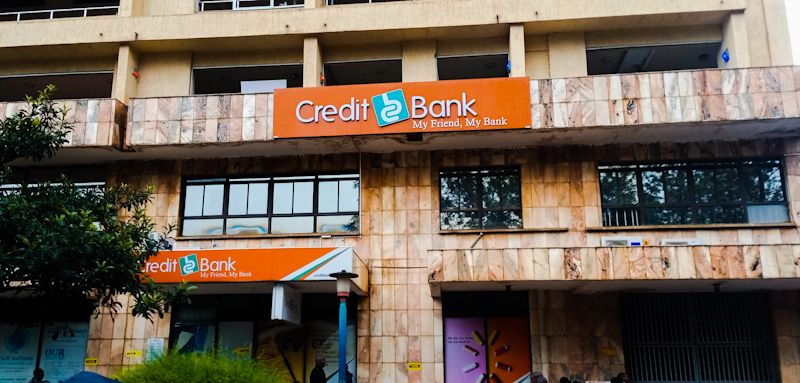
Credit Bank PLC charged the highest average lending rate in July at 19.06 percent, keeping its position as the most expensive lender in the sector. Bank of Africa Kenya followed at 17.49 percent, with Access Bank Kenya close behind at 17.45 percent. SBM Bank Kenya and Kingdom Bank completed the top five most expensive lenders, at 17.33 percent and 17.00 percent.
Full List: Lending And Deposit Rates By Bank, July 2026
The table below ranks all 38 banks covered in the CBK release, from the lowest to the highest lending rate for July 2026.
| Rank | Bank | Lending Rate | Deposit Rate |
|---|---|---|---|
| 1 | Citibank N.A Kenya | 10.59% | 4.42% |
| 2 | Standard Chartered Bank Kenya | 11.55% | 3.02% |
| 3 | Stanbic Bank Kenya | 11.97% | 7.07% |
| 4 | Habib Bank A.G Zurich | 12.68% | 6.56% |
| 5 | HFC Limited | 13.04% | 6.18% |
| 6 | Guardian Bank Limited | 13.47% | 7.27% |
| 7 | Bank of Baroda (Kenya) Limited | 13.49% | 7.30% |
| 8 | ABSA Bank Kenya PLC | 13.64% | 6.87% |
| 9 | I&M Bank Limited | 13.68% | 7.39% |
| 10 | Diamond Trust Bank Kenya Limited | 13.88% | 6.83% |
| 11 | Bank of India | 13.92% | 6.94% |
| 12 | Development Bank of Kenya Limited | 13.92% | 9.98% |
| 13 | Prime Bank Limited | 13.94% | 8.11% |
| 14 | Paramount Bank Limited | 13.97% | 8.65% |
| 15 | Consolidated Bank of Kenya Limited | 14.01% | 7.09% |
| 16 | Guaranty Trust Bank (K) Limited | 14.08% | 6.67% |
| 17 | Victoria Commercial Bank PLC | 14.24% | 7.96% |
| 18 | Gulf African Bank Limited | 14.32% | 6.53% |
| 19 | M Oriental Bank Limited | 14.53% | 7.55% |
| 20 | NCBA Bank Kenya PLC | 14.64% | 5.32% |
| 21 | Commercial International Bank (CIB) Kenya Limited | 14.74% | 8.01% |
| 22 | Ecobank Kenya Limited | 14.75% | 6.99% |
| 23 | KCB Bank Kenya Limited | 14.79% | 6.35% |
| 24 | Equity Bank Kenya Limited | 14.83% | 6.72% |
| 25 | Sidian Bank Limited | 15.02% | 8.42% |
| 26 | Co operative Bank of Kenya Limited | 15.10% | 6.01% |
| 27 | UBA Kenya Bank Limited | 15.24% | 5.26% |
| 28 | Premier Bank Kenya Limited | 15.48% | 7.27% |
| 29 | African Banking Corporation Limited | 15.54% | 10.86% |
| 30 | DIB Bank Kenya Limited | 15.76% | 6.33% |
| 31 | National Bank of Kenya Limited | 15.86% | 7.48% |
| 32 | Family Bank Limited | 15.92% | 8.34% |
| 33 | Middle East Bank (K) Limited | 16.24% | 9.26% |
| 34 | Kingdom Bank Limited | 17.00% | 8.87% |
| 35 | SBM Bank Kenya Limited | 17.33% | 8.92% |
| 36 | Access Bank (Kenya) PLC | 17.45% | 7.53% |
| 37 | Bank of Africa Kenya Limited | 17.49% | 7.22% |
| 38 | Credit Bank PLC | 19.06% | 11.15% |
| Overall Average | 14.39% | 6.93% |
Why Borrowing Costs Have Stayed Low
The July reading lands against a backdrop of a steady central bank rate. The Monetary Policy Committee has held the Central Bank Rate at 8.75 percent for three consecutive sittings, citing global inflation pressure linked to conflict in the Middle East and a need to keep local inflation expectations anchored. Government fuel subsidies and a temporary cut in VAT on fuel have also helped keep price pressure in check, giving the committee room to hold rather than tighten.
Cheaper credit has coincided with a pickup in borrowing. Private sector credit growth reached double digits for the first time since February 2024, with sectors such as trade, construction, agriculture and consumer durables driving demand as the cost of loans came down from the highs of late 2024, when the average lending rate stood above 17 percent.
What It Means For Borrowers And Savers
The gap between what banks charge borrowers and what they pay savers remains wide. At an overall average of 14.39 percent for loans against 6.93 percent for deposits, the spread sits above 7 percentage points, though it has narrowed slightly since March.
For anyone shopping for a loan, the range between Citibank’s 10.59 percent and Credit Bank’s 19.06 percent shows that the lender chosen still matters more than the market average. For savers, deposit rates above 9 percent at banks such as Development Bank of Kenya, Middle East Bank and African Banking Corporation stand out against a sector average that remains under 7 percent.
Comparing rates is only part of the decision. Parents planning ahead for school fees or other long term goals can look at how newer products such as Britam’s KidNest children’s investment account work alongside a standard savings account. And whichever bank a reader chooses, Khusoko’s guide on keeping a bank account safe from fraudsters is worth a read before moving money into a new account, since a good rate offers little benefit if the funds are not secure.
