



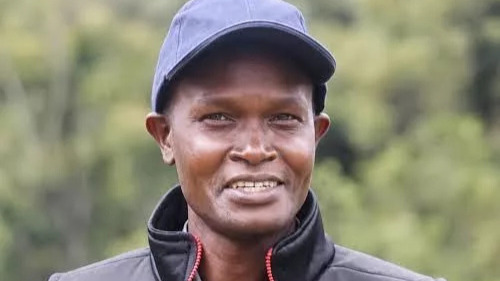
Armed men dragged Standard Group Associate Editor Alex Kiprotich from his car along the Gilgil Nakuru Road on Tuesday night, holding him for roughly nine hours before he was found alive near Masinga Dam in Machakos County. The incident has drawn condemnation from media and rights organisations, who are demanding a transparent police investigation.
The Standard Group PLC confirmed Kiprotich was seized shortly before 9:20 pm as he travelled to Nakuru. Video footage that circulated online showed masked men blocking his vehicle before pulling him out. His family and colleagues, unable to reach him for hours, searched through the night.
Kiprotich turned up early Wednesday morning in a thicket near Masinga, more than 200 kilometres from where he was taken. He had sought help at a nearby home before a Standard Group team located him. The company said he was shaken and injured, and he was taken to hospital for checks.
A Second Attack in Two Months
Standard Group CEO Chaacha Mwita said the abduction was not an isolated event. He linked it to an earlier, failed attempt on June 27, 2026, when armed men in a Toyota Probox tried to intercept Kiprotich as he drove to work in Nakuru. He escaped that encounter by locking his car and driving off.
According to the Kenya Editors Guild, that June incident came days after President William Ruto publicly criticised the Standard Group’s coverage. The Guild also said the company traced the Probox to the National Police Service’s Crime Research and Intelligence Bureau, though no one was held accountable.
“We believe it may be linked to elements within the State seeking to intimidate this Group into silence,” Mwita said in a statement.
National Police Service Orders Investigation
The National Police Service has since responded, ordering an investigation into the Gilgil incident. In a statement dated September 2, the Service said it had taken note of reports on Kiprotich’s abduction and treats kidnapping and abduction as grave offences that threaten the lives, liberty and security of Kenyans. Inspector General Douglas Kanja has ordered immediate investigations, including into the identity of the armed individuals who ordered occupants out of the vehicle, and the Service said its Anti Abduction Unit is actively pursuing the case.
NPS Director of Corporate Communication and spokesperson Muchiri Nyaga said the police and media share a role in safeguarding the country’s constitutional order.
“We unequivocally condemn any act of kidnapping, abduction, or intimidation intended to interfere with press freedom,” Nyaga said, adding that the investigation will be transparent and that no one is above the law.
The statement did not address the Kenya Editors Guild’s claim that the vehicle used in the June 27 attempt was traced to the NPS Crime Research and Intelligence Bureau, nor did it name suspects in the Gilgil incident.
Separately, the same NPS statement disputed an unrelated Standard front page headline on police brutality, calling it misleading and unsupported by evidence, and pointed to IPOA’s 2024/2025 report showing 262 officer cases pending in court and 42 convictions since the authority was formed.

Media Bodies Demand Accountability
The Media Council of Kenya called for an urgent police probe, with CEO David Omwoyo asking Inspector General Douglas Kanja to establish who was behind the abduction and why. Omwoyo noted that the Council had flagged earlier attacks on journalists to police without meaningful follow up, and that no arrest ever followed the June attempt.
“The impunity for crimes against journalists in the country and increasing cases of press freedom violations is a major concern for the Council,” Omwoyo said.
The Kenya Editors Guild went further, describing the abduction as part of a wider pattern of intimidation against the press. Guild president Zubeidah Kananu pointed to the recent assault of two Agence France Presse journalists, Fred Ooko and Brian Ongoro, while they covered a rally in Homa Bay, and called it evidence of a media environment where reporters face threats simply for doing their jobs.
“A journalist’s safety cannot depend on whether the Government approves of his reporting,” Kananu said. “The safety of journalists is non negotiable.”

The Guild demanded a full inquiry into both the June and September incidents, a probe into the alleged police vehicle link, and oversight from the Independent Policing Oversight Authority.
Amnesty International Kenya raised similar concerns, noting the timing of the abduction just after Kenya marked the International Day of the Victims of Enforced Disappearances and the 16th anniversary of the 2010 Constitution. Executive Director George Morara said the government must match its constitutional commitments with concrete action.
“Journalists must be able to carry out their work without fear of intimidation, harassment, abduction or other reprisals,” Morara said.
The Gusii Press Club welcomed Kiprotich’s safe return but insisted the case cannot end there. Chairperson Nyang’au Araka said the club’s position has always been to spare the messenger, and urged police to identify and prosecute whoever was responsible.
The Kenya Human Rights Commission also weighed in, calling the abduction unlawful and demanding the arrest of any officers found responsible, along with their commanders.
Media Coalition Declares “A Line Has Been Crossed”
The Kenya Media Sector Working Group, a coalition of editors, media houses and press freedom bodies, issued its own statement on September 2, calling the abduction a calculated attempt to instil fear across the media fraternity rather than an isolated highway crime.
The Working Group linked the attack to Kenya’s slide on the Reporters Without Borders World Press Freedom Index, which has fallen from 69th globally in 2022 to 106th out of 180 countries this year, placing the country in the index’s “difficult” category. It said CIVICUS Monitor and Freedom House have similarly flagged Kenya’s civic space as increasingly restricted, citing state surveillance, arbitrary arrests and physical attacks on journalists.
The coalition recalled its July press conference following the Ol Kalou by election, when it warned that failing to prosecute officers involved in assaults on The Star’s Enos Teche and Nation Media Group’s Brygettes Ngana would embolden state actors to target senior editors. It said that warning went unheeded, and that the resulting culture of impunity has now escalated into the abduction of a senior editor.
The group said the targeting of media practitioners violates Article 33 on freedom of expression, Article 34 on media independence, and Article 29 on freedom and security of the person, and warned that the pattern appears aimed at pressuring newsrooms ahead of the 2027 election.
“An attack on an editor or media practitioner in Nakuru is an attack on every journalist in Nairobi, Kisumu, Mandera, Turkana, Mombasa, and beyond,” the coalition said, demanding a joint DCI and IPOA investigation with accountability for the command structures involved.
Part of a Wider Pattern
Kiprotich’s case adds to a growing list of attacks on Kenyan journalists in recent months, a trend Khusoko has previously examined in its coverage of press freedom pressures facing the media sector, including the unresolved 2022 killing of Pakistani journalist Arshad Sharif by police in Nairobi. Media unions and guild leaders have long argued that journalists need government commitment to the freedoms guaranteed under the Constitution, not just statements of support after each incident.
Rights groups say Tuesday’s abduction, and the unresolved questions from June, test whether the constitutional guarantees cited by both the police and the media coalition hold in practice.
