


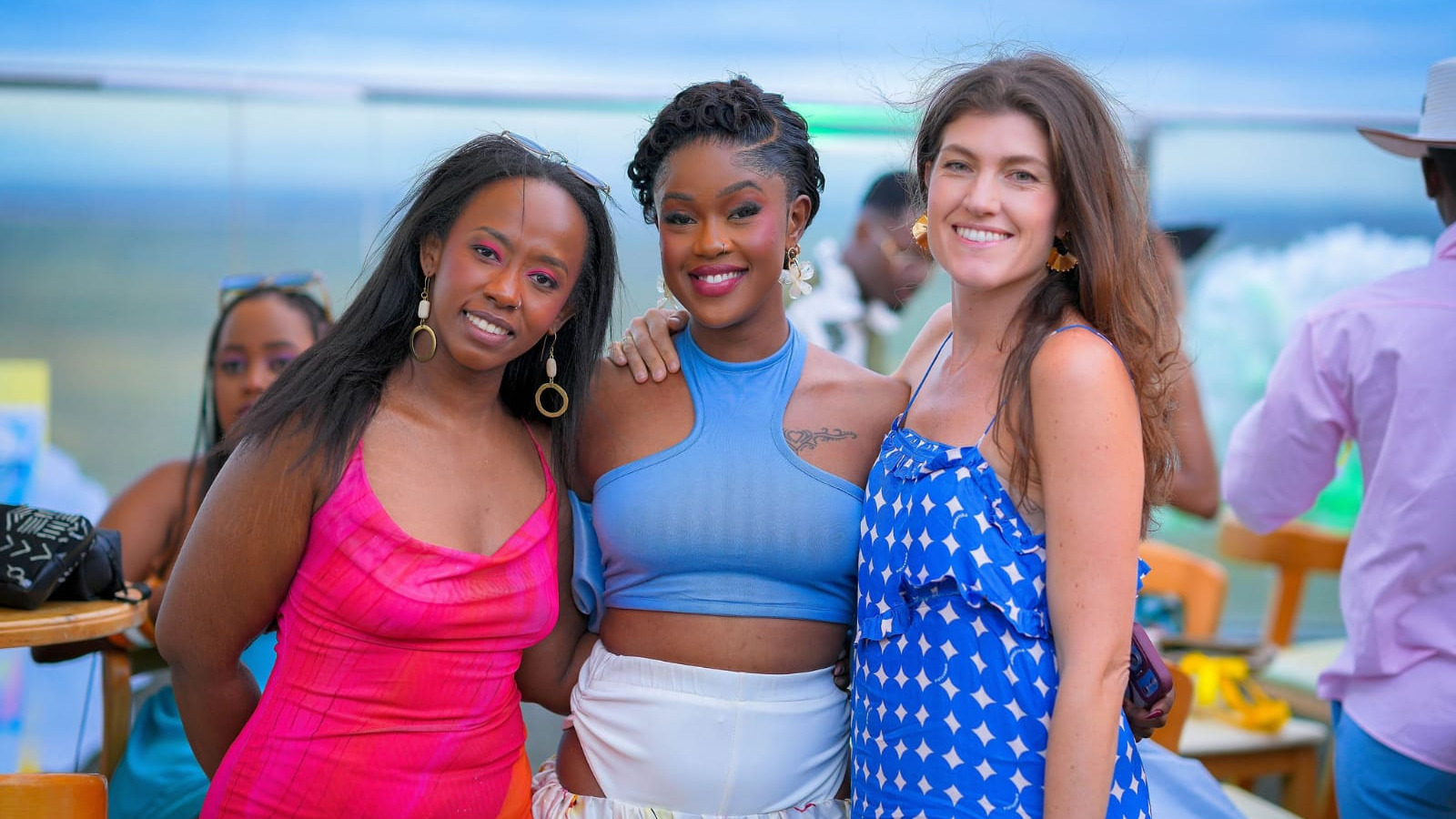
L’Oréal East Africa has named digital creator Azziad Nasenya as the first Kenyan ambassador for a Garnier product in East Africa.
The appointment reflects a deliberate commercial strategy that the world’s largest beauty company has been building toward for years.
The Business Logic Behind the Choice
L’Oréal posted €44.05 billion in sales in 2025, with emerging markets accounting for only 17% of total sales but delivering 40% of the group’s total sales growth. That gap between share and contribution tells the story of where the company sees its next decade.
Sub-Saharan Africa sits within the SAPMENA-SSA zone — South Asia Pacific, Middle East, North Africa and Sub-Saharan Africa — which contributed 9% of group sales in 2025. Kerstin Bird, who serves as President of the Sub-Saharan Africa Zone, sits on L’Oréal’s Executive Committee, a signal of how seriously the group takes the region at the leadership level.
L’Oréal’s CEO Nicolas Hieronimus pointed to the growth of the middle class in emerging markets and the acceleration of e-commerce as underlying trends the company is positioning itself to capture. In Kenya, both forces are visible. A growing urban middle class in Nairobi drives demand for skincare products that sit above the mass market without crossing into luxury pricing. And a creator economy built on TikTok, Instagram and YouTube has changed how that class discovers and buys.
Nasenya built her following through TikTok before crossing into mainstream media and commercial work. L’Oréal cited her authenticity, confidence and connection to Kenya’s youth as the qualities that made her the right fit, someone who embodied the product’s character without performing it.
For Nasenya, the moment carried weight that reached beyond her own career. “Not because of what it means for me,” she said, “but because of what it means for every young Kenyan girl who has ever looked at a global beauty campaign and not seen herself in it.”
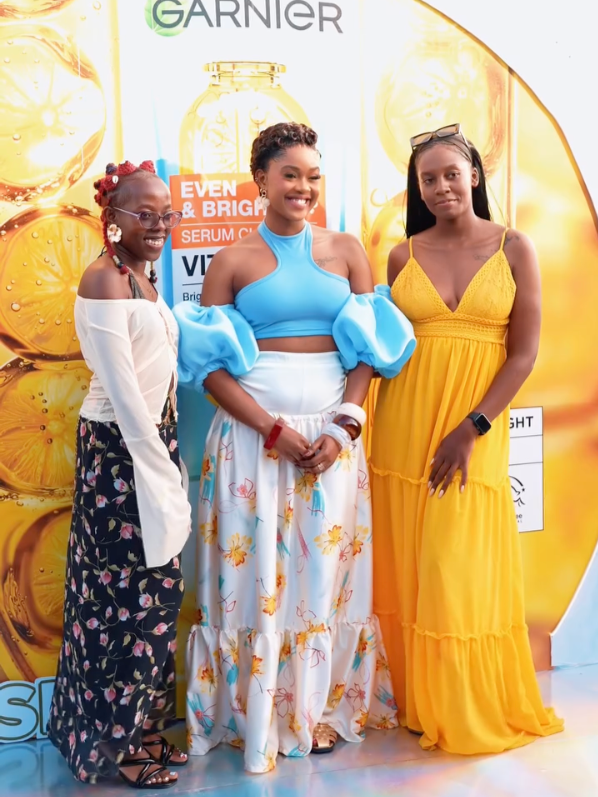
The Product Behind the Partnership
The Garnier Even & Bright Serum Cleanser positions itself against bar soap — a market where bar soap still dominates facial cleansing routines. The product’s pH-balanced formula targets the skin’s natural barrier, delivering serum-level brightening within a wash rather than as a separate step. One bottle. One step. The benefit of a serum built into the cleanser itself.
The campaign built around the launch, titled Dust ni Constant. Glow ni Choice, roots itself in Nairobi’s daily texture: pollution, sun, and a city that moves fast and takes no breaks. It reframes the shift from bar soap to serum cleanser not as a correction but as a choice — one available to anyone willing to make it.
Marie Van Haesendonck, L’Oréal East Africa Managing Director, described the launch as carrying two meanings: a Kenyan first in the brand’s regional history and a world-class product brought in at an accessible price. L’Oréal’s ability to compete in Sub-Saharan Africa depends on closing the gap between premium formulation and everyday affordability, a calculation the group understands well given its stated goal to offer every person around the world the best of beauty across quality, efficacy and price point.
A Creator Economy That Global Brands Can No Longer Ignore
The Nasenya appointment reflects a broader reorientation in how consumer brands spend their marketing budgets. The global influencer marketing industry grew to an estimated $21.1 billion in 2023 and is projected to surpass $32 billion by 2025. More than half of brands — 52% — now run formal ambassador programmes as a core part of their strategy.
The shift toward nano and micro-creators, who command smaller but more engaged audiences, is reshaping how budgets move. Some 54% of marketers now work primarily with creators at that scale, drawn by engagement rates that broad-reach advertising rarely delivers. TikTok has become the platform of choice, with 66% of brands incorporating it into their creator strategies.
L’Oréal itself trained over 65,000 employees to use AI tools to boost creativity and productivity in 2025, and its Chief Digital and Marketing Officer sits on the Executive Committee — an organisation that takes digital reach seriously at every level. Nasenya’s profile sits at the intersection of scale and credibility: large enough to carry a launch, trusted enough to make it land.
What This Signals for the Region
L’Oréal’s multipolar model is built on the principle of combining global scale with local agility — staying closely connected to local consumer needs while amplifying global reach. In practice, that means the company cannot run the same campaign in Nairobi that it runs in Paris or Seoul. The Dust ni Constant. Glow ni Choice campaign, the Swahili tagline, the choice of a creator who grew up inside the culture she now represents — these are not incidental decisions.
