


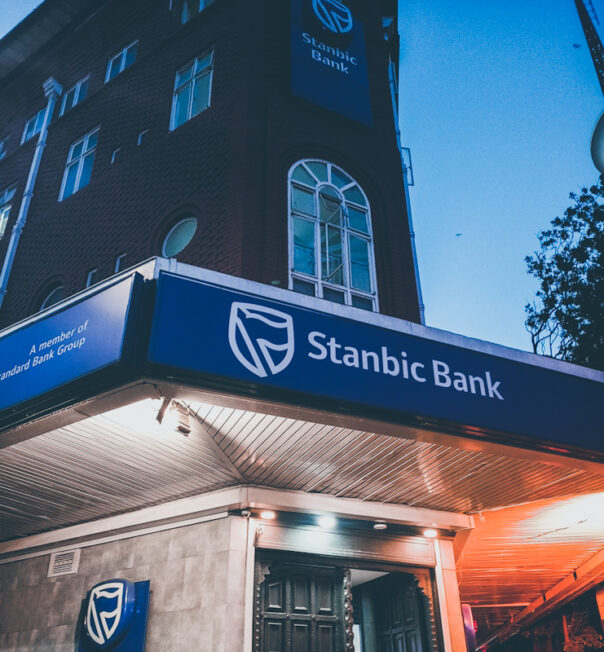
Stanbic Bank has put a greenfield entry into Ethiopia on the table, a move that would make it the first major African bank to bypass the acquisition route into the market.
The bank says it is ready to build a startup operation in Ethiopia as it looks at ways around a rule that caps foreign ownership at 49% when a lender enters through an acquisition. Building from scratch carries no such restriction. A bank that constructs its own operation can own 100% of the entity.
Joshua Oigara, Regional Chief Executive of Stanbic Bank, made the statement in Johannesburg on the sidelines of President William Ruto’s state visit.
“Ethiopia does not stop financial institutions from setting up from scratch if you want to own 100% of the entity,” Oigara said as quoted by The Business Daily. “We have seen Kenyan enterprises setting up greenfield in Ethiopia and we are confident.”

The Ownership Rule That Stopped Other Banks
Ethiopia opened its banking sector to foreign investors in March 2024 through Business Proclamation 136, issued by the National Bank of Ethiopia. The law requires local investors to retain a minimum controlling interest of 51%, leaving any foreign buyer with a stake of no more than 49%.
That clause has stalled expansion plans for every bank watching the market. KCB, Equity Group, and Co-operative Bank have all signalled interest in Ethiopia but the prospect of entering as a minority shareholder, with no majority say over strategy, has held them back.
Oigara stated the problem directly: “We generally go to new markets as a large and significant owner, and so a minority position is always going to be a difficult point to start with.”
A greenfield operation resolves that. Stanbic builds the bank, owns the bank, and controls it. The 49% cap applies only to acquisitions.
The Safaricom Precedent
Stanbic points to Safaricom’s experience as evidence the greenfield route produces results over time. The telco entered Ethiopia through a greenfield operation and absorbed losses for several years before the business turned.
Oigara referenced Safaricom directly: “One of our greatest clients is the telco business that went into Ethiopia a few years ago. It was an absolutely difficult environment, I agree. Does it tick the right boxes now? Maybe not yet. Are we seeing progress so far? Absolutely.”
Safaricom Ethiopia cut its loss to KSh21.2 billion in the last financial year from KSh36 billion the year before, with service revenue growing 58.3% to KSh14.1 billion.
Oigara drew the longer point from those numbers: “Sometimes we take a short-term view and look at things from a one-year, two-year, or three-year lens, yet when you look at things from a 10-year perspective, you are likely to end up wishing you had even done more investment.”
Standard Bank’s Existing Presence
Standard Bank, Stanbic’s parent and the largest bank on the continent by asset base, has operated a representative office in Ethiopia since 2015. A full banking operation would build on that foundation.
Where Others Stand
Absa assessed the market and concluded the rules remain too restrictive, saying it will consider entry only once the regulatory environment becomes less constraining.
Ethiopian banks have grown stronger since the sector opened. Awash International Bank, Bank of Abyssinia, and Dashen Bank rose 18, 17, and 16 places respectively in the African Business Magazine Top 100 African Banks rankings for 2025, as deregulation and increased competition boosted their financial strength.
No timeline or capital commitment from Stanbic has been disclosed. The greenfield route remains under consideration.
